IdeaJones

Author: admin

  • Welcome to IdeaJones.com

    We are members of the Pacific Northwest Writers Association and Women’s Fiction Writers Association.

    Joey Jones has published and edited many newspaper and magazine articles, radio stories, advertisements and commentaries, and has ghostwritten everything from speeches to love letters. She is a past Nicholl Fellowships in Screenwriting semifinalist and Fade In: Screenwriting Awards quarterfinalist. She also gathers sound and conducts interviews as a freelance field producer, and her on-air performance as “The Dying Fish” can be heard in the Water Education commercial series. You can read Joey’s political humor blog, Dear Donny: Presidential Pen Pals, by clicking the link, and see some of her artwork in our Redbubble shop, or fine art exhibits.

    Like quirky, snarky, sweet artwork? Find some at our Redbubble shop.

    Like IdeaJones on Facebook: Follow us on Twitter:

  • A Dream Of Forgiveness

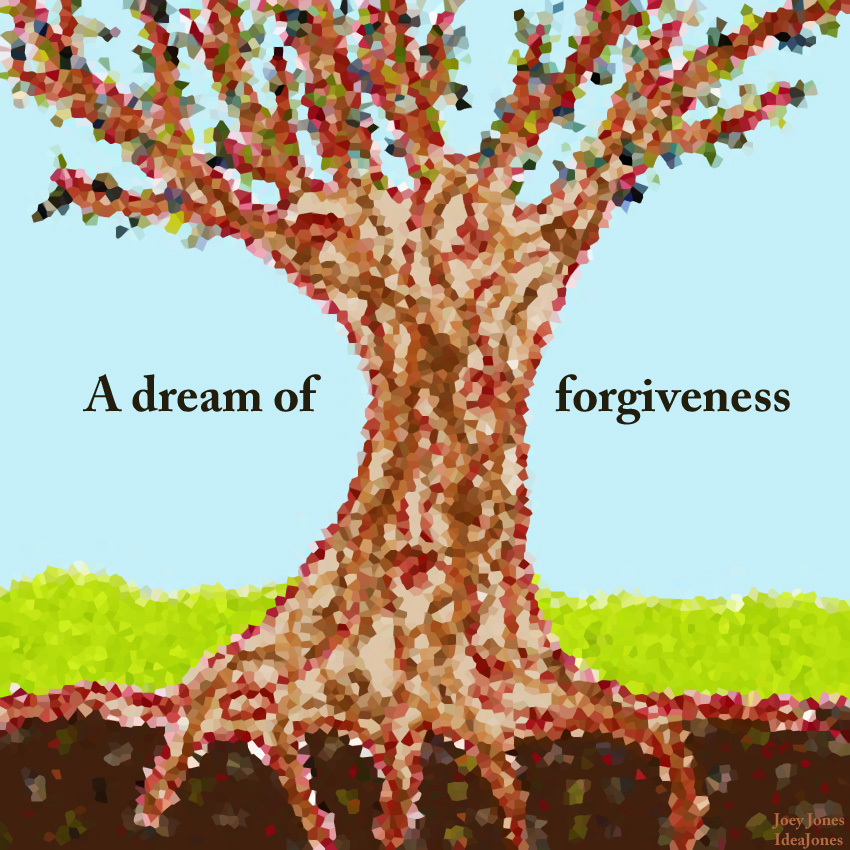
    Dream of Forgiveness IdeaJones What is forgiveness? When and how does one forgive? Are there unforgivable actions?

    I had a dream, sort of a nightmare but also seductive. Someone who had hurt me, in myriad ways, about as badly as you can hurt someone, and I had him down on the ground and I was beating him.

    Horrifying in that I’m not usually an angry or violent person, and I wasn’t just hitting him. I was pounding him, obliterating him. This was all very graphic. In the heightened awareness that belongs to dreams and a few, rare waking moments, I could feel beyond feeling, hear every gasp, grunt, rasp of fabric on concrete, the different sounds my fists made depending on where they landed. I could smell everything (better left not detailed), even taste it.

    This person is gone and has been for some time, and I’d gone through a lot of work to forgive him. A recent revelation brought all that old stuff I’d thought not just buried but dealt with, processed and done back to life.

    You see, I’d hung my forgiveness on one thought, that as sick and awful as he could be, nothing he’d done to me was conscious. Not deliberate, by choice. He was out of control, I told myself. Sick. He’d hurt me, but he hadn’t meant to hurt me. That would have made it all so much worse, if he’d chosen to instead of just blindly thrashing around. If I’d been a chosen target, not just a victim of a sort of terrible accident.

    That one idea was what I hung all the forgiveness on. It made it possible for me to forgive him.

    Years pass, he’s gone, and someone asked me a question. I answered it and in that moment all the foundations of that forgiveness crumbled. The answer to that question made it clear, beyond argument or interpretation, that at least some of what he’d done had been done by intent. Victim chosen, actions planned. Target identified, aimed at and hit.

    The foundation I’d based forgiveness on had been jackhammered, suddenly removed, sending the forgiveness toppling. Talking to him, were that possible, would have been as fruitless as it always was, after all, while he hadn’t denied what he’d done, he also never expressed any regret or guilt for it. Just anger that I’d finally told anyone. What he’d done wasn’t the problem — my talking about it was, to his mind, the problem. Not what he’d done but that anyone knew.

    And talking to him wasn’t an option. He’s gone, after all.

    I sat up in bed, shaking, angry, frustrated, frightened of the force of my own reaction. And resentful. I’d been through this before, after all. Faced the demons, forgave him, moved on. And here I was with it all to do again.

    A friend asked if it was necessary for me to forgive him again. Couldn’t I just move on? Forgiveness, she rightly pointed out, doesn’t come when you call. It’s a process and can’t be rushed. One can’t magically forgive just for wanting to.

    She had a good point. The problem is, my mind tends to circle something like this until I find a way to forgive. Until then, it just won’t let it be. My mother used to say once she got something in mind she was like a dog with a bone, and I’m my mother’s daughter. Until I found some bit of forgiveness for this person, my mind would keep turning it over, rolling it around, looking for an answer.

    I did try putting it aside. Over and over. And found myself sleepless and shaking, alarmed at how delicious I’d found pulverizing another human being, even in a dream. How satisfying I had found his screams as they became cries, then whimpers. How much I hated feeling the seductiveness of rage.

    He was a tortured, complicated, injured, sick human being. Good at faking it in public, and even in his own mind. He edited life as he lived it. You could go through an experience side by side with him and not recognize it an hour later when listening to him tell someone else about it. He would tell me things weren’t happening as they happened or that something else was happening than what was clearly going on, and believed his own lies. And the events that had been at the back of all this were ones I’d always remembered clearly (not the sort of thing one forgets, after all). It was just that I hadn’t wanted to look at them closely. It was all bad enough on the surface, but taking a closer look, it became clear that those times, and others, had been calculated and planned. I’d just avoided admitting that, because if I admitted that he deliberately hurt me, how could I love him, and I did?

    I hung all my forgiveness on believing he never meant to hurt me, he hung his existence on false memories he created for himself about who he was and what had happened.

    I got past loving him, for the most part. It wasn’t possible to forgive him at all while I still loved him and hoped that he would realize what he’d done, repent, and love me back. It was so hard to let go of that hope that I hung on to it, and him, for years, loving him and yet never forgiving, holding it for the day all was made right. In time, I realized all would not be made right. Our relationship would never be what it should be because he didn’t have it to give. I walked away, and my only regret was that I didn’t do it sooner.

    And here I am, knowing I will have to forgive him. Not because he deserves it. He doesn’t. Not because he asked for it. He never did and now he can’t. So far as I know, he went to his grave whining about how he missed me and unable to understand why I told anyone what happened. Again, for him, the problem was never what he did, it was that I talked about it.

    I have to forgive him one last time because I’m tired of carrying around this load he put on me. And maybe that’s my path forward.

    Putting it down for no other reason than because I don’t want to carry it any more. I don’t want him to control any part of who I am or how I feel. Perhaps what I’m looking for is not the forgiveness that should follow repentance. Perhaps the flavor of forgiveness I’m seeking is that granted by someone who just isn’t interested in expending energy to maintain anger or resentment.

    Forgiveness isn’t forgetness, but it is freedom. He gave me burdens. I’m going to learn to put them down and give myself release.

  • What’s Coming To You

    Why Not You 2 IdeaJones

    ” Accept yourself as you are. Otherwise you will never see opportunity. You will not feel free to move toward it; you will feel you are not deserving.” — Maxwell Maltz

    “To be sure of hitting the target, shoot first, and call whatever you hit the target.” — Ashleigh Brilliant

    Sitting on the edge of the bed, putting my shoes on, I had a revelation. A “road to Damascus, stop the presses, pardon me while I pick my jaw up off the floor,” genuine, solid gold or at least silver, not plated, revelation.

    I could put away my guilt. Lay my burden down.

    See, I’ve been scourging myself. No, I didn’t kill anyone (that I know of). No high crimes or treason to confess. I’d simply been walking around feeling undeserving. After all, who am I? I’m a decent sort but nothing stellar. Not famous, not wealthy, with only the power the average person has. My name won’t get a better table at a restaurant. I’m good at what I do but it’s unlikely to usher in a new age of anything or start a movement that would bear my name.

    In other words, not “enough.”

    Enough for what? Enough according to whom? Well, the latter is easier to answer than the former. No, that’s not true. Enough for what? Anything really great. Enough according to whom? A crowd of people from my past, the nebulous “they” who judge such things (the They of “They say…”). It was just part of my worldview, the lens through which I viewed everything, that I was not “enough.” Enough of what? Anything. Everything.

    So my point of view, the place I started from, was always that I was inadequate according to everyone and undeserving of anything good. And a good morning to you, too!

    I’ve worked for money since I was eight or nine. I don’t mean allowance, I mean earning income. First I baked cookies and sold them (on horseback from a saddle bag, neighbors being scattered where we lived then). Then I cleaned house for an elderly couple. I seeded flowers, raked composted sewage into hard desert earth, then when I was old enough, worked in fast food restaurants, waited tables, managed a couple of small restaurants… in other words, I worked. Even when I was briefly unemployed, I worked at getting work, right on through to becoming a freelance journalist.

    Was I happy? Occasionally. I wasn’t constantly unhappy, certainly, nor was I often happy, but then I didn’t expect to be. I wasn’t raised to be. People didn’t talk about being happy or how to be happy or even whether or not to be happy. “Happy,” if it existed, was a nebulous, shifting, accidental thing that might or might not occur. Certainly you didn’t waste time looking for it or trying to get it. What I was supposed to be was useful, obedient and productive.

    Then a few things happened. My accumulated injuries meant that I was no longer physically as productive, and sometimes not very much at all. The journalism landscape changed, and the flow of work became a trickle. I was no longer earning much.

    No matter what else I did, no matter how hard I worked taking care of people, helping charities, or anything else, it just didn’t seem to matter because I wasn’t earning enough. There’s that word again. I hadn’t been “enough” when I was earning a good income. How could I possibly be okay with myself when I wasn’t?

    I was writing, things I really enjoyed writing that were important to me. And sculpting and drawing. But in the world I was raised in, these were all “just hobbies,” and therefore unimportant. Unproductive. Unworthy. True, there were people who said they liked my work. They enjoyed the writing. They were moved by the artwork. But still that voice in my head. To “waste” time on all of that when I “should” be working…

    Mark said he believed in my talent and he’d live with a lower income so that I could pursue the things I really wanted, had always wanted, to do. It was about time, he said, that I had a chance to live my own life.

    And I tried. I did what I knew to do. I worked hard. Got into juried art shows. Started getting some interest in the novels. But still the guilt. I wasn’t bringing in much money (to which Mark would always say, “yet”). I wasn’t worthy of the chance being given to me. I felt guilty that we had to drive our old beater truck, that we couldn’t do or buy other things… I felt guilty for the sacrifices I felt Mark was making for me when it might never pay off, financially. I pursued my dreams but did it while dragging guilt and a sense of unworthiness around with me. I didn’t “deserve” this chance, Mark’s sacrifice.

    Talking with a friend, she brought up the idea of being “worthy.” As we talked and I told her she was a good person and as worthy as anyone and more than some, it occurred to me that good things happen to awful people all the time. They get great jobs, win prizes, all of that. Did they win because they were worthy? Sometimes, I told her, it’s just your turn. The job you didn’t get? Probably not because you weren’t worthy, or were less worthy than the person who did. We’ve all seen the less-qualified person get the job. Sometimes people get things whether or not they’re worthy, or when they are but we can’t see it.

    The next day, putting on my shoes, it came to me. When it happens to you, no point in dragging yourself down by feelings that you aren’t worthy. Don’t even ask if you’re worthy. It just happens to be your turn. Take it and run with it. Enjoy it! Share it with others in some way. Spread it around. It isn’t always your turn, or anybody’s turn. Don’t waste it. When you get your turn, make the most of it.

    It doesn’t matter if I’m worthy of my chance or not. It matters what I do with it. Maybe the being worthy isn’t in getting the chance, it’s in what you do with it.

    So, head high, I’m enjoying the opportunity Mark has given me to pursue my dreams. I can be worthy by not wasting it, by taking it and dancing with it. Why not me? Why not you? We can be worthy.

  • Learning Tips From A Tutor — Don’t Get Married For The Wedding

    Working with a friend who is seeking his GED, we talked about how he came so close when he took the GED test before, and what he can do differently this time. He was within a point of getting his GED when he took the test, a heartbreaker, and I respect him for trying again.

    When we talked about how he prepared for the test last time, I realized that he had concentrated so hard on the test, as though that would be the end of the process. He’s also studying to become licensed as a truck driver. I helped him study and pointed out that he was so fixed on the test itself, he’d lost sight of the real goal, a career. The license is necessary but the exam, and the license, isn’t the goal. Those are steps to the goal, which would be the career that followed. “You’re studying for the test,” I told him, “but the test is just to show that you know the information you’ll need when you’re doing the job. Don’t study for the test, study for the career, so you’ll know this stuff and be able to use it.”

    He blinked at me. “That’s what I do,” he said. “I study for the test. I did the same thing with the GED. I didn’t study to understand it and be able to use it — I studied to pass the test. This time I’m studying for understanding more than for the test, so I’m remembering more.” It’s true. His English has improved so much in the past year. He’s worked hard, and it shows. He hasn’t just memorized things; he’s understanding concepts. “It’s like when someone gets married for the wedding,” he told me. “A wedding isn’t about the wedding. It’s about the marriage and the years and the life that follow.”

    And learning is about understanding. Yes, we need to pass the tests, but the tests are to show that we understand and can, hopefully, make use of the information. My friend has stopped studying for the test, or, as he puts it, getting married for the wedding, and he’s really learning.

  • Happy Halloween!

    Happy Halloween!

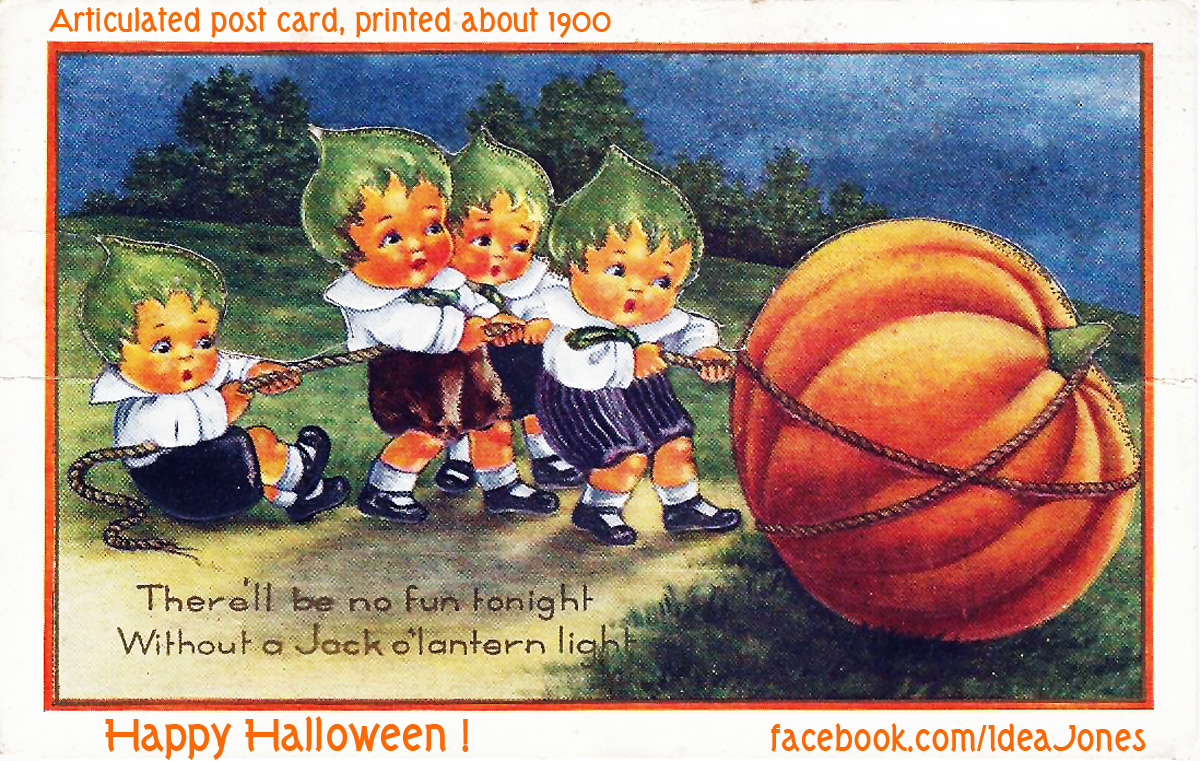
    Happy Halloween 2 IdeaJonesI have fond memories of Trick or Treat. I could only do it when I was very young as we moved after that to several places where we had no close neighbors, but when I was five, Halloween was a very big deal. The selection of a costume was crucial as Halloween only came once a year, which meant it would be an eternity plus an eon before I could choose another costume, in Kid Time.

    When I was five, I wanted to go as Mr. Ed. If you’re younger, you may be interested to know that there were once shows on television that featured talking horses, talking cars… the 60s were an interesting time. Anyway, Mr. Ed was the talking horse and star of his own show, a beautiful Palomino with a somewhat goofy, sometimes dry sense of humor (at five, you don’t realize the horse’s voice comes from an actor reading lines).

    I was madly in love with Mr. Ed and wanted to marry him, to my mother’s consternation. She tried explaining that it would work because he couldn’t eat at the dining table with us (we didn’t have room for a trough), and he couldn’t sleep in my bedroom. I shrugged that off and said we’d figure out something, and I could sleep in the barn. Mom said again that I couldn’t marry Mr. Ed. When I asked why, she said it was because he was already married. There was already a Mrs. Ed. Being a good girl, this meant he was off limits. Note that she didn’t try to say it wouldn’t work because Mr. Ed was a horse. In our family, we were used to believing six or more impossible things before breakfast, like Alice in Wonderland.

    Anyway, to help assuage my broken heart, she told me I could go trick or treating as Mr. Ed… but we couldn’t find a costume. Nowhere in Santa Cruz, and not even in the neighboring towns, which we tried. I was down, but Mom, who usually made my costumes (it was a big deal that she tried so hard to buy me one in respect for my being disappointed in love and all), said she would make me a costume. Although she was talented, she said there wasn’t time to make a horse head. Was there anything else I might like?

    I thought about it and told her I wanted to go as a tomato. All these years later, I don’t remember what it was about tomatoes that was so appealing, but I was determined. If not Mr. Ed, I wanted to be a tomato.

    She tried. She really did. Mom was a talented seamstress with a lot of inventive flair, but her best efforts left me looking more like an unfortunate medical condition than a healthy, ripe tomato. And it was the night before Halloween. In a burst of desperation, she declared I would be Santa Claus. Santa Claus? On Halloween? That just made no sense (whereas marrying a horse or being a tomato seemed altogether rational). She finished my costume and I wore it to school the next day, where kids laughed and asked me why Santa Claus. I explained that I was supposed to be a tomato but it didn’t work, which just confused everyone more.

    Came Halloween evening. Forcing a smile, I trudged out with the other kids and parents to go Trick or Treating, dreading having to explain at every single house that I was really a failed tomato. At the first house, the woman who opened the door exclaimed, “Santa Claus! That’s great!” She called everyone in the family to come see the little Santa. Versions of that happened at almost every house. People told me over and over how funny, how cute, how brilliant, even how scary (from someone who was already dreading holiday shopping) it was to go out on Halloween as Santa Claus. And I took in a real haul of candy. I was showered with Pixie Sticks, chocolate bars, even handfuls of coins. I made out like a whiskered, red-suited bandit.

    That’s the thing about Halloween. It can surprise you. May your surprises all be happy ones.