IdeaJones

Tag: writing

  • Prince Charmish

    So I’m talking with Mark about fairy tales, and it occurs to me… Prince Charming. He’s been a literary character, a cartoon, a meme, and yet…

    What is it about Prince Charming? I read the Brothers Grimm version, as a kid and as an adult. I swallowed the animated, kind of 2D-Ken doll versions as a kid. I’ve absorbed the cultural visions of him through my pores like almost every woman (it’s not just Western culture — other cultures have their own versions) in movies, in books, magazines, television, songs…  It’s embedded into our view of the world, the idea of the perfect man. It’s so prevalent that it took me years to examine it. When I did, I realized something…

    Nobody tells you what makes him charming. We’re simply told he’s charming, and that’s that. In the original, he’s simply a prince, and that’s enough. Then he becomes a handsome prince. He dances with Cinderella, and he’s charmed by her, but does he do anything particularly charming himself? Not really. In later versions, he acquires the name, Prince Charming, but still we’re not given any evidence that he is, indeed, charming. He ignores the other guests at the ball to dance with the most beautiful girl in the room, flattering for her, but hardly charming for everyone else there. He chases a girl who’s trying to get away from him. Not so charming, that. He takes her shoe on an obsessive quest,  prepped to marry the first woman who wears that size shoe in the kingdom, assuming there’s only one, and it must be her. Not too bright. If you find intelligence charming, you’re out of luck.

    To a lonely, abused girl, maybe the very fact that he could take her away and presumably give her a place to bathe, a change of clothes, and a bed that wasn’t the floor was probably enough, to start. How likely is it that her standards were high? We don’t hear from her five years into the marriage. By that time, he might be “Prince Too Dim To Follow A Thought From One End To The Other,” or “Prince I Think He’s Sleeping With The Maids, And Not One At A Time, Either.” 

    So what is it that drives the myth of Prince Charming? He’s a mirror. You bring to him whatever needs and desires you’re carrying with you. He’s featureless. You can hang whatever fantasies you want onto him, and he’ll wear them, much like dressing a Ken doll. We all know Ken only exists so that Barbie doesn’t have to go stag if she doesn’t want to. Pre-media celebrity, we had Prince Charming. Much as we approach celebrities with our load of issues and paint them to suit us, we create our own Prince Charmings, one for each of us. Mine might be, probably is, very different from yours.

    All of which is fine, if you see it for the fantasy it is. Instructive, even, if you look at why your Prince Charming looks and acts as he does. That could tell you a lot about yourself. If, however, you go out in the world skipping any guy who doesn’t fit the suit, Prince Charming becomes a problem. He gets in the way. Which isn’t charming.

    Yes, guys have their own versions of this (“Hooker with a heart of gold, beautiful but unappreciated, disease-free, no addictions, not planning to steal my wallet, just needs someone perceptive and kind to rescue her”). No, I don’t have any deep, insightful lessons to impart from it all. I just find it interesting that in looking slightly to the left or right of the real people standing right in front of us, we might be missing something.  — Joey
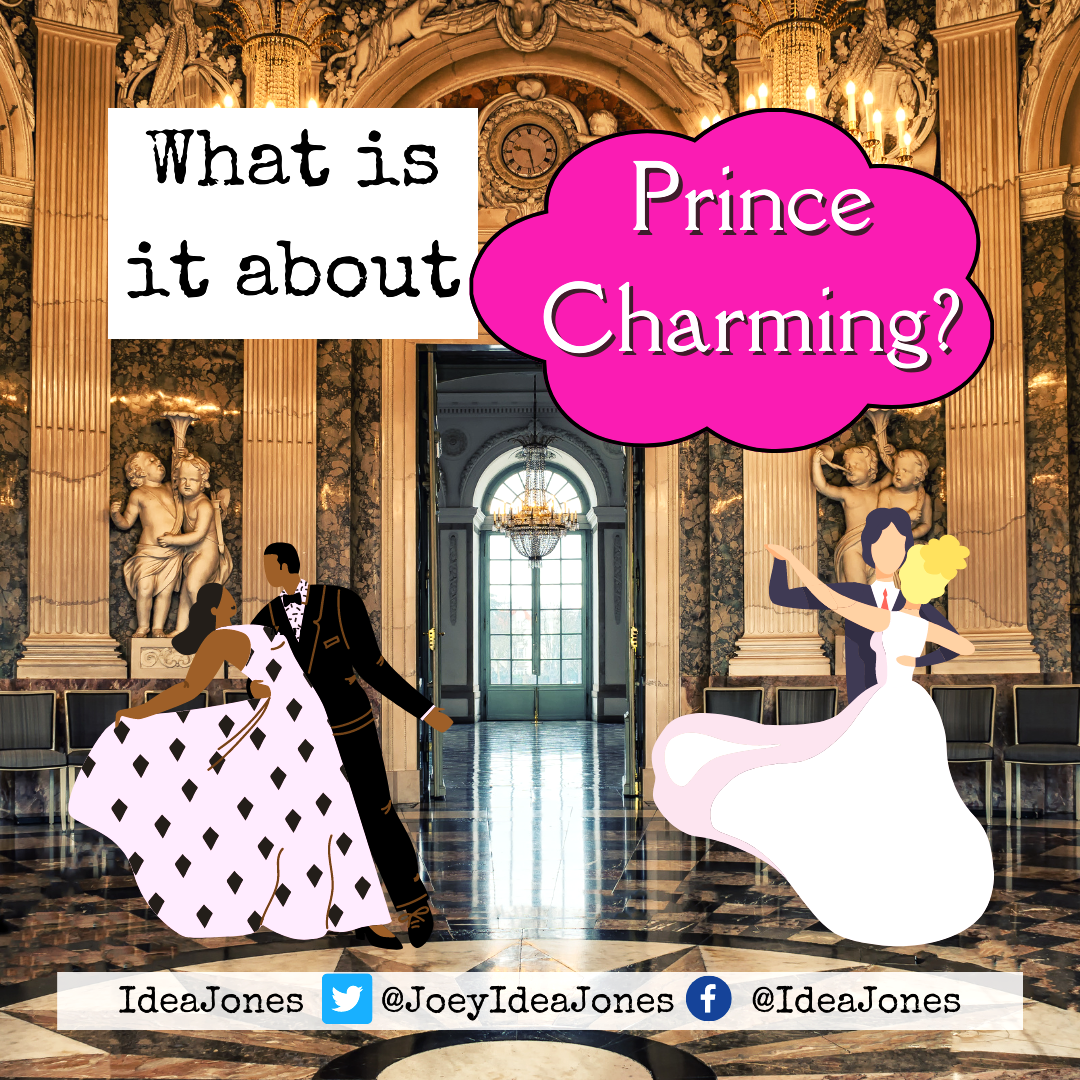
    What makes him Charming, anyway?

  • Please, 2020, No More Sequels

    Please, 2020, No More Sequels

    New Year’s Eve, 2021. Tomorrow, we start the third official year of the pandemic. Would whoever’s in charge of such things turn off 2020 before midnight tonight? Please?

    2021 seemed like 2020, Pt. 2. The pandemic plodded on, largely thanks to its biggest fans, anti-vaxxers and anti-maskers, who thought the only thing wrong with the pandemic was that it might not last long enough. While shouting about how they wanted to be free of the pandemic and its restrictions, they did everything they could to assure us all that it wouldn’t end. Thanks!

    Wildfire season, again, entered and was the Drama Queen that literally sucked up all the oxygen in the room for multiple states.

    Between wildfires and Covid, there was a theme to 2020 and 2021: breathing. Call it the era of Waiting To Inhale.

    We’re still dealing with Long Covid here, 20 months later. Definitely better than I was a year ago, but the big excitement for me was getting on the waiting list for my health care provider’s Long Covid program (which hasn’t started yet). Now it has a name: PASC. Here’s a hint for those with Long Covid looking for a doctor: ask what that doctor thinks about PASC. My old doctor didn’t “believe” in Long Covid, as though we were talking about the Tooth Fairy. My current doctor? Filled in the acronym and proceeded to discuss the latest research she’d read about. This was the year I learned to advocate for myself. A friend who works in healthcare said, “Always remember this is a service industry. You are a customer and if you don’t like how you’re treated, you might go somewhere else, and we’re unemployed. If you need something you aren’t getting, speak up!”

    A doctor is a business partner. You have to work together to improve your health, and you have to be able to both understand and trust the advice you’re given. You have to be able to communicate. You have to know that you are heard and your concerns are considered. If all of that isn’t true, you might need a new doctor — and don’t be shy about finding a new one.

    My own personal pandemic is entering its fourth year. I was just getting over a mysterious and scary illness (that turned out to be a reaction to a virus), when I caught Covid. Yet I still believe the pandemic will eventually end. Mom used to say that everything ends, and if the bad news about that is that good things end, the good news is that bad things end. She also said “Better is always coming. The trick is to hang on until it arrives.”

    So hang on. Keep masking when you should, get vaccinated if you haven’t, and cut yourself a big slice of slack. This decade has a lot of room for improvement. When things get better, you want to be able to enjoy it. So rest. Meditate. Listen to music and dance around the house. Pet a dog. Laugh whenever you can. Forgive as much as you can. Be the light until the sun shines again. You are more remarkable than you suspect and more glorious than you know. Give yourself room to stretch out and shine or incubate and rest, whatever you need.

    And if you’re the person who should have turned 2020 off, you’re forgiven, but please flip that switch now, please and thank you.

  • Back In The Saddle Again (Well, in, then out, then in…)

    So I haven’t been keeping up on our website until just recently. My new hashtag is #IBlameCovid. It’s been 5 months since I was first diagnosed. Here we are in July (almost August) and I’m definitely improved (I know March happened, but don’t ask me about it), but not completely over it yet.

    The main lingering symptom is exhaustion. In March, I found myself having to sit on the floor of my shower because I couldn’t stand up long enough to rinse the shampoo from my hair. Now? I can shower, then I have to lie down for an hour. So improvement, yes, but not back to normal.

    That’s a common misunderstanding about #Covid19. People think you have it and you die, or you get better, end of report. Not really. For many people, even a mild to moderate case (like mine), where you didn’t have to be hospitalized, produces lingering and often debilitating symptoms that can come and go unpredictably.

    Thinking is physical work and it tires me out. Laugh if you want to, it’s true. Sometimes I hunt for common words or to labor to finish a thought. It gets better, then returns. I’m just glad my brain came back at all. For quite a while, I struggled to follow a thought from one end to the other, and conversation left me with crushing fatigue.

    I’m writing and editing again, and my brain seems to function, until I get tired, so my working hours are brief and interrupted by rest breaks while I lie down, but at least I can work a bit. I just have to accept that an hour of writing will be followed by an hour (or more) of lying down. It’s frustrating, and I was wrestling with guilt and frustration, but I remembered the lesson a dear friend taught me.

    Merlin was my service dog. He had been a starving stray puppy, but he still approached every morning cheerfully, making the most of whatever life offered him that day. We call it The Lesson Of Merlin. He taught me that it doesn’t matter what you planned, or what you feel your situation “should” be. What matters is meeting life where it is and doing what you can with what you have to work with.

    Merlin, who tried to teach me all he could.

    Which isn’t to say I’ve magically become a yogi and avatar of enlightenment. I have to remind myself every day, sometimes multiple times a day, to look at what I have available that day and make the most of it. If it’s a bad post-Covid day, that may mean lying on the couch all day, watching Shakespearean comedies, history programs and writing classes on tv. If it’s a good day, it’s a bit of housecleaning, writing, playing with my pups, talking with Mark. My challenge is to find joy in whatever I have.

    The lesson of Merlin.

  • Dance Like Nobody’s Watching

    Dance Like Nobody’s Watching

    My mom used to say, “We’re on each other’s minds a lot less often than we think we are. While you’re worried about what people think of you, they’re worried about what other people think of THEM.”

    Mom was so right. Especially in this social media, selfie-driven age. Where you used to go through the world trying to figure out what the people in your immediate vicinity thought of you, now we wake up and check our phones for thumbs up or thumbs down from an entire world.

    Think about that symbolism for a moment. We’re taught that the thumbs up or down was used by Roman emperors to declare whether someone lived or died (not sure if it’s accurate, but for sure it’s what I was taught). Having incorporated those symbols into social media means that we’re not just saying, “I like this,” or, “I don’t like this.” We’re passing judgement on each other. Letting other people declare whether or not we are worthy. Which is why involvement with social media isn’t a good predictor of happiness.

    Increasingly, we’re not even bothering to hit “like.” It takes less than a second to do, but now even that often seems like too much trouble. I can’t tell you how many times someone has told me in person they really like what I do — and yet they don’t bother to literally “like” it online, or share it. Which can make creating feel like yelling into the abyss — you’re shocked when you hear a response. And yet, there is good news in this, for creators.

    Take Twitter. Writers are constantly told we must “build platforms” and increase our “social media presence.” Which can lead to having 2,000 followers, most of whom don’t actually follow what you do, in the sense of paying attention to it. They’re other writers or artists following you so you’ll follow them so it’ll look like you have a lot of followers, yet how many of those followers are truly engaged? One really engaged follower beats 100 (or more) courtesy followers.

    Where’s the good news? In creative freedom. You can stop reading tea leaves, casting chicken bones, and otherwise trying to figure out what other people think of you, or what you do. The idea that you actually know, based on numbers of followers, etc., is an illusion.

    Do what you do. Create the best version of what you do that you can. Experiment. Learn your craft. Try things, get some wrong, learn from the process. Edit, refine, examine and re-examine. Show the world as much or as little of all that as you choose. Be brave. Wallow, flail, find and develop your stroke, and learn to swim.

    In time, you may find your tribe, the people who get what you’re doing and enjoy it. Meantime, at least you’ll be enjoying it.

    And if you really want to be a Patron of the Arts, bother to hit “like” occasionally. Comment now and then. Share the stuff you like. Don’t just flood feeds with automatic retweets… make your opinion count by sharing what speaks to you and saying that it does (and even why). Be engaged.

    That, by the way, really is a good predictor of happiness — how engaged you are with people and the world around you.

  • #QueryRoad: Rejections Come In Flavors

    #QueryRoad: Rejections Come In Flavors

    Rejection comes in flavors.

    As we learn the fine art of querying a novel to agents, there are a few things that are becoming clear. One is that rejection comes in flavors, like ice cream (I know, you probably think getting a rejection is more like eating cat litter and the “flavors” are just “used and unused,” but…

    Rejection isn’t just a one-size-doesn’t-fit-any, unredeemable experience. It’s not poking your head into a dumpster, where everything stinks and the only detail is “stinks of what, exactly?” Some rejections are actually useful, and others are, if not exactly enjoyable, more than merely nutritious.

    First, the “no flavor” rejections. A lot of agents and agencies specify that you will only hear from them if they’re interested. Which leaves you wondering if anyone even saw your query letter. Saying “no” is not fun (unless you’re an unpleasant person, more about that in a moment). So, like the first date who ghosts you, it’s understandable if sad that so many don’t even bother to acknowledge your submission. This isn’t ice cream. It’s a glass of air.

    Next comes the form letter. These come from really formulaic letters that you can tell nobody spent time on (“Thank you for your submission which doesn’t fit our needs goodbye”) to ones where they’re at least trying (“Thank you for your submission and while we are unable to represent it, we realize it’s not easy to go through this process and you have to understand, it’s all very subjective, so don’t give up and good luck”).

    The former is “school ice cream” that comes in a paper cup and tastes like cold milk someone packed while looking at a bottle of vanilla they never thought to pour into the ice cream. The latter is the least expensive store brand vanilla, that might not be memorable, but at least has some flavor.

    Kudos to the people who at least send the form letter, who stand high above the ones who don’t even bother to do that. At least you know they saw your submission.

    After that comes the personal note. We’ve gotten a number of those, and they range from one who said “I really wish I could identify what isn’t quite working for me here,” which, while not especially helpful, at least is a personal response from a human being, to “this strong writing and funny, it just isn’t quite right for my list. I really want to see the next book you write, if you don’t have an agent already, but you will.”

    The writer of that last one will live in my heart with gratitude. And will definitely see the next book I’m working on, if I don’t have an agent by the time it’s done.

    But I’m grateful to anyone who takes time to write even a brief personal note. I’ve gotten a few, some very encouraging. Agents, especially good ones, get a ton of submissions. So to give you a personal response, that person has to take time out of her (or his) day, think about you for a bit, write a note and send it, knowing that you, a stranger, may simply be hurt by the “no” and not appreciate the time and effort it took to write to you. It’s been explained to me that once you’re getting personal notes, it’s another step toward achieving your goal, because agents don’t take time to write those unless they see something they want to encourage.

    These rejections are, as rejections go, the good stuff, ranging from “better than the cheap stuff, with some flavor” to “this is the luxury ice cream you serve to company or buy to spoil yourself, or to eat after a really bad breakup, because it’s good enough to remind you life is still worth living.”

    Finally, and I’ve only gotten one of these, the really awful rejection, where you get a personal note, and it’s useless, uninformative, and just plain mean. I found out later the same agent had sent variations of that letter to multiple people. We’re back to cat litter here. You may well get at least one pint of used cat litter ice cream. Just know that it isn’t you. Nobody worth bothering about sends anyone used cat litter ice cream.

    I don’t know the average, but looking into it, I found that those “I showed my first book to one agent, who signed me and sold it for many dollars” story is so rare as to be almost (not quite) an urban myth. The usual story is “I wrote a book and queried 50-200 agents before one took a chance on me, and wrote the next book in the year+ it took her to sell the first one.”

    Rejection is baked into the professional writing experience. I’ve been an editor, and can tell you I hated saying “no.” Hated. It. You’d much rather say “yes,” but you can’t say yes as often as you would like to. There is nothing, with the possible exception of oxygen, that is for everyone. Once you get published, not everyone will like what you write. It’s just that way.

    If you get a “school ice cream day” vanilla form letter, or an “I sent this and never heard back” glass of room-temperature air, well, that’s one closer to finding your agent, the one who gets what you’re doing. If you get a “store brand vanilla,” be grateful that someone at least took time to let you know. If a “luxury brand” rejection comes your way, mine it for anything useful, be grateful for the time that person took to encourage you, and keep going.

    Actually, no matter what, keep going.