IdeaJones

Tag: dogs

  • A Dog’s Guide To Humans: Piddle & Doody

    A Dog’s Guide To Humans: Piddle & Doody

    A word about wiz.

    You might want to go relieve yourself before you start reading this dispatch.

    Of all the things I’ve observed about humans, the most perplexing is their attitude toward their own bodies and natural processes. Honest to Dog, it’s confounding. I’ll see if I can make even minimal sense of it, but some of this you will just have to accept on faith. I swear on my favorite squeaky toy, what I’m about to tell you is true.

    • They are embarrassed by the fact that they poop.

    I’m not talking about someone seeing them poop. When someone watches you go, it’s awkward and weird, no doubt about it. I’m talking about simply acknowledging that you do poop, or pee, at some point in your day.

    I think it’s some sort of sacred ritual for them. They even have special rooms in which to relieve themselves. They also wash themselves in that same room, which is odd unless you consider it as part of a ritual. You have the shameful elimination, then the ritual cleansing. This might explain why it’s considered such a private event.

    Outside of the Altar of Elimination, though, they try hard to pretend they don’t have to go. Some humans use special code words for elimination. Piddle, which sounds like an endearment for a puppy, is actually a code word for peeing. There are many others. One is “tinkle.” I met a dog named Tinkerbelle and she said her name was very confusing as nobody ever rang a bell when she tinkled. I theorized that maybe they were saying it sounded like a bell when she tinkled. Human hearing is quite limited, after all. This seemed to satisfy her and make her far more happy with the situation.

    There are also many words for defecation, including “doody.” My humans like to watch historic recordings of the stories that appear on the glowing boxes. One featured a man in a cowboy suit who talked to a wooden toy he called “Howdy Doody.” I do not believe he would have greeted even a toy by saying, “Hello, Turd,” but “Howdy, Doody” seemed to be not only acceptable but much admired, to judge by the humans slapping their front paws together (known as “applause,” the equivalent of a happy tail wag).

    They have a great many words for peeing and for pooping, from those supposed to be rebellious (“shit”) to those meant to be euphemisms (“do your business,” for example. This one confused me quite a bit at first as it seems an odd business to be in).  A species only exhibits this behavior in regards to things seen as taboo.

    • Some of them are driven insane by elimination.

    Not their own, I hasten to add. They might be uncomfortable with their own elimination, but they are downright neurotic about ours. My own humans will not let me eliminate in their Altar of Elimination, although they do allow human visitors to do so, so I must go in the back yard. Strange as this is, it is nothing to the behavior of some humans.

    I have been told of dogs who are swatted with objects when they eliminate inside the dwelling. It has even entered their language. To be “hit with a rolled-up newspaper” is a general term for being corrected. It is uncertain what the thinking is, but I’m inclined to accept the explanation given to me by Runs With Nose Lifted (aka “Wowzer”), a Great Dane I met. He theorizes that as uncomfortable as humans are with elimination in general, some are driven mad in the presence of it. Wowzer said he solved the problem by going behind the sofa to eliminate.

    Another dog, Steps High And Walks Fast (aka “Charlie”), said she tried designating her own altar — the tiny room in which the humans store their clothing — but this proved displeasing to her human companions, so as of that morning, she had started going under their bed, which seems reasonable.

    There is more to write on this subject, but I am still compiling my notes, and will send another dispatch as soon as I can.
     

  • A Dog’s Guide To Humans: Sleep

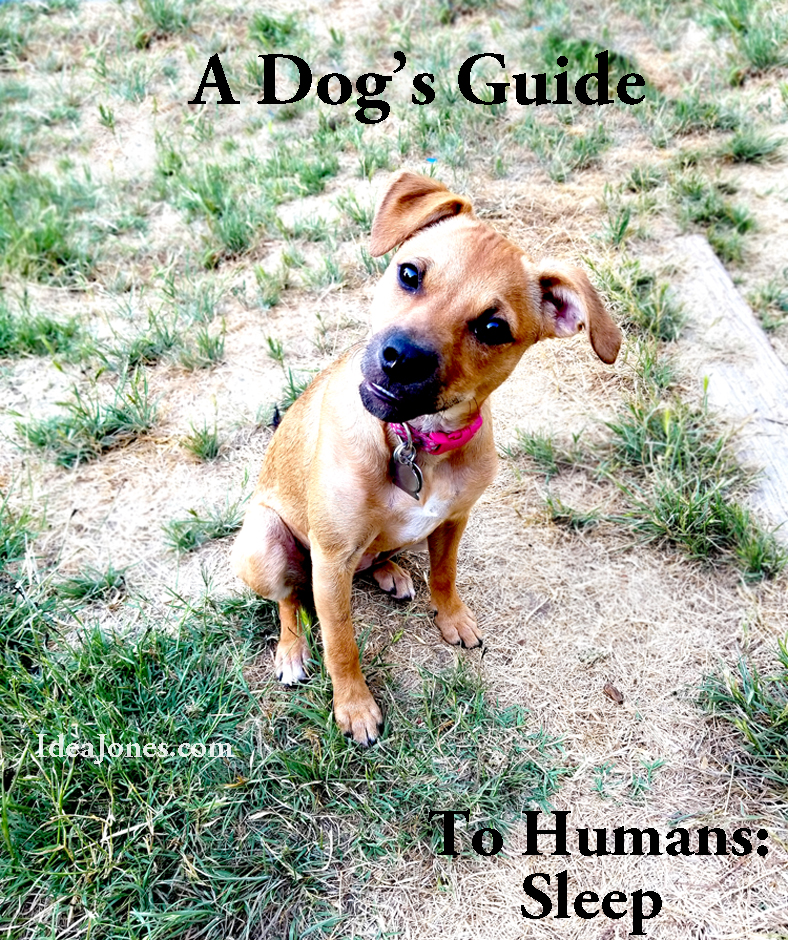
    A Dog’s Guide To Humans: Sleep

    Humans are always tired.

    As with so many things, humans have a strange relationship with their own bodies (just wait until I get to humans and elimination. Oh my dog, that’s a whole subject in itself).  They are so uncomfortable in their own skins that they do things to themselves that can only be described as straight-up freaky. One of the things they really can’t figure out is sleeping.

    How, when, where or with whom, humans can screw all of that up beyond any dog’s ability to understand, but I’ll do my best to explain it.

    • Humans don’t understand sleep.

    I mean, quite literally, they don’t grasp the concept. Not really. They seem to do all right as puppies, but once they can walk unassisted, they start experimenting with it.  Their puppies, called “babies,” are the most sensible stage of their development. They eat when they’re hungry (well, they demand food), poop when they need to, and sleep when they’re tired, unless someone or something prevents them. Yes, you read that right — adults try to manipulate their puppies so they sleep not when they’re tired, but when it is most convenient for other adults. This isn’t surprising when you realize that this is what the adults do to themselves and to each other.

    They have a schedule that is baffling. They wake up, usually after not getting enough sleep, so they’re cranky and clumsy. By ingesting the runoff of water in which various plants have been dredged, they open their eyes, at least somewhat, and begin to communicate. Prior to drinking the runoff, they communicate mostly in grunts and gestures. After, they communicate in sharp, harried barks and run around grabbing things and  putting them into other things, usually some sort of bag or box, and complaining that they are now late.

    Laugh if you will — this is how they start most of their days.

    They spend their days in a variety of behaviors, most of which seem to have little practical value, but do keep them occupied and, for the most part, out of trouble. During the afternoon, when their energy dips, they do not rest. Instead, they ingest more runoff so they can keep doing whatever it is they’re doing.

    Then they come home and do more things, not very effectively, because they’re tired. When they get tired enough, they slump on the supplementary dog bed (aka “sofa”) and stare at boxes with emit light and sound, which helps keep them awake. Sometimes these are thin, small boxes they can hold in their hands. Other times they are very large boxes.

    Eventually, long after they should be asleep, they will topple over and sleep in front of the glowing boxes, still resisting the urge to go to their comfortable beds to sleep. Eventually, many of them do rouse somewhat and stagger to their beds, but some stay in front of the glowing boxes so they can wake in the morning and complain about the parts of their bodies that hurt.

    • Humans don’t trust sleep.

    You might have read that more than once only to discover that it still makes no sense.  This is because it makes no sense.

    Humans dislike sleep. They brag about how little they get. They pretend they don’t need it. They talk about “snatching” or “grabbing” it. Where any sensible dog will tell you that if you’re tired it’s time to sleep, humans avoid it as long as they can.

    Instead of viewing sleep as a necessary part of the healing process, humans treat it like an enemy who must be conquered. Even as they are staggering, bleary-eyed and foggy-brained, they tell anyone who will listen that they “don’t need that much sleep.” It causes them untold health risks from accidents to heart attacks, but they take pride in their unwillingness to lie down and close their eyes as if simply being able to keep their eyes open long after their brains have stopped working were some sort of accomplishment.

    It is worth considering what marvels they could accomplish if only they weren’t so tired all of the time. And cranky. I’ve heard the phrase so often that the one word doesn’t sound right without the others. Tired and cranky.

    I doubt we’ll ever know what humanity could be if it only it got the occasional nap.

    I will write my next dispatch as soon as I can. Meanwhile, it’s time to go to bed. ~ Gingeroo

  • Kindle Scout: Based On A True Story: Really (Almost) True Story (BOATS:RATS) — Coming Soon!

    Kindle Scout: Based On A True Story: Really (Almost) True Story (BOATS:RATS) — Coming Soon!

    Merlin, aka “Mr. Darcy,” from Based On A True Story: Really (Almost) True Story

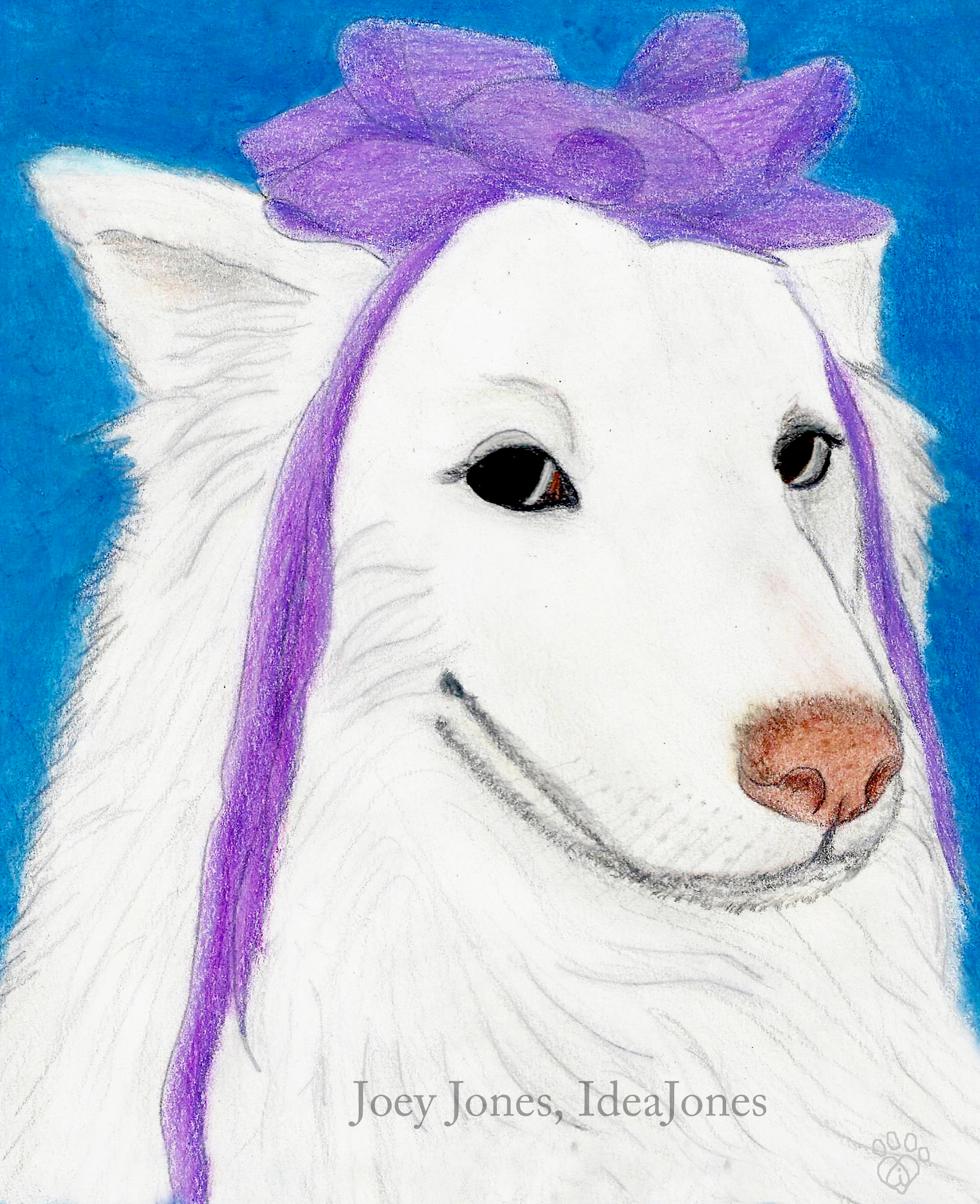
    This is a painting I did of Merlin, aka, “Mr. Darcy” from our book, Based On A True Story: Really (Almost) True Story. We got the notification from Amazon’s Kindle Scout publishing program that they’re going to consider our novel! This means that you have a chance to read an excerpt, and if you like it, vote for Amazon Kindle to bring the novel out. If you vote for it and it’s selected, you get a free online advance copy of the book!

    More info coming tomorrow, but we thought we’d share a secret with you… something that isn’t even on the page for the book’s campaign. Something the people who read early drafts of the book asked and we avoided answering directly…

    “Did any of this really happen?”  The short answer is “yes.” The slightly longer answer is “quite a bit of it, actually.” We did fictionalize events and people. So that thing happened, for example, but different people were there.  A lot of times, things happen in life and they don’t link up to form a longer story. Or you don’t know why it happened or what it meant. In a book, by fictionalizing reality, you get to string things together that happened on different trips, and include anyone you wish was there. Some of the characters are true-to-life. Merlin (aka “Mr. Darcy”) was our beloved friend, a puppy found stray on the streets who became a Service Dog and saved my life. He was just like the Mr. Darcy of the BOATS books.

    Some of the things in the book happened just that way. Pat, Mark’s mom and my friend, read the first draft of the book. She said it was odd reading it because she was present for many of the events in the book, so for her, it was part novel and part journal.

    Ultimately, for the novel, it doesn’t matter which parts are 100% accurate accounts. When you read a book, if you enjoy it, it becomes a real world, with real people. It’s just that this one happens to be real in this world, too, in places. Like Mr. Darcy.

  • Prepped to Go

    Prepped to Go

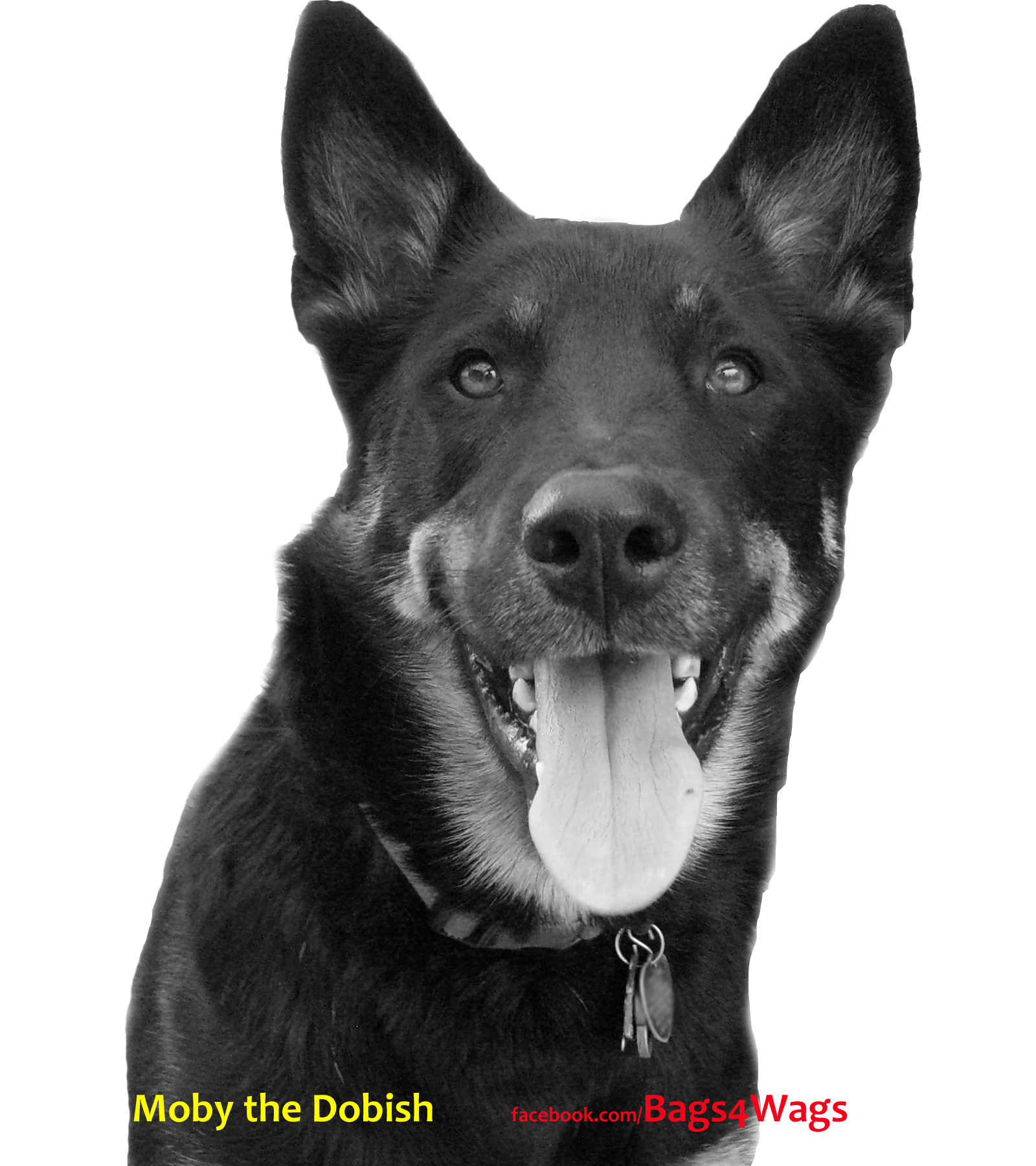
    Bowurrr! Who’s a good boy? I am! Keep your pets safe! ~ Moby the Dobish

    I confess, I’m mystified by reports I keep seeing of pets tied or chained to trees or fences and left to the mercy of the weather during the recent hurricanes. What are the people responsible thinking? What scenario do they envision — that somehow the dog will ride out the storm from his safe spot anchored to a tree, battered by gale-force winds and driving rain, unable to get away?

    While I do try not to be judgemental, no animal found in those conditions should ever be returned to the people responsible. No. Animal. Ever.

    The heartbreak of having to flee and being unable to take your pet with you is one I can only imagine in my nightmares. There must be situations where that is true. But.  Even in that last-case scenario, tying the animal down is unbelievable cruel. Mind-numbingly heartless.

    And a reminder to the rest of us before we judge — what plans have we made for our own pets? There are a lot of things that can happen besides hurricanes. Earthquakes, wildfires and other natural disasters. Man-made disasters such as gas pipe ruptures and overturned freight trains. Wherever you live, there is the outside chance that you might have to pick up stakes at least temporarily and go. What plans have you made for the pets who depend on you?

    A therapist once explained to me that the worst stress she knew of was the feeling of helplessness. Doing something, however small, about a stressful situation reduced the stress. With that in mind, why not make plans for your evacuation, and your pets? Here are some questions to get you started:

    1. What’s your evacuation plan? Following a suggestion, I looked up where we live and work, and what the likely evacuation routes will be for the most likely problem (here that would be flooding). I picked a rendezvous point for our family members that is likely to stay above water. Communications may be out, or jammed, during an emergency. Have a place to meet in case you’re separated.
    2. Get those kits ready. Go to a thrift store or  yard sale and find a backpack. Put basics in it like matches in a tin, a can opener, a first aid kit, and other essentials (like a couple of pairs of underwear and socks — if you have to evacuate, put them into a ziploc plastic bag). One for each family member, including pets. Backpacks are good in case you have to walk somewhere.
    3. Have an evacuation packing list in the backpack you can follow if you need to. This can remind you to include medications, etc.
    4. Have a gallon of water per person (or pet), per day, for at least 3 days on hand.
    5. Have a spare leash in your pet’s evacuation kit, and a copy of his/her microchip information, license info and health record, in a ziploc plastic bag.
    6. Do you have a crate or carrier for your pet? In an emergency, you might have to crate your pet. Some hotels will be more willing to allow a pet in an emergency IF you have a crate and old sheets to cover their furniture.
    7. Don’t wait until the last minute! If your area is under evacuation, get out while it’s still safe to do so! I have had to evacuate. It’s scary. It’s difficult. It’s also your best chance for survival. And if you leave promptly, you will have time to take your pet with you.
    8. What’s your “Survivaversary?” Pick a date and put it in your calendar. Every year, check your kits, replace things that have expired. We use the expired jugs of water to water plants in our garden. Update information and be sure your kits are good to go.

    More info on preparing your evacuation kits:

    ASPCA: https://www.ready.gov/animals

    Ready.gov: https://www.ready.gov/build-a-kit

  • Pack Mentality

    If you’re familiar with the phrase “pack mentality,” you probably think first of its negative connotation. But pack can be a very good thing. Pack can be family, a support system, a group working toward a common goal. To that end, this article:

    On Saturday, July 5 at 10:30am, local members of the Vagos Motorcycle Club will make a special appearance at Nevada Humane Society—hand delivering three-thousand pounds of pet food to help the homeless pets. The delivery will take place at Nevada Humane Society, located at 2825 Longley Lane in Reno. A parade of motorcycles will precede the trucks holding the donations.

    I suppose you could think of this as a pack to pack delivery. I just thought it was an uplifting article, and wanted to share it with you. The Nevada Humane Society shelter in Reno is a no-kill facility, so animals  that go there have a good shot at finding their “forever home.”