IdeaJones

Tag: art life

  • Reception Tonight — Time To Get Dragged Out From Under The Sofa

    Tonight’s the opening reception for one of the shows I’m in. If you can make it to Lincoln, CA, it should be a fun show. This is my second in this gallery and it’s a nice little gallery with welcoming people who really want things to be good for visitors.

    Writer Carol Terracina Hartman gave the show a mention in her Examiner.com column: http://www.examiner.com/article/nature-and-animals-art-show-opens-saturday-lincoln

    I’m a real introvert. I like people. It’s just that while extroverts gather energy from being around other people, introverts spend energy to be with others. I’m also shy, which isn’t the same thing. So I tend to either not say much or babble. Weirdly the fix for that seems to be accepting it and not caring much. People will like you or they won’t and there’s no predicting which way it will go, so you might as well relax.

    For past receptions, I’ve always been keyed up and tense. This time I’m just looking forward to it. The weather is beautiful (my gosh, it’s in the 80s in June in Sacramento. Usually it’s “how have we sinned, Lord?” hot. I’m couldn’t be more pleased and surprised if Oprah Winfrey showed up on our doorstep and yelled, “You get a car!”).

    So a short drive (it’s about thirty minutes away) with Mark on a beautiful day through the country to see what else is in the show (I’ve only seen a few of the other pieces). I don’t drink (well, I had a sip of Communion wine yesterday but I’m such a lightweight that almost put me on my butt), so finger foods, ice water and art. Should be a good evening. If you can make it introduce yourself — I promise not to hide under the furniture.
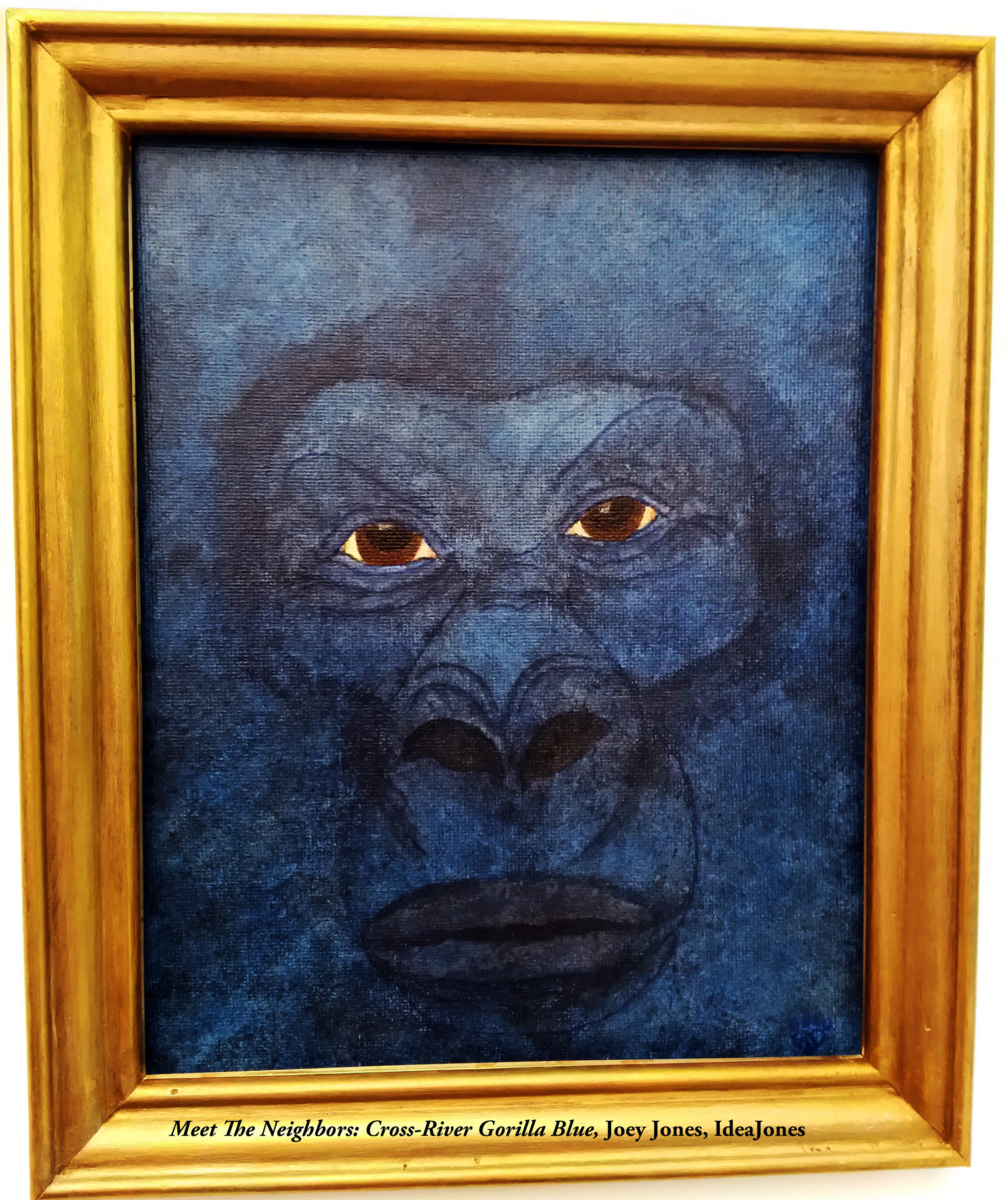
    On exhibit June 11 - July 1 at the Art League of Lincoln in Lincoln, CA.
    On exhibit June 11 – July 1 at the Art League of Lincoln in Lincoln, CA.
  • Birth of a (Painted) Owl

    Process is interesting to me — how someone makes a thing. I’m a sucker for factory tours (Jelly Belly in Fairfield, CA and the Budweiser plant nearby have fun tours), or watching someone create.

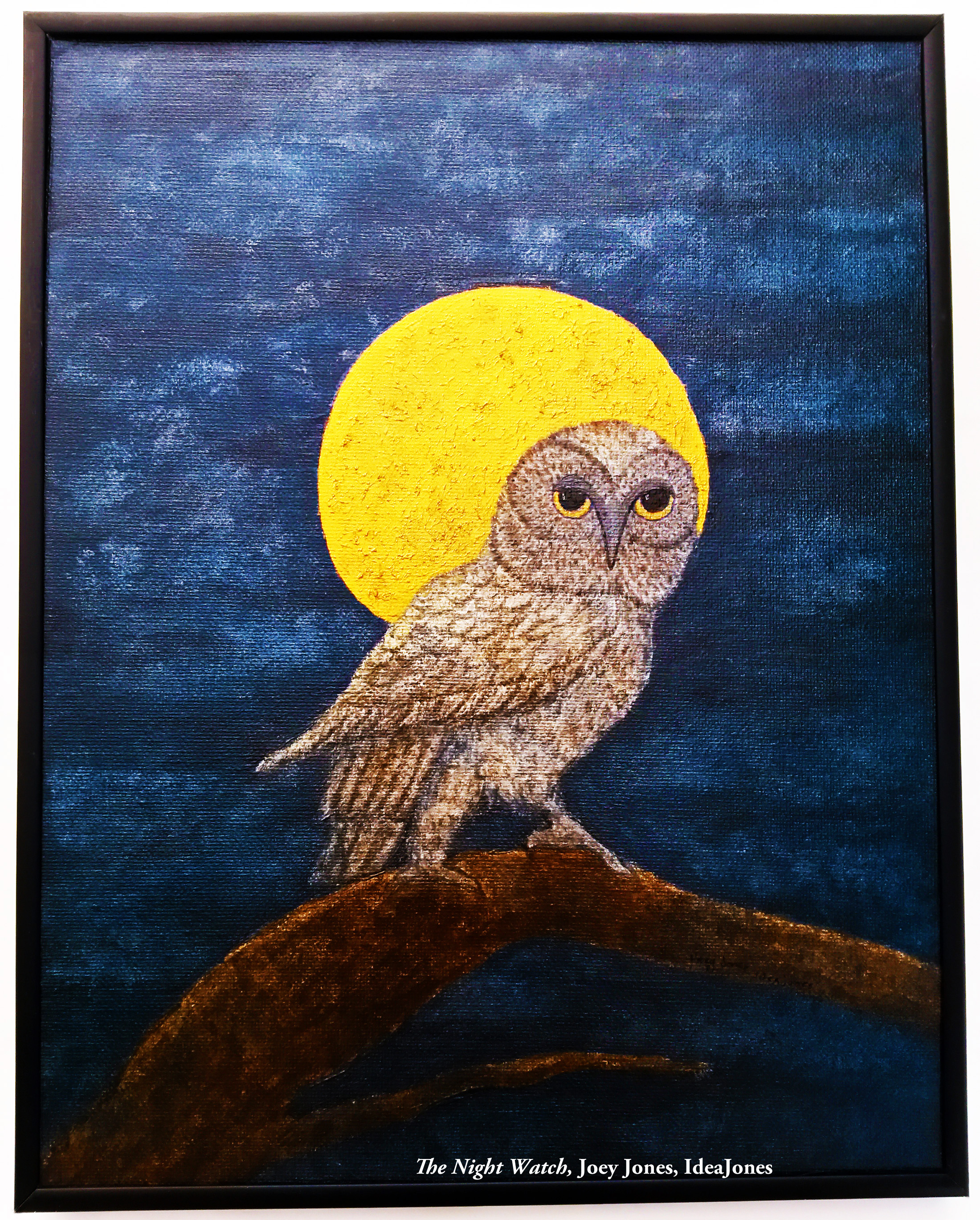
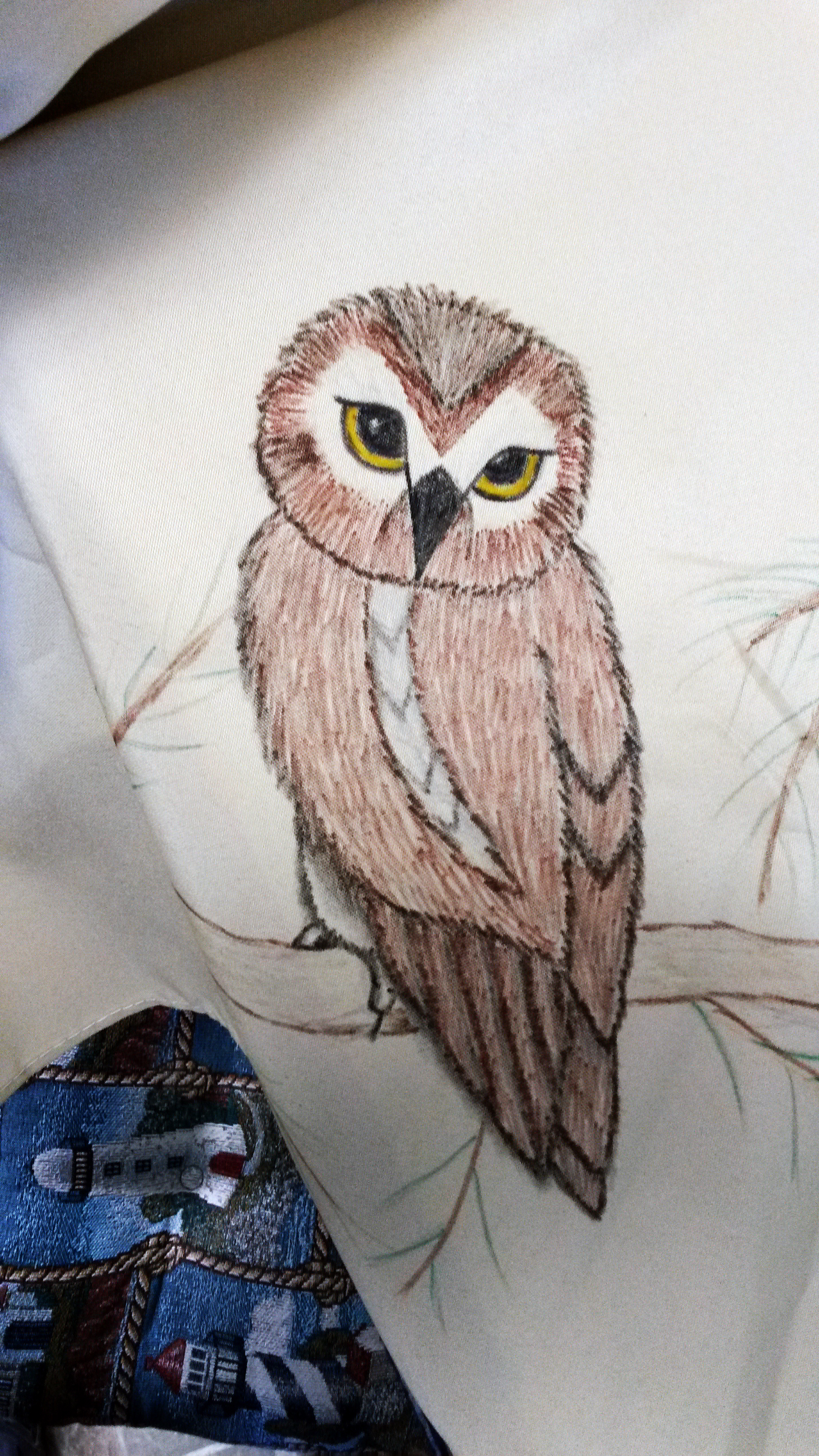
    The latest animal painting, “The Night Watch,” is the first in a planned trio of paintings featuring owls. I’d painted an owl before, in a hurry, for a charity fundraiser, and on a 9-foot market umbrella at that (first time for that, too):

    Detail from the beginning of a 9-foot painting of owls and their prey.
    Detail from the beginning of a 9-foot painting of owls and their prey.

    This is an early sketch for the finished painting, which featured owls and their prey catching sight of each other. At the time, I hadn’t planned to paint another owl, but then an idea started rolling around in my brain, an owl dancing.

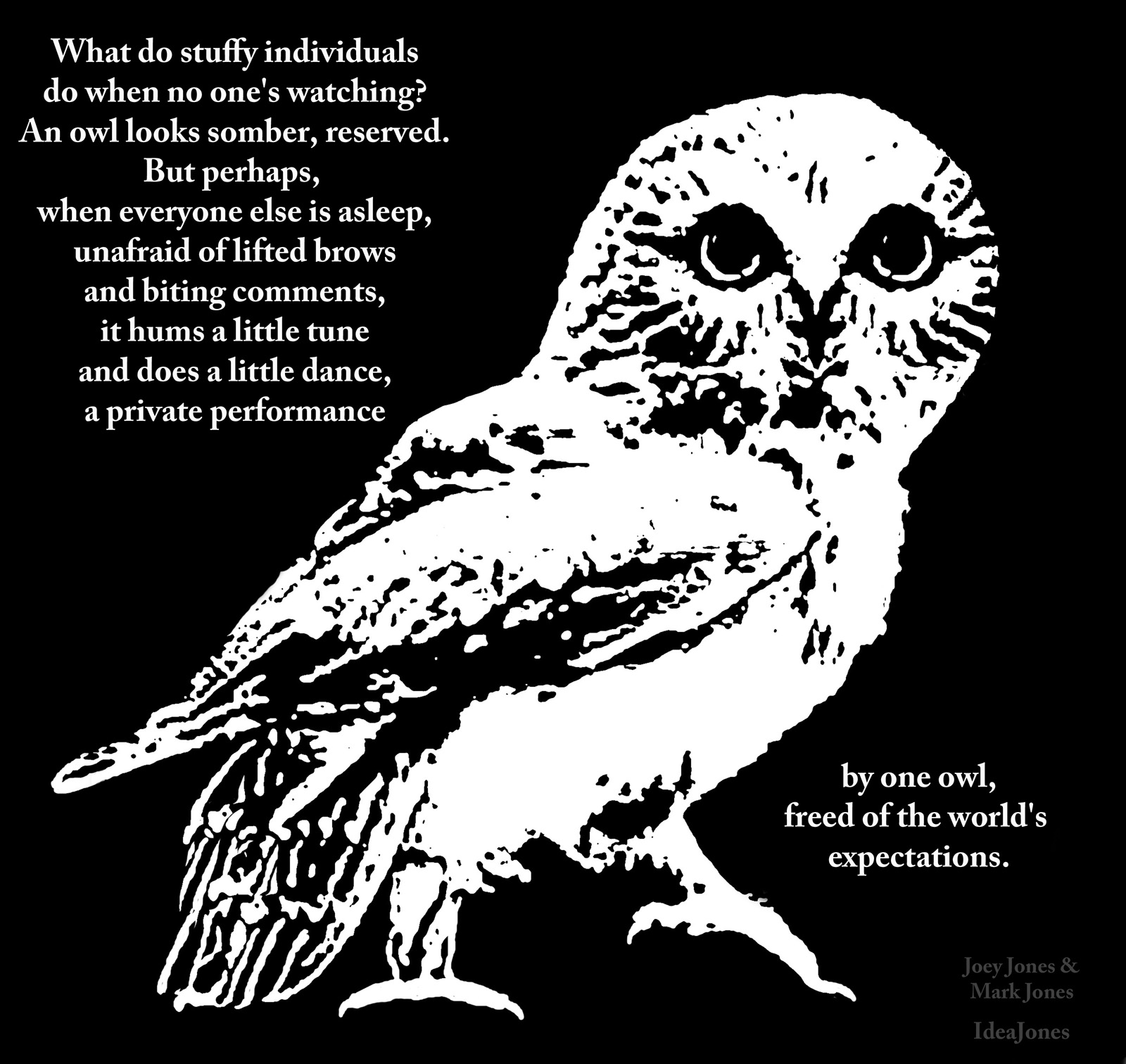
    A painting and poem from our Redbubble.com shop.
    A painting and poem from our Redbubble.com shop.

    When i finished the painting, the poem came into my head while I was looking at it. I think most of us feel we have a secret self, and that self has the potential to do things very different from the things others expect.

    So that led to an image of that same owl, about to take flight.

    The moment just before takeoff. Ready to fly, but not yet in the air.
    The moment just before takeoff. Ready to fly, but not yet in the air.

    In the end, I liked the idea enough to create the full painting in color, that moment just before vaulting into the sky, one last look back before launching.

    The first in a trio of planned paintings featuring owls, here an owl pauses before taking flight.
    The first in a trio of planned paintings featuring owls, here an owl pauses before taking flight.

    Each owl informed the next. Now The Night Watch is set to be in a show, and over the summer I’ll complete the series. It’ll be interesting to see where my owls are by the time I complete the last one.

  • Arts Life — Dispatches From The Trenches #3

    As we gather information from those who know about promoting artists and arts groups, we're sharing them. May your art thrive!
    As we gather information from those who know about promoting artists and arts groups, we’re sharing them. May your art thrive!

    Continuing with Lesson #2, Why Should Anyone Give A Rat’s? or What The Gatekeeper Wishes You Knew:

    2) Think like your audience.

    A producer put it best… “Put yourself in my listener’s shoes. Why should he care?” I’ve been told one of the biggest mistakes made by people looking to get an event, or their work, mentioned (or that golden holy grail, coverage, with an interview and everything) is that they assume everyone will automatically grasp why it’s fascinating.

    Uh… no. First off, nothing is universally interesting to everyone. And chances are the person reading your press release or the person listening to that radio station knows less than you do about your event or the topic in general. Maybe nothing at all. She has no idea why she’d like to hear your lecture on 15th century art or listen to Seymour Garbick play French country tunes on his oboe.

    If you already like Seymour Garbick, or his music, or French country tunes, then yes, all you need to hear is that there’s an event with that involved, that you can afford, at a date/time/location available to you, and yay, you make plans. But an any artist or arts group survive only on the support of people who already know about it? What about people who don’t know much about it but might be willing to give it a try?

    When you’re in your car, what grabs you? What hooks your interest? Don’t assume that the public just needs to hear about your whatever to be fascinated. You should be able to explain in one minute why it’s interesting. You can expand on it, but there has to be a core. Is Seymour playing a song that hasn’t been played in 100 years? A song that’s played a lot, but Seymour happens to be the composer’s great-grandson? Or is Seymour a brilliant musician with a great reputation? Somewhere, there’s something about Seymour, or the music, or the oboe, or something that makes his performance different from the others happening that week.

    Remember that unless you’re talking to the people at Seymour Garbick Oboe Performances Monthly, your first hurdle is a Gatekeeper who may not know anything about any of that, who is looking for things of interest to other people who may not. Remember that story about the concert by the elderly guitarist? If you hear that he’s playing a song that is almost never performed, or that he taught someone well-known, or that he’s an expert but there are few chances to hear him play live, you might be more likely to pay attention, and go. Certainly the Gatekeeper is more likely to see why it might merit coverage.

  • Arts Life — Dispatch From The Trenches #2

    As we gather information from those who know about promoting artists and arts groups, we're sharing them. May your art thrive!
    As we gather information from those who know about promoting artists and arts groups, we’re sharing them. May your art thrive!

    Let’s call this one Why Should Anyone Give A Rat’s?

    A conversation I had with someone at a gallery today brought back conversations I’ve had in the past with “gatekeepers,” the people who decide whether or not to cover something. These are editors, producers, reporters, critics — people who look at your press release, press kit, what-have-you and decide if there’s a story there. If they don’t see what will interest a reader, listener or viewer, your event won’t be mentioned.

    I’ve been given some pointers on how to make a project, or event, more appealing to a gatekeeper. I’m sharing what I’ve been told in hopes some of it will prove useful (and so I remember it myself). The idea of this lesson breaks into a few parts, so we’ll start with:

    How are you saying it?

    An idea can be more or less interesting depending on how you put it. I don’t mean “spin,” that manipulation that seeks to gild cowflops and call them gold nuggets. I mean looking at your event for what is new, unusual, or interesting about it. For example: I recently spoke with a man who organizes concerts and musical performances for a nonprofit. He was frustrated by their low success rate at getting noticed in the larger arts scene in the region.

    So we talked about a recent event he’d worked on, a concert by an elderly guitarist. Sounds ripping, right? Well, I asked a few more questions and using the techniques I’d been taught, the concert with the elderly guitarist became a “rare performance by an influential musician, an expert in classical and flamenco guitar…” All of which was true. The man rarely performs any more, and was a teacher who influenced other up-and-coming musicians, including one who opened for him.

    Not spin — what you say must be true and defensible. You should be able to make a strong case for what you’re saying if you need to. Look at your subject. What’s unusual about it?