IdeaJones

Tag: writing life

  • Conferences for Introverts: Big Events for People Who Like People In Small Doses

    Conferences for Introverts: Big Events for People Who Like People In Small Doses

    Huge groups of people! Yay?

    Often, extroverts (and there are far more of them than introverts, which makes sense — who is more likely to get out and find people to mate with?) think introverts don’t like people, or don’t like to go out.  They don’t understand that being an introvert has nothing to do with liking (or not liking) people. It’s about energy — what charges you, and what drains you.

    Extroverts are energized by being around people. They need to be around people as much as possible. This doesn’t mean they never like to be alone, but they don’t need to be alone.

    Introverts? We like being around people, but it drains our batteries. To recharge, we need to be alone. I can’t tell you how many times I’ve been running on fumes and really needed some alone time, only to be asked what was wrong or who made me mad. Nothing. Nobody. I just need to fill that battery — and being an introvert, that means some alone time.

    So how to cope with crowded events, like conferences and conventions? I’ve been going to more conferences lately, and having to think about how to get the most out of them (they’re expensive and you want to feel you got your money’s worth, which means identifying what take-away would be satisfying).  How to not drain my batteries to the point where I can’t take in any more input, or worse, Dr. Bruce Banner becomes The Incredible Hulk.

    The first step sounds obvious, but when you try it, you realize it isn’t. Accepting that you are an introvert, what you need to be at your best, and that it’s okay not to be an extrovert. Extroverts make up more of the population. The world is thus geared toward them. Like being left-handed in a right-handed world, introverts bump up against expectations that they want and need what extroverts do, and operate the way extroverts do. Nope.

    Where extroverts might look see, “6:30 PM: Cocktail Mixer” and think, “Hey! People! Fun! Drinks!,” your average introvert thinks, “Ooh. More people after a whole day of people. Trying to make conversation with strangers. Standing around feeling awkward. Meh.” This is because extroverts will get charged up and introverts will get more drained.  And if you say you just want to go to your room and watch tv, prepare to be asked if you’re okay. Several times.  It takes self-knowledge and self-acceptance to withstand well-meaning pressure to conform.  If you want to go and it sounds good, go and enjoy, and leave whenever you feel like it. If not? Don’t go, and enjoy, and hear the stories about what went on the next day.

    If you’ve met a few interesting people, you can also see if anyone wants to have dinner together, just a few of you. Then see them off to the mixer with your blessings. Best of both worlds. You get to really talk to a few people instead of making small talk with a lot of people, and then get your alone on.  Getting coffee is also good.

    Personally, I’d rather really enjoy and make a connection with a few people than try to paper a crowd with my business cards. The people I do chat with remember me, and I remember them.  Introverts tend to be good listeners.  I can’t give 50 people my full attention at the same time — but I can give 50 people my full attention one, two or three at a time.

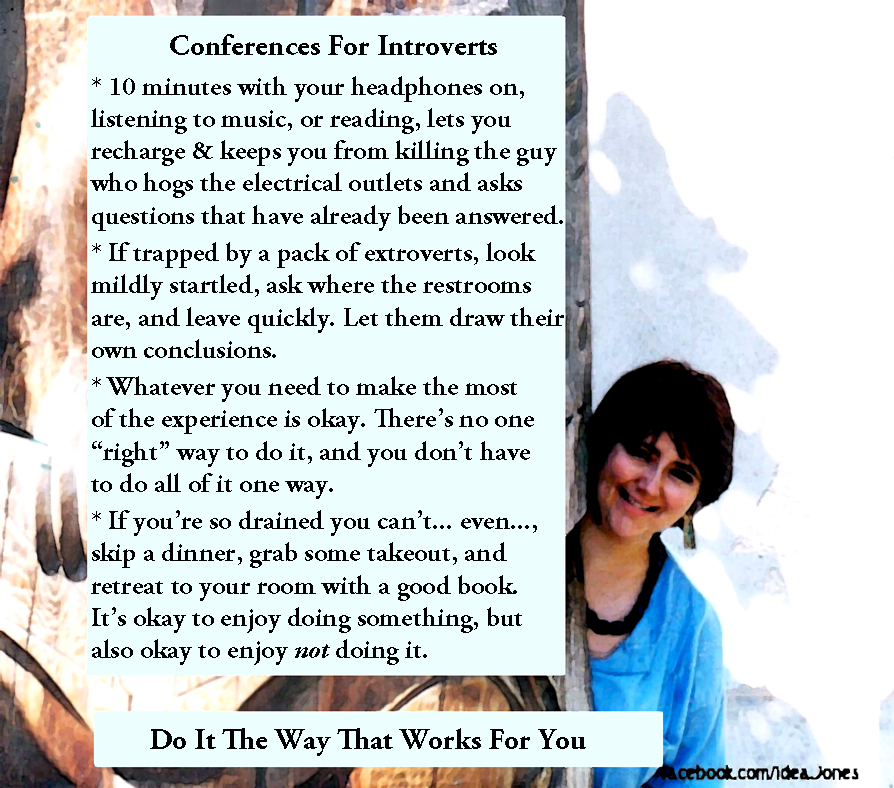
    The next step is to plan a bit. Have those ear buds available. Have a book on you. Look at the schedule for a few minutes you can retreat from the crowd. The classes are usually too close together to give you a break. Get the feel of the event. Is it okay to be a few minutes late for something? Is there one you really can skip? It’s often not necessary to do every single thing available to you — and better to be really present for what you do attend.

    Really, the secret seems to be doing it  your own way, in whatever way works for you and most promises that you’ll be able to get the most from the event. My mom and I had a saying, “Better to be a really good donkey than a sub-par fake horse.” We’re all weird. Be weird in your own way and rather than trying to be a fake extrovert, be a really good introvert.
  • Chick Lit v. Women’s Fiction

    Chick Lit v. Women’s Fiction

    I get it — human beings like labels (applied to others). It’s a natural function of the brain to categorize. It’s how we navigate the world. “That is similar enough to this so that I sort of know what to expect.”  Without it, we’d constantly be stuck, trying to evaluate every person, experience or thing that is even slightly unfamiliar.

    But nobody likes to feel “labeled,” especially when those labels are dismissive or derogatory.

    When we completed the first draft of Based On A True Story: Really (Almost) True Story, a writer acquaintance said it was great, he enjoyed it a lot, but he’d only read it if his wife bought it and left it lying around. He wouldn’t buy it for himself, he said, because it’s “Chick Lit.”

    I wasn’t sure how to take that. Here, in order, are the usual reasons people are dismissive of “Chick Lit:

    • It’s about relationships.  Well, so is almost every other book, with the possible exception of Chilton automotive repair guides, and the dictionary. The Bible talks a lot about relationships. So does War & Peace.  Humans are social animals, and relationships are central to how we live our lives, and most of the things we do. Try building a freeway by yourself. If you build it with others, that involves relationships. So as a criticism, “it’s about relationships” falls flat.
    • It’s escapism. Well, duh. So is Treasure Island, Moby Dick, and a lot of other novels. It may talk about “important” themes, but the first job of any novel is to entertain. I grew up around entertainment — the working, blue collar end of it, like boardwalks and nightclub shows. The ride has to be worth the price of the ticket. Nobody cares what you have to say if you’re not entertaining when you say it. And life includes a lot of seriousness and pain. The mini-vacation brought to you by a good book can save your sanity. If a book manages to take someone away from a stressful day and make her (or him) forget and have fun for a little while, that is a beautiful thing.
    • It’s “too light” or “frothy.” By which you mean…? Go ahead and try to come up with a valid explanation that doesn’t include sexism in it. I’ll wait…

    Ultimately, that’s what is at the bottom of “Chick Lit as insult.”  It’s usually by women. Has female protagonists. Generally includes humor.  But because it’s “female,” it gets relegated to a pink, frilly literary ghetto. You don’t see the “dick lit” section in a book store.

    As near as I can tell, most often, “Women’s Fiction” is “Chick Lit” without a sense of humor. This is not a criticism of books labeled “Women’s Fiction,” by the way. What I’m saying is that because they usually have female protagonists, “Women’s Fiction” or “Women’s Literature” books aren’t simply considered Fiction, or Literature. No, they’re off in their own category, as though they couldn’t lift the barbells and were relegated to the sidelines. And yet, being more serious in general, Women’s Fiction books are considered more important and valuable than Chick Lit books.

    I’ve heard it described as the difference between steak and popcorn, steak being considered more worthy than popcorn. Yet both steak and popcorn follow the same path, from a digestive standpoint. Popcorn is a whole grain, with its own nutritive value. It isn’t that steak is better somehow. Steak and popcorn are both good and give you different things. I wouldn’t want to watch a movie with a bucket of hot, buttered steak.

    A good laugh when you need it, whether it’s a bark of surprise or a hoot of recognition, helps relieve stress, so it’s good for your health, and lowering your stress makes you better able to deal with the often confusing, confounding humans around you, so it’s also good for their health when you laugh.

    So I’ll go on peddling popcorn and busking on the boardwalk, proudly, and let others categorize my work in whatever way works for them. My big hope is that I can do for someone else through my writing what books have done for me in my darkest times. And if someone else calls my work “Chick Lit,” I’ll wear the badge with pride.

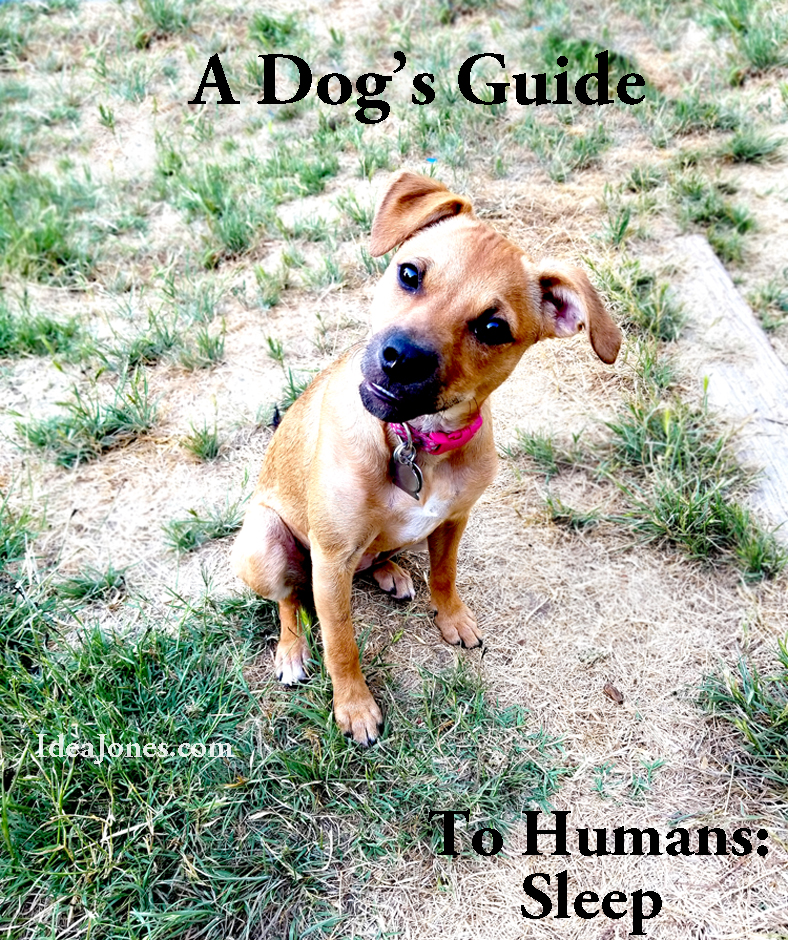
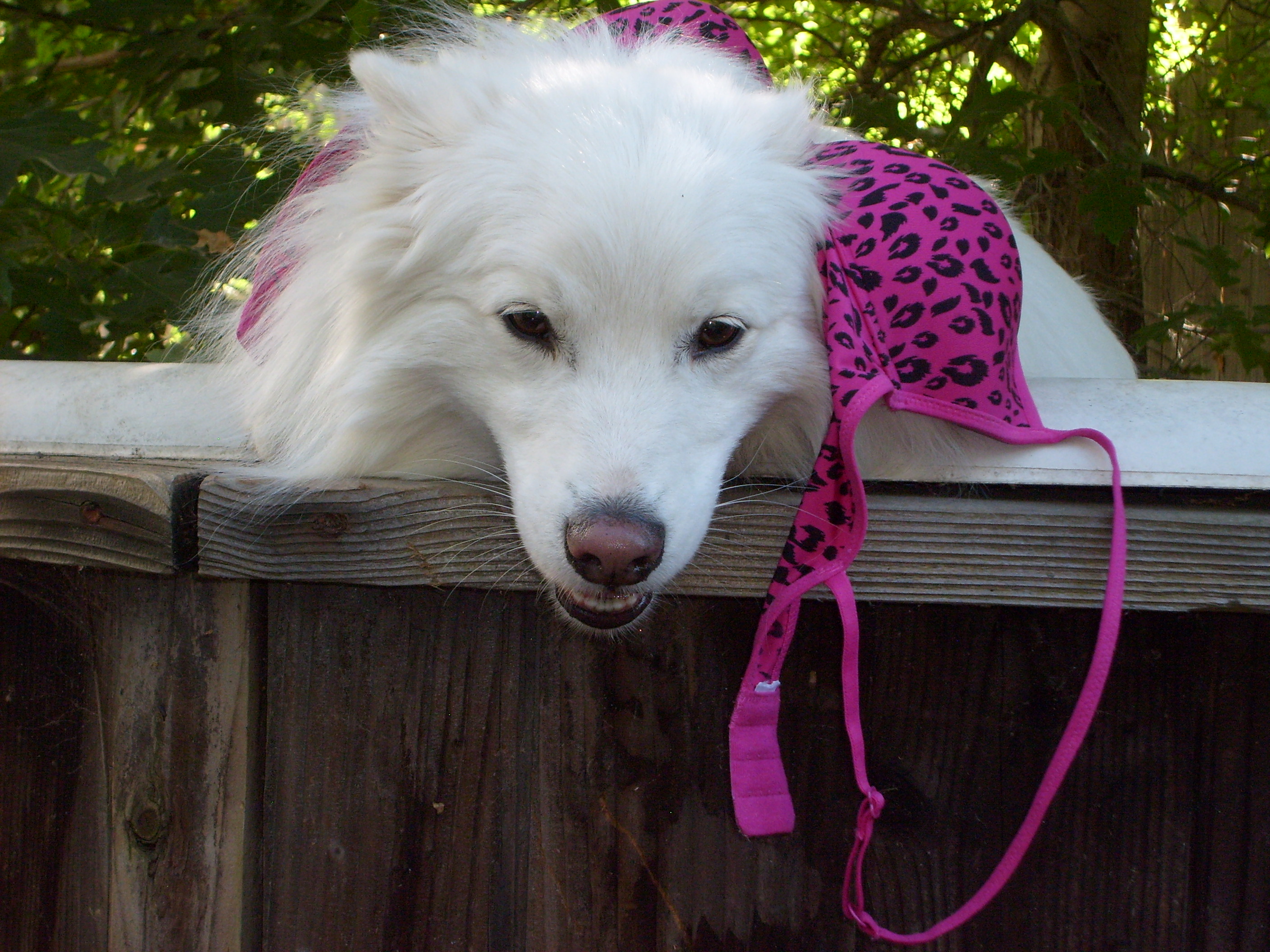
  • A Dog’s Guide To Humans: Sleep

    A Dog’s Guide To Humans: Sleep

    Humans are always tired.

    As with so many things, humans have a strange relationship with their own bodies (just wait until I get to humans and elimination. Oh my dog, that’s a whole subject in itself).  They are so uncomfortable in their own skins that they do things to themselves that can only be described as straight-up freaky. One of the things they really can’t figure out is sleeping.

    How, when, where or with whom, humans can screw all of that up beyond any dog’s ability to understand, but I’ll do my best to explain it.

    • Humans don’t understand sleep.

    I mean, quite literally, they don’t grasp the concept. Not really. They seem to do all right as puppies, but once they can walk unassisted, they start experimenting with it.  Their puppies, called “babies,” are the most sensible stage of their development. They eat when they’re hungry (well, they demand food), poop when they need to, and sleep when they’re tired, unless someone or something prevents them. Yes, you read that right — adults try to manipulate their puppies so they sleep not when they’re tired, but when it is most convenient for other adults. This isn’t surprising when you realize that this is what the adults do to themselves and to each other.

    They have a schedule that is baffling. They wake up, usually after not getting enough sleep, so they’re cranky and clumsy. By ingesting the runoff of water in which various plants have been dredged, they open their eyes, at least somewhat, and begin to communicate. Prior to drinking the runoff, they communicate mostly in grunts and gestures. After, they communicate in sharp, harried barks and run around grabbing things and  putting them into other things, usually some sort of bag or box, and complaining that they are now late.

    Laugh if you will — this is how they start most of their days.

    They spend their days in a variety of behaviors, most of which seem to have little practical value, but do keep them occupied and, for the most part, out of trouble. During the afternoon, when their energy dips, they do not rest. Instead, they ingest more runoff so they can keep doing whatever it is they’re doing.

    Then they come home and do more things, not very effectively, because they’re tired. When they get tired enough, they slump on the supplementary dog bed (aka “sofa”) and stare at boxes with emit light and sound, which helps keep them awake. Sometimes these are thin, small boxes they can hold in their hands. Other times they are very large boxes.

    Eventually, long after they should be asleep, they will topple over and sleep in front of the glowing boxes, still resisting the urge to go to their comfortable beds to sleep. Eventually, many of them do rouse somewhat and stagger to their beds, but some stay in front of the glowing boxes so they can wake in the morning and complain about the parts of their bodies that hurt.

    • Humans don’t trust sleep.

    You might have read that more than once only to discover that it still makes no sense.  This is because it makes no sense.

    Humans dislike sleep. They brag about how little they get. They pretend they don’t need it. They talk about “snatching” or “grabbing” it. Where any sensible dog will tell you that if you’re tired it’s time to sleep, humans avoid it as long as they can.

    Instead of viewing sleep as a necessary part of the healing process, humans treat it like an enemy who must be conquered. Even as they are staggering, bleary-eyed and foggy-brained, they tell anyone who will listen that they “don’t need that much sleep.” It causes them untold health risks from accidents to heart attacks, but they take pride in their unwillingness to lie down and close their eyes as if simply being able to keep their eyes open long after their brains have stopped working were some sort of accomplishment.

    It is worth considering what marvels they could accomplish if only they weren’t so tired all of the time. And cranky. I’ve heard the phrase so often that the one word doesn’t sound right without the others. Tired and cranky.

    I doubt we’ll ever know what humanity could be if it only it got the occasional nap.

    I will write my next dispatch as soon as I can. Meanwhile, it’s time to go to bed. ~ Gingeroo