IdeaJones

Tag: writer

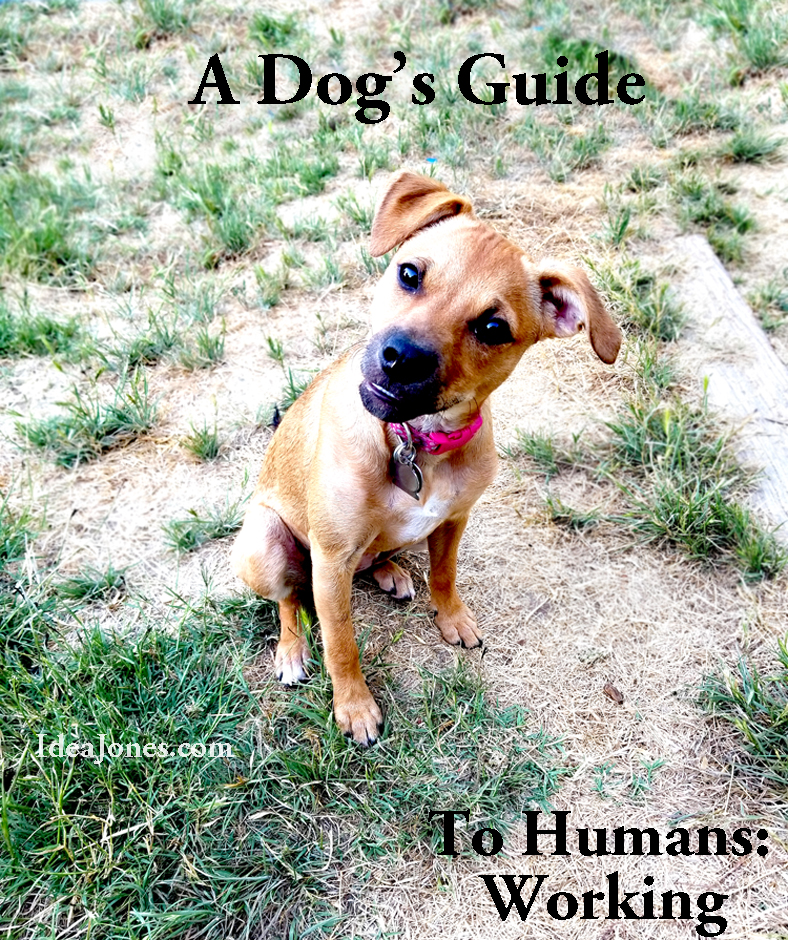
  • A Dog’s Guide To Working With Humans

    A Dog’s Guide To Working With Humans

    Humans are both fascinating and confusing.

    If you want to work with humans, there are a few important things you need to know.  I’ve been working with these humans for a couple of months now, and I can already tell that working with humans isn’t as easy as working with dogs:

    • Humans talk about cooperating a lot more than they cooperate.  Sometimes this is because they really don’t want to cooperate.  I overheard someone saying “This shit has too many captains.”  He pronounced it “ship,” but I’m not going to make fun of him for a speech impediment.

    As you know, among dogs, we all sort out who does what and do what we do best.  I have the best sense of smell in our pack, but Reo is better at spotting squirrels in trees. I’m little and fast, but Moby is big and strong. Humans can use can openers. We all have our role to play.

    Humans have an “all or nothing” approach to control. They don’t want to give up any, or they pretend they gave up all of it.  And nobody listens to anybody just because she’s good at that particular thing. They think listening to someone who knows what she’s talking about means giving her some sort of power over them… How do humans get anything done? They overcomplicate things so much.

    • Humans have the awareness of rocks.  Okay, their senses are, to be kind about it, very limited.  They stare, baffled, at the tree you’re barking at, because they can’t hear or see the squirrel right over their heads. They step in things because they can’t smell them.

    This lack of awareness of who or what is around them causes them endless problems. When a pack works together, we pay attention to where the other members of the pack are and what they’re doing. If Moby flushes a rat, Reo and I need to be able to help him catch it. If we don’t pay attention to each other, the rat gets away. Which means we’ll probably have to chase that same rat another day — plus a bunch of baby rats.  If I flush a rat, I need Reo and Moby to help me, because I’m a baby and the rat is probably almost as big as I am. If they aren’t aware of me, the rat gets away, or I’m rat chow.

    Humans engage in things far more complicated than chasing rats, but usually they don’t seem to be aware of the other people involved. If Reo chases a rat and it runs my way, I have to chase it toward Moby so he can take care of it. Moby needs me to do my part, so he can do his. But humans take on projects where each person  has to chase his rat, so to speak, on time, so the next person can chase her rat.  But they ignore all of the other people waiting for them and do whatever they feel like, whenever they feel like it, so the next person waiting for the rat to come his way misses it, or gives up and goes home.

    No wonder there are so many rats in the world.

    The humans are interesting animals with many bizarre habits, and the ones I have adopted are very nice, even if they are, as all humans seem to be, somewhat limited.  My studies continue, and I will send more dispatches as I can.
  • Creating While Distracted

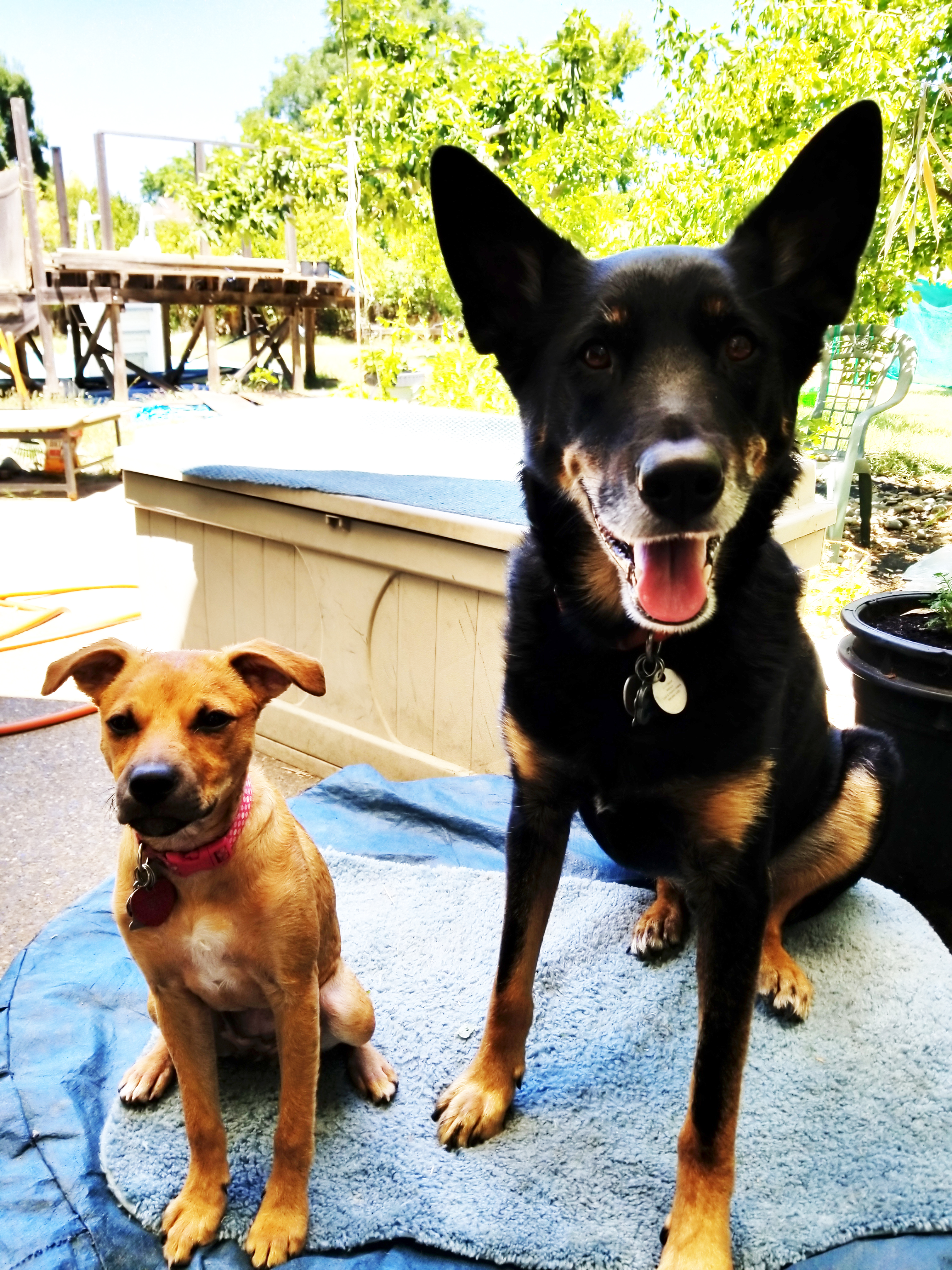
    Gingeroo and Moby, a puppy & her (adopted) dad.

    We have a new family member, Gingeroo, who joined us almost two months ago. She’s an adorable little girl and before anyone asks, she is 100% Pure Yorgess… “your guess is as good as ours!”  She’s a mixed breed, some sort of hound/terrier mix. We’re thinking she’s part Basenji, as Abby was (always miss you, Princess Hound!).  Gingeroo does a lot of things Abby did, from trying to climb on everything (including people –we’re working on it) to holding things with her paws like a raccoon. She even has the Basenji speaking voice, which sounds, so Mark’s mom used to say, like something from The Exorcist (think someone talking in a very raspy, growly voice).

    Moby loves his little baby (she’s almost five months old now). He lets her take tennis balls, roll in the grass with him, even cuddle up to his tummy.  And when she gets out of control, he gently but firmly corrects her. She’s a spitfire, lots of energy and focus, but once she settles down, very sweet and cuddly.

    We’re trying to work with a puppy in the house, and for other reasons, it’s been pretty stressful here.  There are a few things we’ve figured out:

    * When it’s not normal times, don’t try to pretend it is. Acknowledge whatever challenges there are and plan accordingly. You don’t have to let things stop you — but if there’s a hill in your path, it doesn’t help to pretend there isn’t. Make plans to climb the hill.

    * If a situation isn’t likely to resolve itself quickly, adjust your expectations. A friend said, “If it’s a marathon, not a sprint, train for a marathon.” She went on to say that you have to get your rest, drink plenty of water, exercise, eat a healthy diet, all that stuff, just as if you were going to run an actual marathon. This may be the smartest advice we’ve gotten in years.

    * “If the straight path is blocked, get creative about going where you need to go. Other paths may still get you there.” Great advice from another friend. Right now, my schedule revolves around little Gingeroo, who is learning to go outside to potty, but has to go outside about every other hour. Plus, I don’t want her to think if she goes, that’s it, back in the house, fun’s over, so after she goes, we play for a while. This is seriously cutting into my productivity, but will pay off in the future. So I take her out to play, bring her in, get her settled with a toy, and get some work done until we do it all again in 90 minutes. Which means that if I’m not as productive as I’d like, at least I’m productive, so I don’t lose patience with her, and she’s getting really good about housetraining, since it’s a positive experience.

    We’ve had other times when life was challenging, sometimes very challenging, and it was frustrating, on top of what was going on, not to be getting anywhere creatively. Fortunately, now we know how to navigate the rough patches in the road until they smooth out, which brings me to the other best advice I ever got:

    “The universe doesn’t recognize stasis. Things can grow or decay quickly or slowly, but they can’t stay the same.” This was our doctor and once we really understood it, we realized it meant that change is part of the system. Enjoy the good and survive the bad knowing it won’t last forever.

    “Better is always coming. The trick is to hang on until it gets there.”  Mom, who lived through The Great Depression, told me that.

    Hope your good stretches are longer than your bad.

    Gingeroo and Moby enjoy the summer.
  • Writer’s Gold

    Writer’s Gold

    That’s what I call it, “writer’s gold,” when you meet someone who enjoys your writing. Writing is such a solitary art. It’s ceremonial. Writers have their traditions, habits and rituals. For me, it’s turning the lights low, getting a cup of tea, putting on some soft, quiet music, turning off the ringer on my phone, and surrendering to the gravitational force of the story. It pulls me in and I’m there, with those characters, seeing, hearing, smelling and experiencing what they do.  Mark says that you could light fire to my chair when I’m writing and I wouldn’t notice — and he’s not far off.

    But you walk forward, struggling to capture the vision in your mind and describe it, not knowing if anyone will understand what you’re trying to say, or enjoy what you’re creating. It goes out and (hopefully) people read it, but you don’t sit there with them while they do (and good thing — when a writer watches someone read his work, it’s uncomfortable for both parties. The writer is hyper-focused on the reader and trying not to ask “What? Where are you?” at each sigh, laugh, gasp or facial expression, which is annoying for the reader and I’ve been there, but trust me, it’s almost impossible to resist).

    So for the most part, a writer works in solitude, builds his paper boat, launches it onto the pond, and retreats to build another boat. That’s why it’s so great when someone has read something you wrote and really enjoyed it. I talked with someone the other day who read the opening of “Based On A True Story: Really (Almost) True Story,” and told me she enjoyed it a lot, it made her laugh, she recognized moments in it as moments like ones she’s had… She went on to talk about the scene with the cake and said she could see it in her mind and feel what was going on, laughing as she recounted it back to me… She also said that she was frustrated because she couldn’t keep reading and wants to buy the book!

    What I hope is that the book will give the reader a bit of an escape. Life can be stressful and when it is, books have been my refuge. This person has a stressful job, and the idea that for a moment she left it behind while laughing over our book makes me happy. Hearing her enjoyment gives me heart to build more paper boats and launch them.