IdeaJones

Tag: #safeharbor

  • The Biggest Little Thing I’ve Done So Far

    The Biggest Little Thing I’ve Done So Far

    I think 2020 is called that because by September, this year has seemed 2,020 months long. It’s so easy to lose hope. I don’t spend a lot of time on social media, especially since I’m still recuperating after Covid19 and there’s only so much energy, but it seems every time I do go on Facebook or Twitter, there’s someone fighting sadness, anxiety and/or depression who asks for some sign that things can get better.

    When I feel that way, I think about 2016-2017. It seemed like a parade of the most hateful people in the world were just partying in the streets. Meanwhile friends who are gay, or non-binary, or non-white, or otherwise in some way didn’t fit what those jerks thought was “acceptable” were being trolled by morons saying that they should die. People were being harassed, injured, killed.

    I’d heard about Safe Harbor Pins, safety pins worn to signal that the wearer was safe to approach, especially if you felt threatened and needed someone, even a stranger, to help you feel, or be, safe. There was some controversy — some thought that too many people would congratulate themselves on wearing the pin and not do anything else.

    Symbols are powerful things. When you adopt one as part of your identity, you are making a statement about where you stand and what you believe. But then there were reports of white supremacists hijacking the symbol, wearing safety pins as a threat, or to fool others. Artists talked about how to take that symbol back.

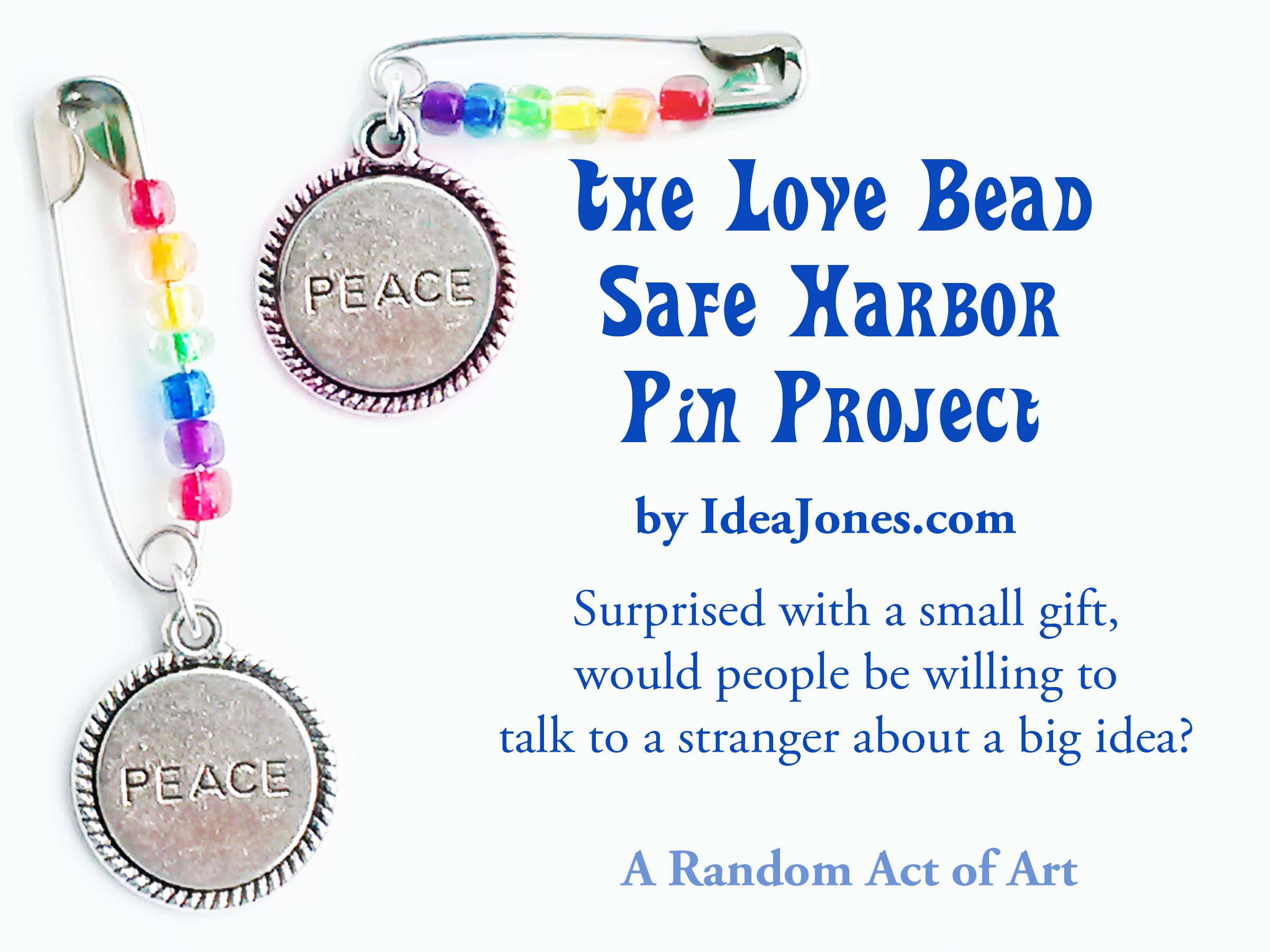
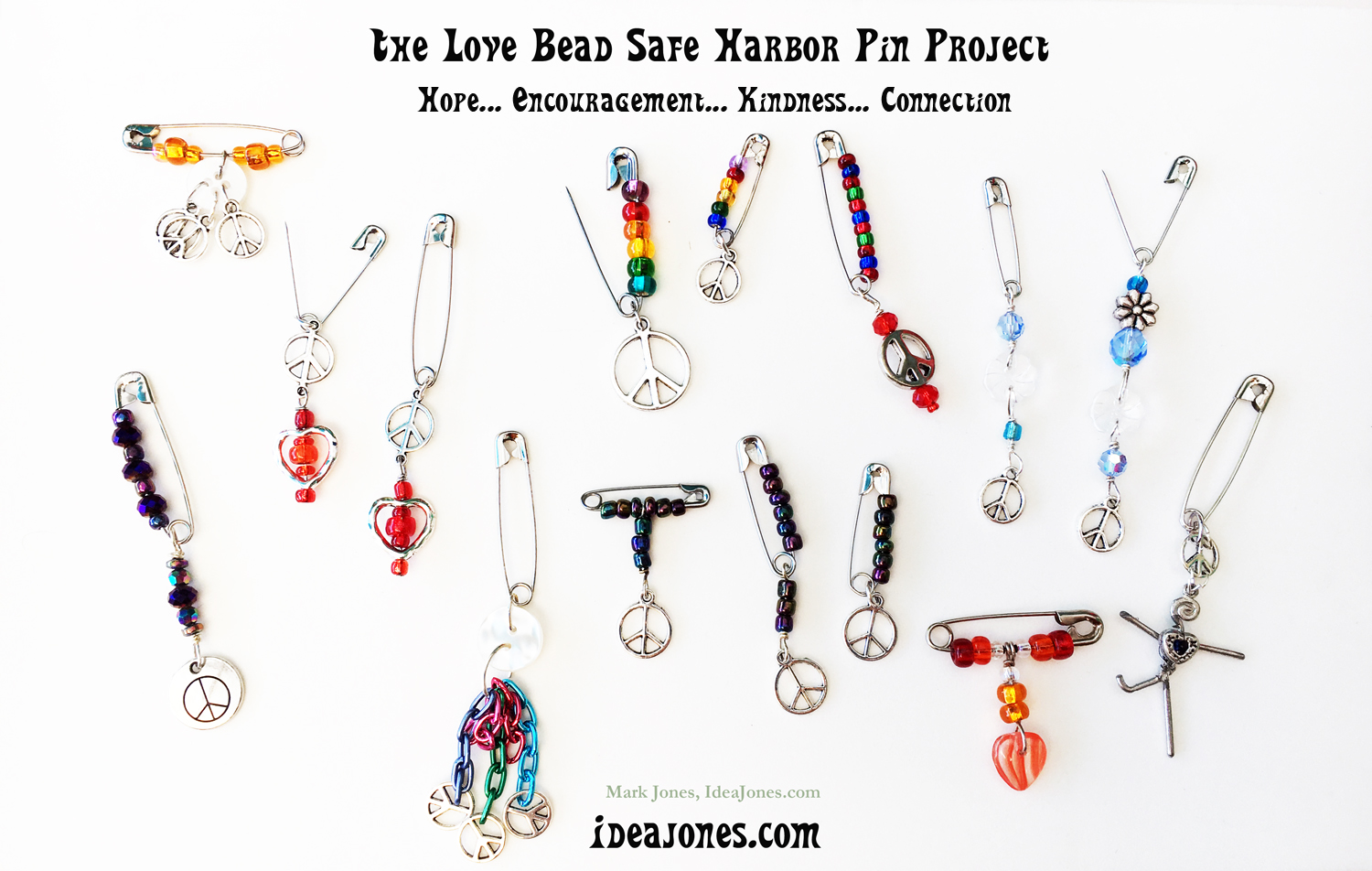
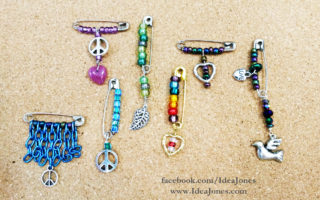
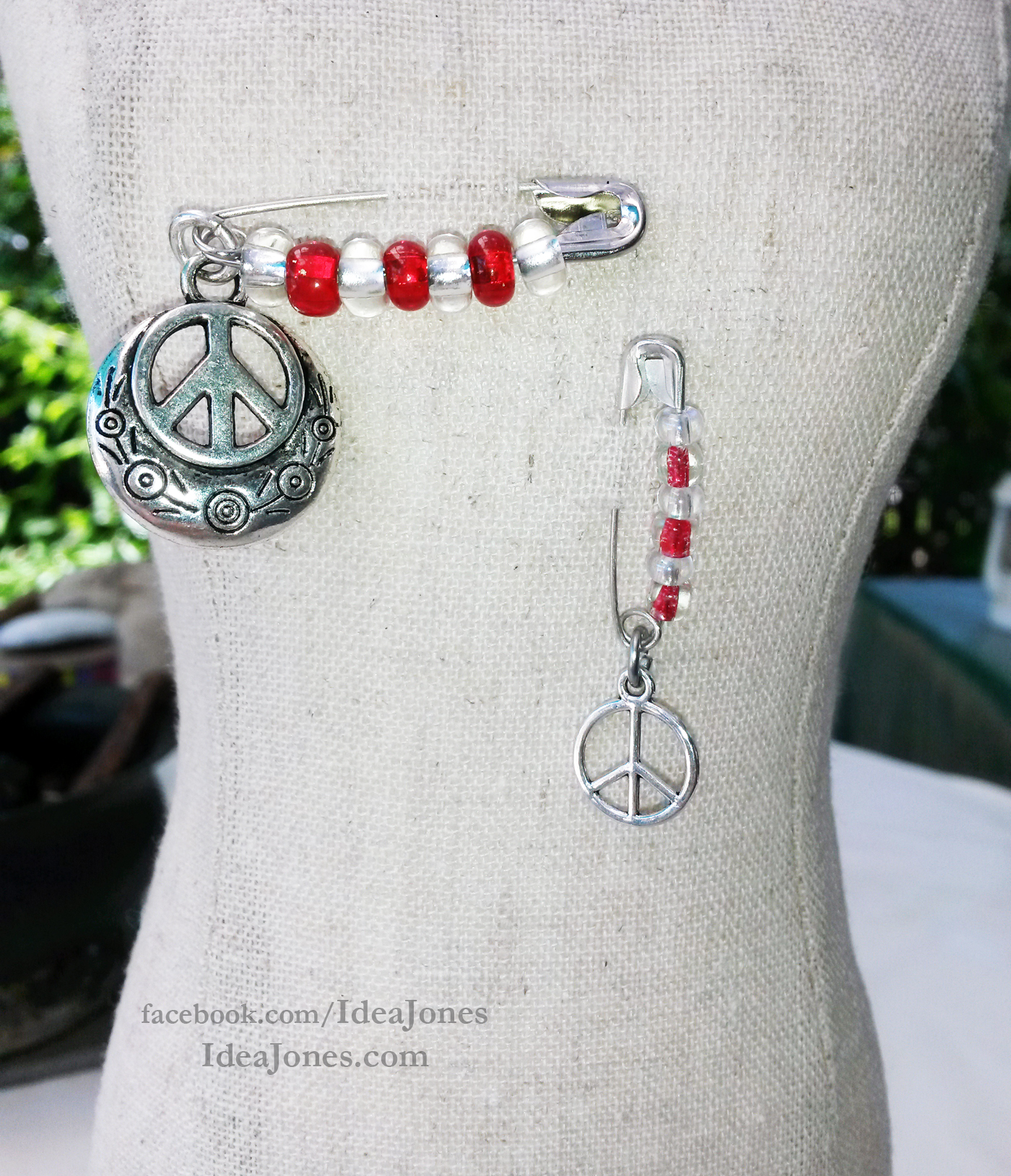
    So I started making them, and beading them. Adding charms, buttons, all sorts of things. I didn’t think people would really want them, but I went to a local women’s march with a few pins, thinking it would take me hours to give them away, if I even could.

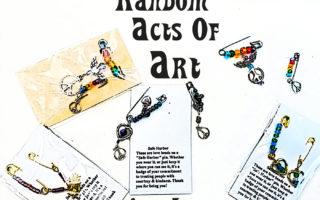
    I’m an introvert, and shy, so talking to strangers is not my thing in a big way, but I did approach some people. I’d put single pins on little cards explaining what they were. Withing 15 minutes, I’d given them all away, and people were asking how to make them.

    I felt the need to stand and make a statement, and others did, too. One young woman gave me the idea to put two pins on a card, one to keep, one to give away. I took time off from everything else I was doing and, with the help of my husband, made over 2,000 pins in total by the end of the project. I got hand cramps, calluses, and more pin pricks that I can count.

    We visited San Francisco during the anniversary of the Summer of Love. We visited Los Angeles. We talked to people from around the world and around the U.S., including people from every political party. We talked to people from many economic backgrounds, cultures, and belief systems. This was designed not to be a political project. Over 1,000 people were stopped by a stranger and asked if they would like a pin. The meaning of the pin was explained, and that wearing it was a symbol that you believed all people — including those you don’t understand, those you disagree with, even those you dislike — deserve to be treated with dignity and respect.

    And they did. In overwhelming numbers. Parents talked to their children about respect and how they treat people. Teens talked about why they give respect to some people but not others. Adults talked about their fears for friends, family.

    We were hugged fairly often. Kissed once by a tourist from Paris. Offered money (which we declined. A gift is a gift). Some people cried. Too often, we heard from people who had been going through rough experiences, being bullied, hurt and otherwise abused. People told us who their second pin was going to. We were privileged to be included in conversations people had with their kids, friends, significant others about how they choose who to be kind to and why – and that it is a choice.

    Now, with so much violence and anger, the threat of a global pandemic and a future that looks even more uncertain than usual, I think about more than 1,000 people, stopped by a stranger, standing up in front of other strangers, talking about freedom, kindness, and the worth of human life, and making a conscious choice to state their belief in the value of every human being.

    They walked away taller, beacons of light in the darkness. And they are still out there. THAT is what I reflect on when the world is chaotic and frightening. Over 1,000 people, and the even larger number who contributed to them being who they are.

    If you see this and you happen to be one of them. Thank you. You light my way in my dark hours.

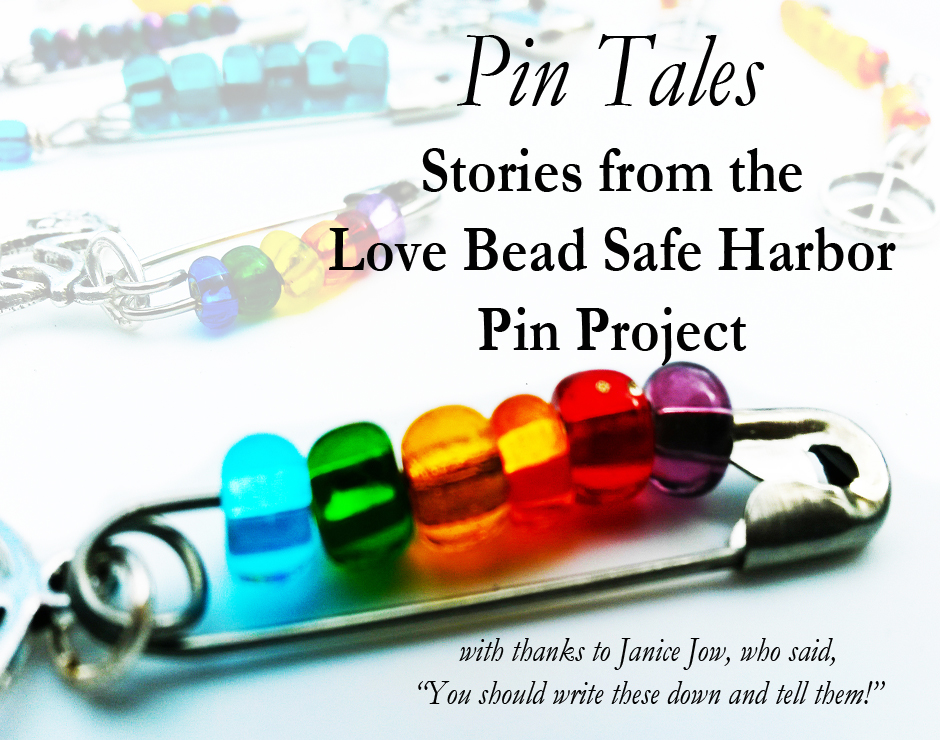
    Should you want to read short stories from the project, just search for #lovebeads to find stories from our adventures.
  • Of Love Beads and Novels

    Of Love Beads and Novels

    Hi! This month has been even busier than usual. Endings, beginnings, recuperation, it’s all been part of this month. There’s a tradition that says you should start the year as you mean to go on. Eat the foods you love, do the things you love, be with the people you love to show the new year what you want from it. If it’s true, this is going to be an interesting year.

    Excerpt on Kindle Scout — free to read!

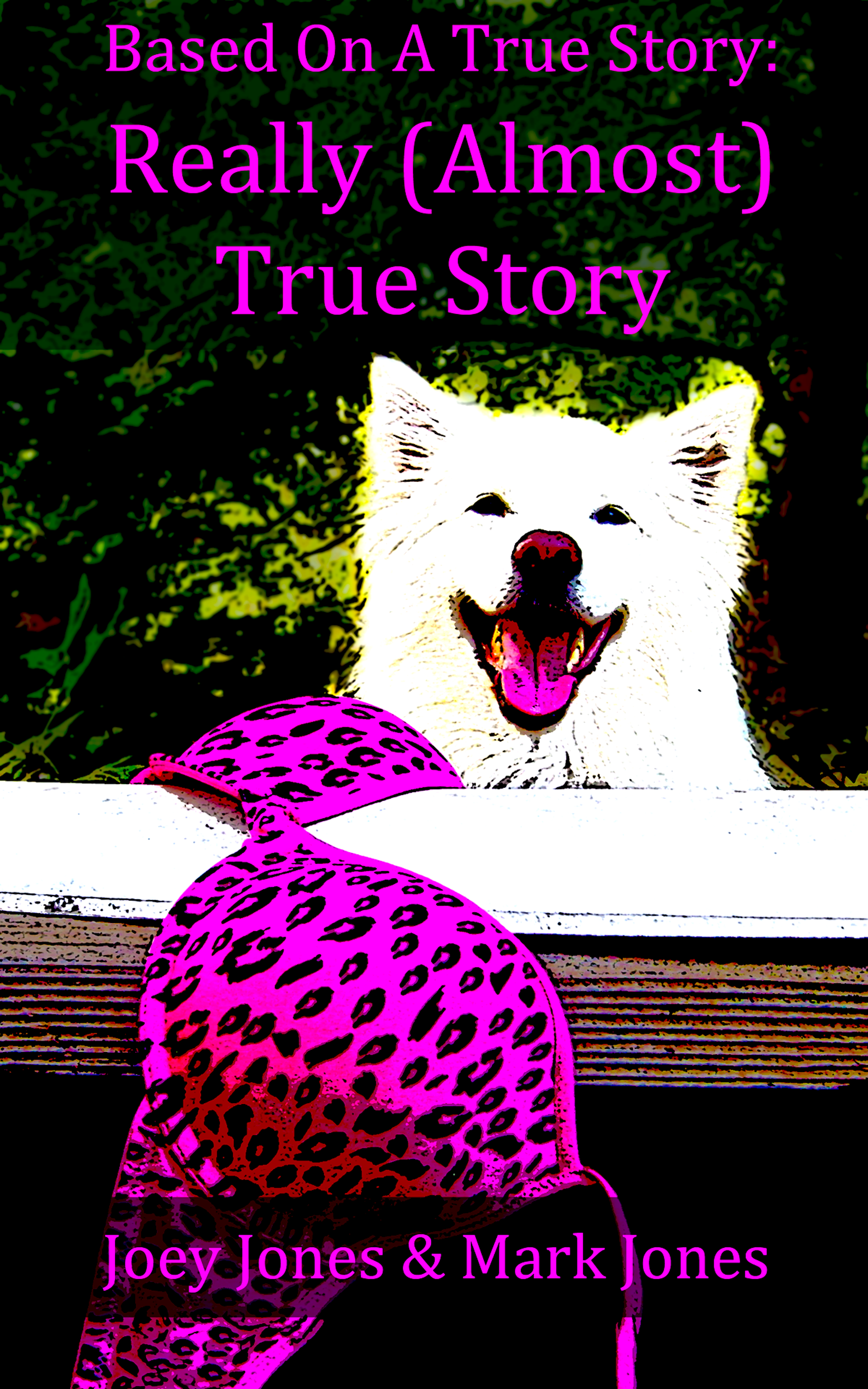
    The beginning… our book, Based On A True Story: Really (Almost) True Story, was selected for Amazon’s Kindle Scout program! This means an excerpt is available on the Kindle Scout website, and you can vote for it to be published. It’s free to participate, and if the books you vote for are selected, you get a free online copy!  You do need to sign up for an Amazon account (free) if you don’t already have one, then you can log in and become a Kindle Scout, helping new authors and getting free book! The link is: https://kindlescout.amazon.com/p/2ZS8M8QUBB0QC

    The ending… the Love Bead Safe Harbor Pin Project is now officially over (for us — anyone can make pins and give them away). For the project, we made and gave away 2,000 hand-beaded Safe Harbor pins, promoting the idea that all human beings deserve to be treated with basic dignity and respect. In three cities, we talked to people from many countries, economic levels and cultural backgrounds about that idea. One thousand people stood up in a public place and confirmed their belief in that principle. We got to talk to so many great people, parents who used the pins to talk about respect with their kids, friends and families who chatted with us, often told us their personal stories.  In every distribution, at least one person would hug me. Some cried as they talked about the challenges they deal with.  There are stories on the website and on our Facebook page. Here are some from the Women’s March in Sacramento, CA:

    * The little boy who, after his mom accepted a set of pins, said he wanted a set as well and asked about the meanings of the various color patterns. When he saw the green “environment supporter” pin with a gear on it (for science), he got excited and shouted, “That’s it! That’s my pin!”  Later, as his family passed me, he looked back and said, “Thank you for the pins!”

    * The young women from a Feminism Club (I didn’t catch which school), who accepted pins with big smiles and talked about their Women’s Studies class.

    * The parents from Arkansas who traveled to California to march with their daughter and her family.

    * The young woman who accepted the last set of pins and received a set of three additional pins, including a set of crystal rainbow LGBTQI pins, who smiled like the rising sun and was still beaming when I looked back.

    Other people stand out from the course of the project, the tourists from France who asked wonderful questions and really engaged with the project as art; the young man who told me about how his gay friends were getting harassed and threatened and felt alone – but he would tell them there were people they didn’t even know who wished them well and believed in them; the young woman with dreadlocks who hugged me and got teary, saying, “You don’t know how bad it is out there — I was having a really bad day. It’s nice to know there are people who care;” the group of skaters under the tree in Mission Dolores Park who got excited about the project and even told other people who joined us about it, including the young man who yelled, “Fuck yeah! I’m for respect for everyone!”  So many people, so many memories, and we’re so grateful to all of you. May you be blessed.

    We also were in two art shows that ended this month. Now it’s time to regroup and create.

    The recuperation has been from a bout of flu (yes, we got the shot, and it did seem to keep the flu from being as bad as it’s been before).

    We’re spending time with friends, working on other books, and letting ourselves pause now and then to experience and enjoy the gratitude we feel towards everyone who’s voted for our book, or talked to us at a pin distribution. Thank you! May the new year to come treat us all as friends.

  • New shows to end the year…

    New shows to end the year…

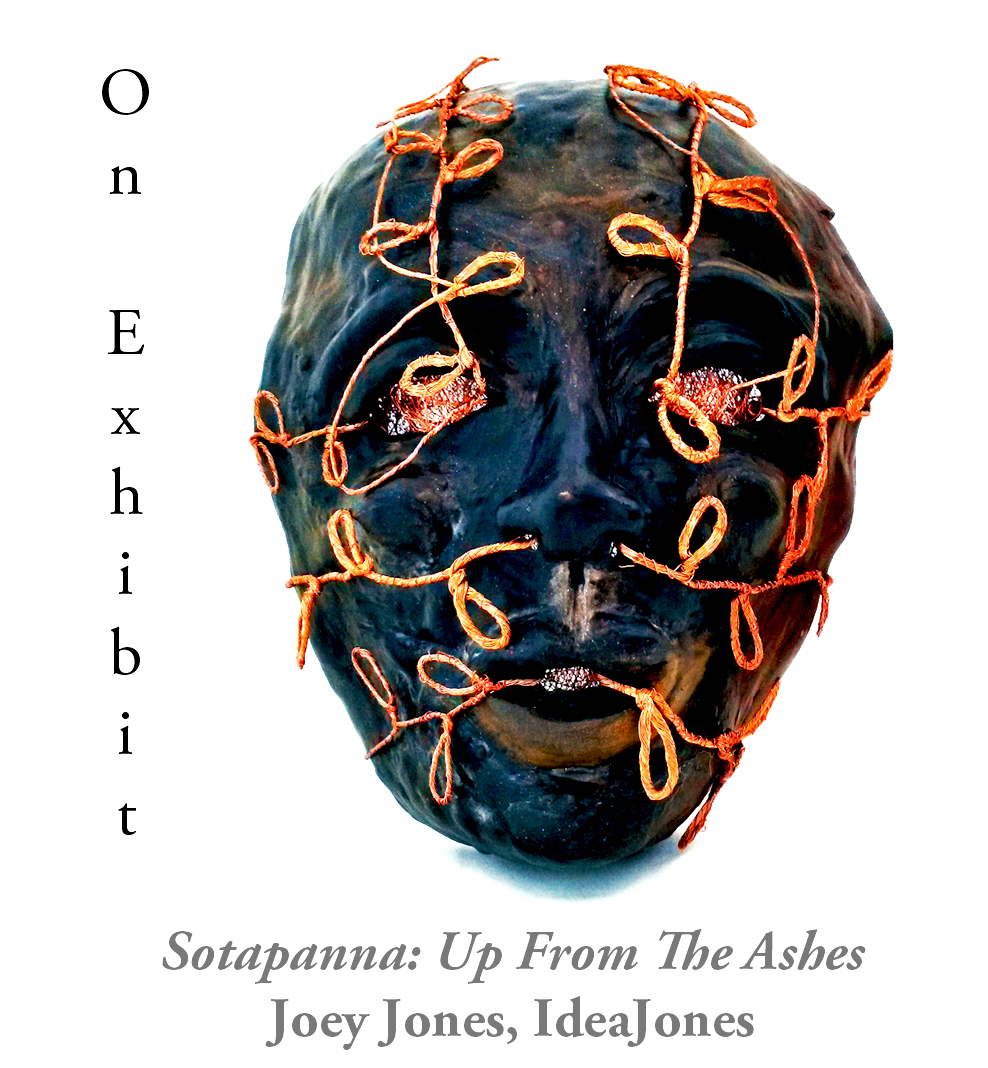
    This work is currently on exhibit.

    This holiday season has been “beautifully busy,” a nice way to end a year that started in heartbreak. Mom used to say, “Better is always coming. The trick is to hang on until it gets here.” She was right. Nothing is permanent. The secret, I think, is to convince yourself to remain open.

    A very good friend, who we lost earlier this year, started each day open to whatever good there was available. That point of view informs Sotapanna: Up From The Ashes, on exhibit in the gallery at WAL Public Market, 1104 R Street in Sacramento. The show runs from Dec. 1, 2017 until Jan. 3, 2018. The theme of it is regrowth after trauma.

    It also ties into the “Me, Too” movement of women who have been sexually assaulted telling their stories. Abuse was a part of my life for many years. Forgiving my abusers and rebuilding my life was, and is, a growth process. Even after horribly traumatic events, it’s possible to grow and go forward. Not easy — possible.

    I also have jewelry being offered for sale by Blue Line Gallery in Roseville, CA (405 Vernon Street, Roseville, CA). They have jewelry from local artists on display in the small gallery, and available for sale. If you buy a set of Love Bead Safe Harbor Pins, a portion of the sale goes to charity. The pins have never been for sale before, but Women’s Wellspring, a center for women in crisis, recently sold them to raise money for their charity (with our blessing — women who come to the center learned to make them in a free workshop we just gave, and made pins to sell to raise money for their art therapy program), and they’re for sale at Blue Line, raising money both for the nonprofit art gallery and for other charities. We may offer them online as well, with part of the money going to charity.

    Lots going on here, most of it good, so we’re tired, but happy. Hope this finds you happy, even happy-tired, storing up the energy of good moments to sustain you.

  • Social Art, or The Love Bead Safe Harbor Pin Project Rides Again!

    Social Art, or The Love Bead Safe Harbor Pin Project Rides Again!

    Remember when I announced that we had finished The Love Bead Safe Harbor Pin Project?

    Turns out we weren’t done — we just didn’t know it yet.

    This project really began in late November of 2016. By the end of the election that year, we’d had over a year of arguments, name-calling and accusations All of that comes with an election, but this was particularly virulent. Many of the people we knew had stopped speaking to friends, colleagues, family, us…

    We heard stories from friends who had been threatened or who had friends or family members who had been attacked for being different, for not fitting in to someone else’s idea of how people should be.

    When I first heard of Safe Harbor pins, safety pins worn to signal your belief that all people should be treated with basic human decency and respect, I loved the symbolism of it. True, no symbol solves a problem on its own, but using the symbol requires a choice on your part. Do you agree with the idea it represents? Are you willing to make that belief part of your identity? That’s not a meaningless thing. Human lives are saturated with symbols that represent how we think the world works, or ought to work, indicate our commitment to ideas, tell the world who we are. Most things carry at least some symbolic meaning. I donned my Safe Harbor pin, knowing perhaps I’d get some push back from people who disagreed with me. Mark put on his pin and wore it wherever he went.

    Then white supremacists started wearing safety pins, co-opting the symbol and turning it. I wasn’t willing to relinquish it and have a symbol of decency and kindness come to stand for the opposite. So I started beading pins. I work with wire a lot in sculpting, so I figured out how to bead the pins so I could take them on and off without losing beads. I hung charms on them. I started giving them away.

    Honestly, I didn’t know what would happen. I’m an introvert, for one thing. Talking to strangers isn’t my strongest skill. I didn’t know how the idea would be received. They’re inexpensive, humble little things. The first time I did a large giveaway, I told Mark, who was parking the car, that I had no idea if it would take me hours to give them all away, or even if anyone would want them.

    Within fifteen minutes, I had none left. Hundreds of pins. Hundreds of people who consciously chose to adopt a symbol. I explained briefly what the pins stand for when I offered them. Each person made a conscious choice to affirm his or her belief that people, all people, should be treated with basic courtesy and respect. Even people they might not understand, agree with, or even like.

    We continued giving away pins. Even just giving them away casually in multiple cities, more and more pins found homes. Then we saw that the 50th anniversary of the Summer of Love in San Francisco was coming, and decided to be part of the celebration. There was a specific part of the celebration we wanted to honor. When scores of young people, most without jobs, housing or money, descended on the city of San Francisco in 1967, the city was overwhelmed. There was no infrastructure to take care of hundreds of homeless, jobless kids. Something like that, on that scale, just hadn’t happened before.

    So some of the residents stepped up. They set up soup kitchens. They distributed clothing. They helped kids find places to stay and health care. Confronted with a horde of hungry kids, those people chose to take care of them. They did urge them to return home to where they had some sort of support system, but in the meantime, they fed and clothed them.

    That was the legacy we wanted to honor.

    So we set about making over 1400 pins. We stood on street corners and walked through parks, we stood in front of a museum. Over and over, we offered strangers the following choices:

    • Will you interact with a stranger?
    • Will you listen to a brief description of an idea, Radical Respect, the idea that all human beings should be treated with basic courtesy and respect?
    • Will you accept a symbol of that idea?

    Accepting the symbol after the explanation means accepting the idea, and making it at least a small part of your identity. It was a public decision and affirmation.  We also tried to keep track of our results. The overwhelming majority of people we encountered chose to talk with me, listen to the idea, discuss it with me, and accept the pins.

    All in all, so far, over 750 people have made that choice. People from every economic level, from different cultures, countries and educational backgrounds have stood up in public and affirmed their commitment to supporting human decency for everyone.

    On days when the cacaphony of argument and accusation makes me want to become a hermit, I remember some of the people we met and talked with.

    We had planned to end the project after the Summer of Love anniversary. It consumed a lot of our lives for almost a year. But we had some materials left, so I offered a free workshop at a program for women and children in crisis. It seemed like a good way to wrap up the project. The workshop went so well, and I had so much fun making pins with some of the women there.

    On the way out, the art therapy coordinator introduced me to a member of the Board of Directors of the center. She accepted a set of pins, and asked if they could make pins to sell at an event to raise money. She and the art coordinator were so respectful, asking if what they wanted to do would fit into the goals of the project. I really appreciated their courtesy, and yes, while it’s true that we gave away pins, selling them to benefit a charity, especially one helping people who aren’t often treated with the respect they deserve, is in keeping with the project’s point of view. Anyone who buys a set of pins will get the pins mounted on a card describing Radical Respect, and will also  be making a choice to support people who could use help.

    So the project isn’t quite over. And I may make a few to sell as a separate-but-related project to raise money for other charities.

    Perhaps it’s not consuming my life as it did, but almost a year later, the Love Bead Safe Harbor Pin Project goes on.

  • Love Bead Safe Harbor Pin Project: Finding Your Tribe

    Love Bead Safe Harbor Pin Project: Finding Your Tribe

    This project is about human interaction and conscious choices.

    You’ve found a project you’re passionate about. You think you’d be good at it. You’re excited! You tell your friends and family and… pfffft, the air goes out of the balloon. Nobody’s interested. What now?

    This has happened to me more than once over the years, so I feel you. The natural feeling, when you’re excited about something, is that the people around you will see how great it is and get excited about it, too. Or at least be excited for you. You’re hoping for encouragement, for someone else to be excited for you, happy that you’re happy. If you run headfirst into a wall of indifference, it can bring your momentum to a halt. There you stand, looking around, baffled and hurt — why doesn’t anybody seem to give a fig? Don’t they care about you?

    I used to let that stop me. If the people around me weren’t interested, then ( so I thought) either (1) whatever I was excited about wasn’t important, or not “worthy,” or (2) I wasn’t important or worthy. That is not true, and here’s why.

    People who like you like you. They may or may not like your work, or be interested in the same things you are. They may enjoy your company and think you’re great and still not get your work. I have a couple of really good friends who, so far as I can tell, don’t get what I do. Everything isn’t for everyone, just as every person isn’t for everyone. I don’t much care for cauliflower, or the paintings of Jackson Pollock. This doesn’t mean that cauliflower is bad, or that Jackson Pollock’s paintings aren’t “worthy.” It means that neither does much for me.

    Yet I might have liked Jackson Pollock, and I can like someone who is passionate about the paintings of Jackson Pollock (a passion for cauliflower might be harder to take. I really don’t like the smell). The people who like you have found something they enjoy, or admire, or both, in you. But they might look at your painting, or whatever your project is, and be mystified, or disinterested. It doesn’t move them — you do.

    The flip side of this is that you shouldn’t let their reactions determine how you view your project. Get it out there and let your work find its tribe. Chances are there will be someone who will look at it and know just what you were trying to do, and be excited about it. Just as you have your tribe, so will your work.

    Case in point… I put together an art show for a local radio station. Eight artists were involved (including me). It was, by design, a range of styles, disciplines and media. Everything from painting and sculpting to jewelry and clothing. The reception was a crush, a great crowd, many of them very enthusiastic. But there was one man, nicely-dressed, who looked over the gallery and asked, “Why jewelry? Why clothes? I understand why you’d include sculpture and painting, but,” and here he actually sniffed in disdain, “why would you include crafts?” And he said “crafts” with great condescension.

    The inclusion of jewelry and clothing was deliberate, I explained. Personal ornamentation is one of the oldest forms of art, possibly the oldest. Most major museums have collections of jewelry and clothing. He wasn’t convinced, but said that it did offer “the uneducated” something they could “understand,” which was “probably clever” on my part. (*sigh*). So he clearly didn’t get it. That didn’t make my choices wrong. Most of the people at the show didn’t even question the “why” of that, and enjoyed the show.

    My latest project, the Love Bead Safe Harbor Pin Project? Most people who know me could not possibly care less about it. They like me, but they aren’t interested in my work or this project. But over 500 people so far are. They get it. They understand that those little pins are a symbol of an important idea. They think the pins are fun. They get that the pins start conversations. They like the idea of deciding, consciously, to try to treat other people, even people they might not understand or approve of, with respect. They are my project’s “tribe.”

    The “Access To Health Care” Pin

    The acceptance rate for the pins is about 91%. Nine out of ten people offered pins accepted them. Their reactions range from mildly pleased to very enthusiastic. I get to have interesting, challenging, enjoyable conversations with so many people about respect, who we give it to and why, what it means… all because of a pair of little, beaded safety pins in a packet. Another artist said she thought this was “the most important work of social art” she had heard of in years, and I’m still dumbfounded by that. People hug me. They tell me their stories. Parents talk to their kids about respect. It has been amazing — and had I not put it out there, I’d have missed it.

    Yes, you might put your work out there and it might prove hard to find its tribe. But for sure you won’t find that tribe if you don’t try. People can’t want what they can’t conceive of, and they can’t conceive of your project before you put it out there. If the people in your life don’t get it, accept that and keep moving.

    The people who like you, but don’t get your work? Appreciate the role they play in your life, even if it’s just to enjoy your company. You need them. It’s great to have people like your work… but it’s just as great to have people like you as a person. On days when the work just won’t cooperate, you’ll be glad to have someone who, independent of your work, looks forward to talking to you, to seeing you.

    And when you do find people who get your work, listen to them! Let the opinions of people who have experienced what you’re trying to do weigh more than those who haven’t. When I would get discouraged, my husband Mark kept saying, “Listen to  the people who have experienced what you’re doing and told you that it meant something to them. They know what you’re doing.” They are my project’s tribe, and I wouldn’t have found them if I hadn’t taken a chance that they might be out there.

    Save

    Save