IdeaJones

Tag: pup

  • A Dog’s Guide To Humans: Sleep

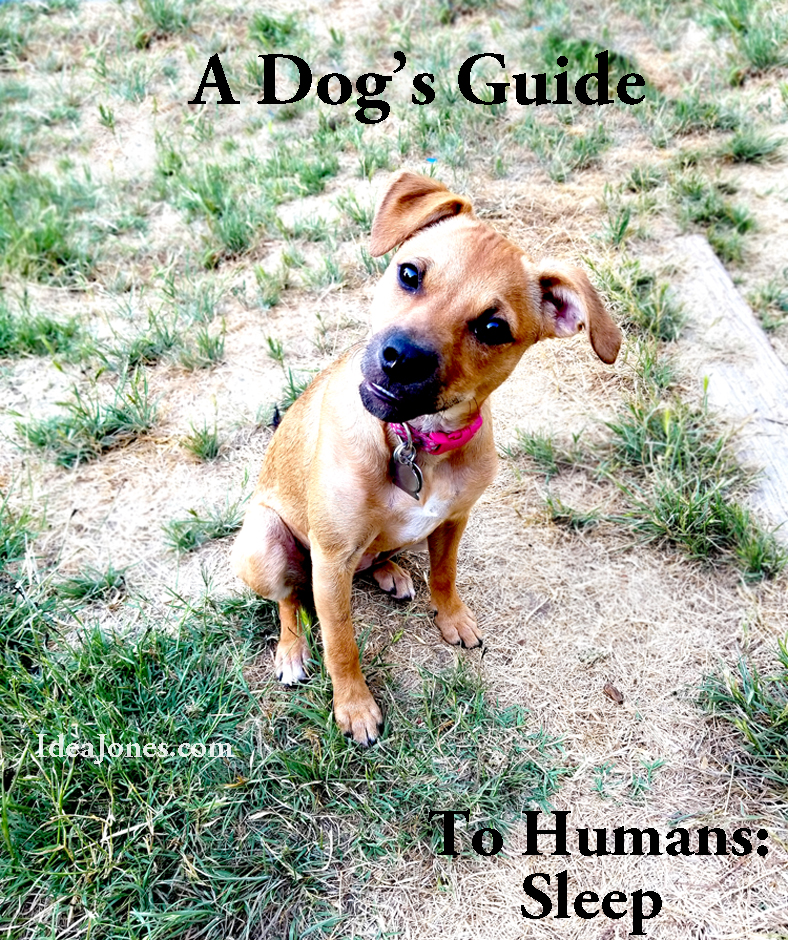
    A Dog’s Guide To Humans: Sleep

    Humans are always tired.

    As with so many things, humans have a strange relationship with their own bodies (just wait until I get to humans and elimination. Oh my dog, that’s a whole subject in itself).  They are so uncomfortable in their own skins that they do things to themselves that can only be described as straight-up freaky. One of the things they really can’t figure out is sleeping.

    How, when, where or with whom, humans can screw all of that up beyond any dog’s ability to understand, but I’ll do my best to explain it.

    • Humans don’t understand sleep.

    I mean, quite literally, they don’t grasp the concept. Not really. They seem to do all right as puppies, but once they can walk unassisted, they start experimenting with it.  Their puppies, called “babies,” are the most sensible stage of their development. They eat when they’re hungry (well, they demand food), poop when they need to, and sleep when they’re tired, unless someone or something prevents them. Yes, you read that right — adults try to manipulate their puppies so they sleep not when they’re tired, but when it is most convenient for other adults. This isn’t surprising when you realize that this is what the adults do to themselves and to each other.

    They have a schedule that is baffling. They wake up, usually after not getting enough sleep, so they’re cranky and clumsy. By ingesting the runoff of water in which various plants have been dredged, they open their eyes, at least somewhat, and begin to communicate. Prior to drinking the runoff, they communicate mostly in grunts and gestures. After, they communicate in sharp, harried barks and run around grabbing things and  putting them into other things, usually some sort of bag or box, and complaining that they are now late.

    Laugh if you will — this is how they start most of their days.

    They spend their days in a variety of behaviors, most of which seem to have little practical value, but do keep them occupied and, for the most part, out of trouble. During the afternoon, when their energy dips, they do not rest. Instead, they ingest more runoff so they can keep doing whatever it is they’re doing.

    Then they come home and do more things, not very effectively, because they’re tired. When they get tired enough, they slump on the supplementary dog bed (aka “sofa”) and stare at boxes with emit light and sound, which helps keep them awake. Sometimes these are thin, small boxes they can hold in their hands. Other times they are very large boxes.

    Eventually, long after they should be asleep, they will topple over and sleep in front of the glowing boxes, still resisting the urge to go to their comfortable beds to sleep. Eventually, many of them do rouse somewhat and stagger to their beds, but some stay in front of the glowing boxes so they can wake in the morning and complain about the parts of their bodies that hurt.

    • Humans don’t trust sleep.

    You might have read that more than once only to discover that it still makes no sense.  This is because it makes no sense.

    Humans dislike sleep. They brag about how little they get. They pretend they don’t need it. They talk about “snatching” or “grabbing” it. Where any sensible dog will tell you that if you’re tired it’s time to sleep, humans avoid it as long as they can.

    Instead of viewing sleep as a necessary part of the healing process, humans treat it like an enemy who must be conquered. Even as they are staggering, bleary-eyed and foggy-brained, they tell anyone who will listen that they “don’t need that much sleep.” It causes them untold health risks from accidents to heart attacks, but they take pride in their unwillingness to lie down and close their eyes as if simply being able to keep their eyes open long after their brains have stopped working were some sort of accomplishment.

    It is worth considering what marvels they could accomplish if only they weren’t so tired all of the time. And cranky. I’ve heard the phrase so often that the one word doesn’t sound right without the others. Tired and cranky.

    I doubt we’ll ever know what humanity could be if it only it got the occasional nap.

    I will write my next dispatch as soon as I can. Meanwhile, it’s time to go to bed. ~ Gingeroo
  • A Dog’s Guide To Working With Humans

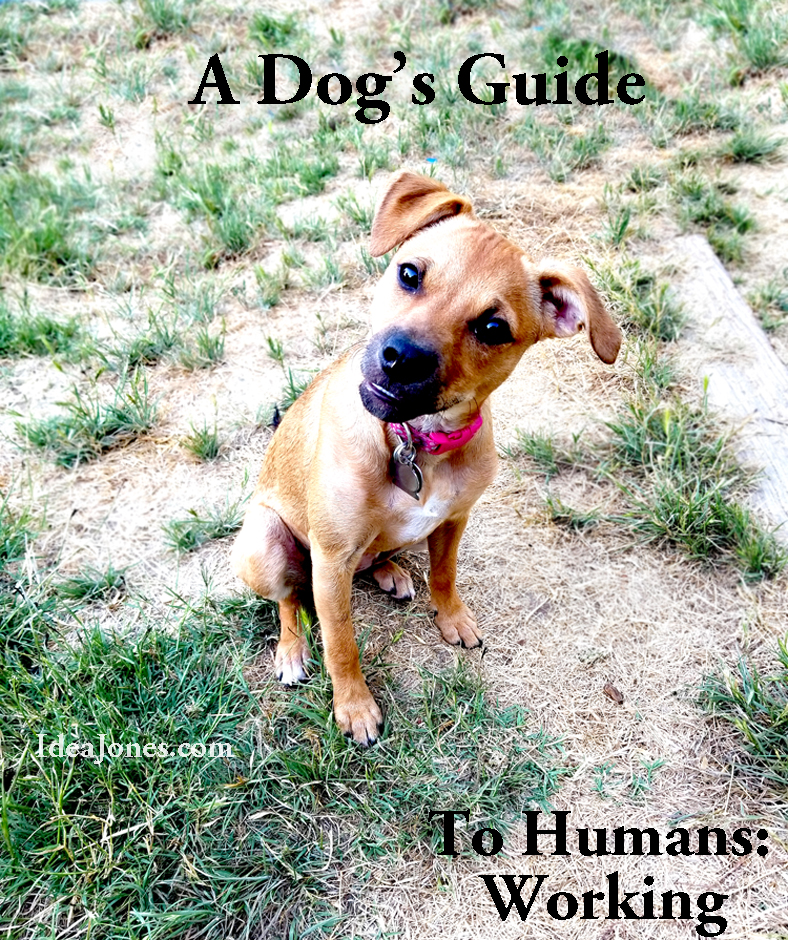
    A Dog’s Guide To Working With Humans

    Humans are both fascinating and confusing.

    If you want to work with humans, there are a few important things you need to know.  I’ve been working with these humans for a couple of months now, and I can already tell that working with humans isn’t as easy as working with dogs:

    • Humans talk about cooperating a lot more than they cooperate.  Sometimes this is because they really don’t want to cooperate.  I overheard someone saying “This shit has too many captains.”  He pronounced it “ship,” but I’m not going to make fun of him for a speech impediment.

    As you know, among dogs, we all sort out who does what and do what we do best.  I have the best sense of smell in our pack, but Reo is better at spotting squirrels in trees. I’m little and fast, but Moby is big and strong. Humans can use can openers. We all have our role to play.

    Humans have an “all or nothing” approach to control. They don’t want to give up any, or they pretend they gave up all of it.  And nobody listens to anybody just because she’s good at that particular thing. They think listening to someone who knows what she’s talking about means giving her some sort of power over them… How do humans get anything done? They overcomplicate things so much.

    • Humans have the awareness of rocks.  Okay, their senses are, to be kind about it, very limited.  They stare, baffled, at the tree you’re barking at, because they can’t hear or see the squirrel right over their heads. They step in things because they can’t smell them.

    This lack of awareness of who or what is around them causes them endless problems. When a pack works together, we pay attention to where the other members of the pack are and what they’re doing. If Moby flushes a rat, Reo and I need to be able to help him catch it. If we don’t pay attention to each other, the rat gets away. Which means we’ll probably have to chase that same rat another day — plus a bunch of baby rats.  If I flush a rat, I need Reo and Moby to help me, because I’m a baby and the rat is probably almost as big as I am. If they aren’t aware of me, the rat gets away, or I’m rat chow.

    Humans engage in things far more complicated than chasing rats, but usually they don’t seem to be aware of the other people involved. If Reo chases a rat and it runs my way, I have to chase it toward Moby so he can take care of it. Moby needs me to do my part, so he can do his. But humans take on projects where each person  has to chase his rat, so to speak, on time, so the next person can chase her rat.  But they ignore all of the other people waiting for them and do whatever they feel like, whenever they feel like it, so the next person waiting for the rat to come his way misses it, or gives up and goes home.

    No wonder there are so many rats in the world.

    The humans are interesting animals with many bizarre habits, and the ones I have adopted are very nice, even if they are, as all humans seem to be, somewhat limited.  My studies continue, and I will send more dispatches as I can.

  • Kindle Scout: Based On A True Story: Really (Almost) True Story (BOATS:RATS) — Coming Soon!

    Kindle Scout: Based On A True Story: Really (Almost) True Story (BOATS:RATS) — Coming Soon!

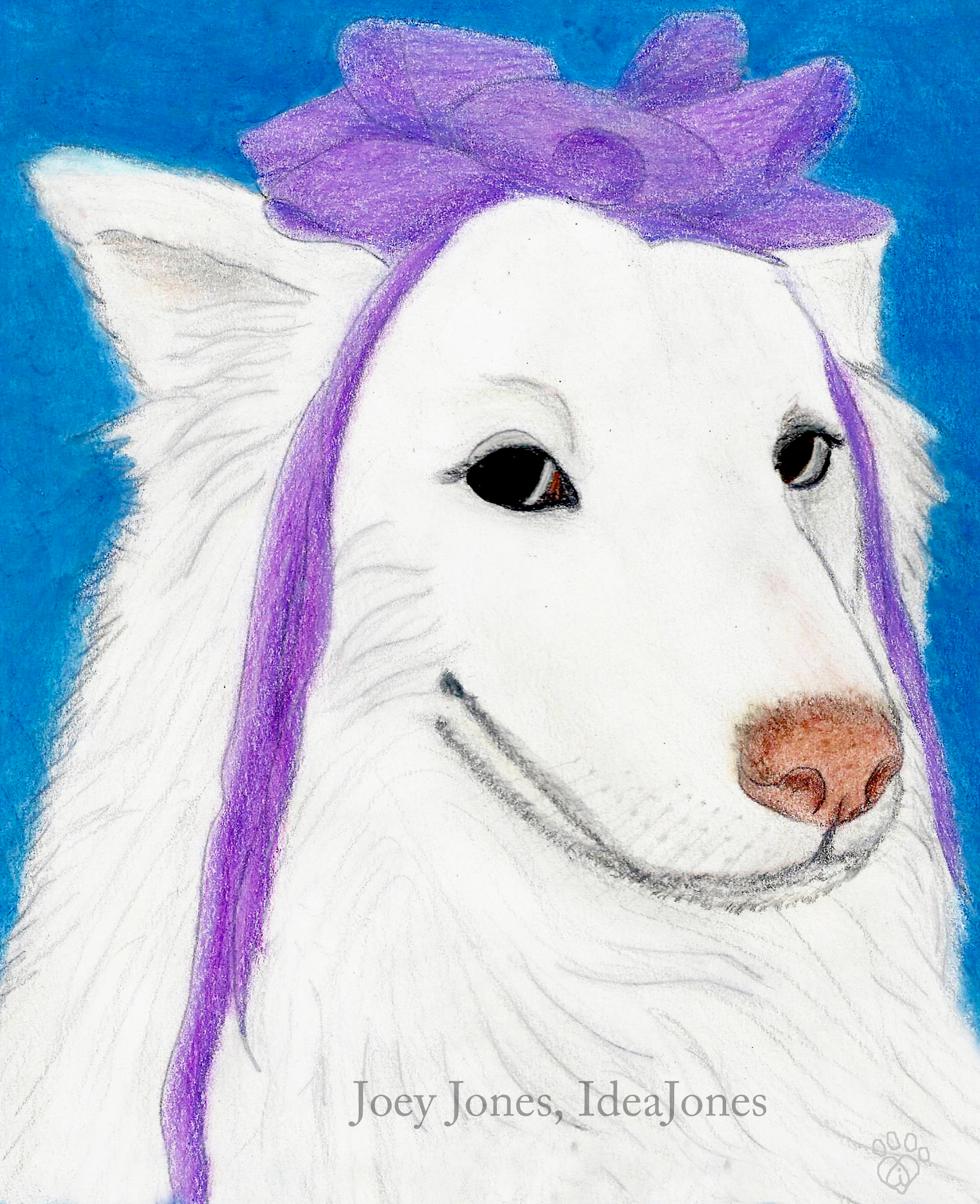
    Merlin, aka “Mr. Darcy,” from Based On A True Story: Really (Almost) True Story

    This is a painting I did of Merlin, aka, “Mr. Darcy” from our book, Based On A True Story: Really (Almost) True Story. We got the notification from Amazon’s Kindle Scout publishing program that they’re going to consider our novel! This means that you have a chance to read an excerpt, and if you like it, vote for Amazon Kindle to bring the novel out. If you vote for it and it’s selected, you get a free online advance copy of the book!

    More info coming tomorrow, but we thought we’d share a secret with you… something that isn’t even on the page for the book’s campaign. Something the people who read early drafts of the book asked and we avoided answering directly…

    “Did any of this really happen?”  The short answer is “yes.” The slightly longer answer is “quite a bit of it, actually.” We did fictionalize events and people. So that thing happened, for example, but different people were there.  A lot of times, things happen in life and they don’t link up to form a longer story. Or you don’t know why it happened or what it meant. In a book, by fictionalizing reality, you get to string things together that happened on different trips, and include anyone you wish was there. Some of the characters are true-to-life. Merlin (aka “Mr. Darcy”) was our beloved friend, a puppy found stray on the streets who became a Service Dog and saved my life. He was just like the Mr. Darcy of the BOATS books.

    Some of the things in the book happened just that way. Pat, Mark’s mom and my friend, read the first draft of the book. She said it was odd reading it because she was present for many of the events in the book, so for her, it was part novel and part journal.

    Ultimately, for the novel, it doesn’t matter which parts are 100% accurate accounts. When you read a book, if you enjoy it, it becomes a real world, with real people. It’s just that this one happens to be real in this world, too, in places. Like Mr. Darcy.