IdeaJones

Tag: love bead

  • Pin Tales: Mission Dolores Park, San Francisco

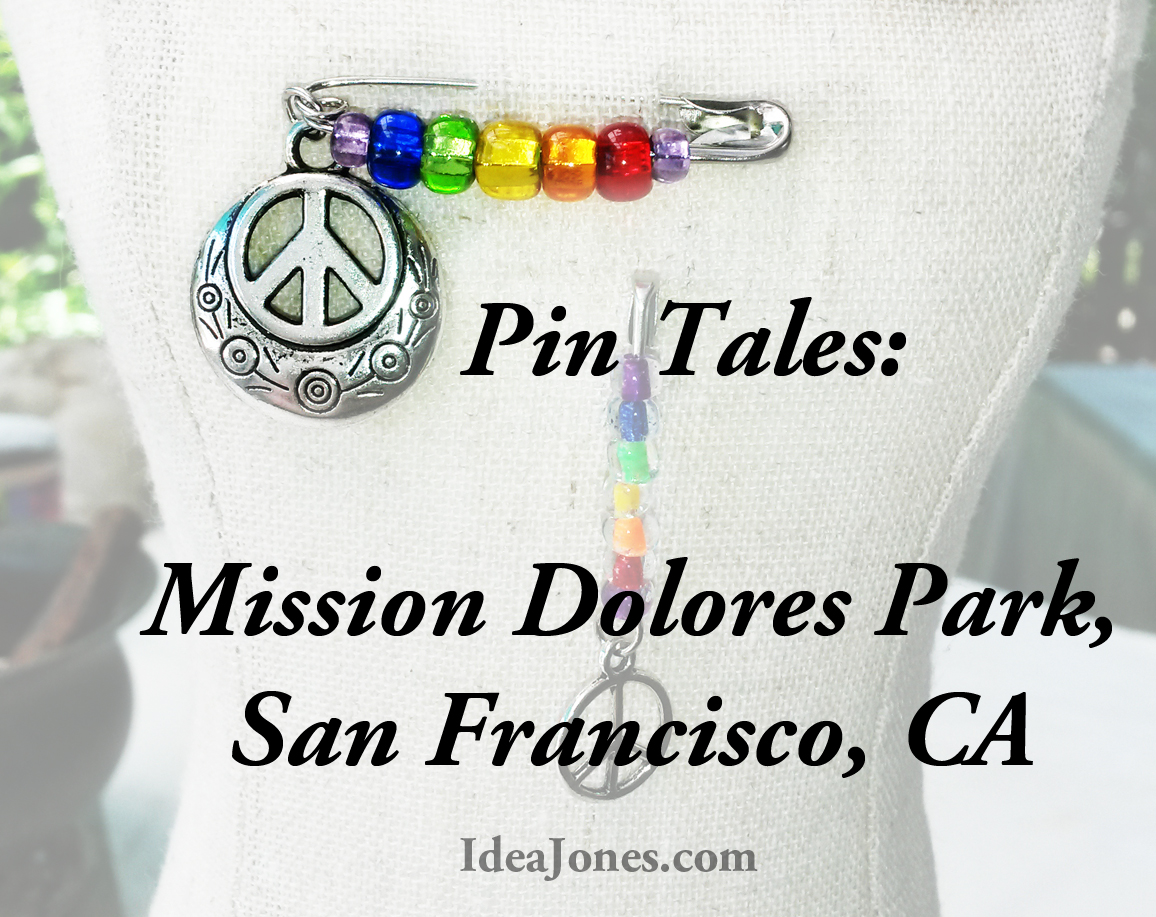
    Pin Tales: Mission Dolores Park, San Francisco

    Of skaters and little kids.

    This is the stop that almost didn’t  happen.

    I was tired and dejected after our stop in the Haight Ashbury district. It wasn’t that people had rejected the Safe Harbor Pin — most of them had no idea they were being offered anything. They rejected me, personally. Sure, every person gets rejected, but being quickly sized up and dismissed by a hundred people in fifteen minutes is hard to take.

    It didn’t dawn on me at the time that among people who actually gave me 30 seconds, the acceptance rate was about 85%. And those people were enthusiastic. No, in the moments after our visit to “the Haight,” I was just tired, feeling stung, and ready to go to our room. Mark reminded me that the Haight was an unusual circumstance and I should try again. We went to Mission Dolores Park, a beautiful city park that runs down a steep hill. At the top corners are concrete platforms from which you can get a spectacular view of the park and the city of San Francisco, joined by concrete walkways that meander through the center of the park to another area at the bottom of the hill with a playground and picnic area. The park was full of people in ones, twos, and groups, enjoying the sunshine and cool breeze.

    Mark was right. I believed in this project and determined not to give up. I got my crutches (I’m on crutches for a walk of any real length), grabbed the bag (the wind made offering them on a tray impractical), and set off at the top of the park.

    Right away, I ran into a group of tourists and their guide, on bicycles. I waited until the guide had finished his presentation and approached the group. “Would you like a free Love Bead Safe Harbor Pin? Surprised, they asked how much the pins were. I repeated that they’re free. They asked questions about Safe Harbor and the pins, selected their pins, thanked me, and pedaled away. I set off down the walkway, offering pins.

    Understand, that for an introvert, this isn’t easy. Heck, making eye contact with a lot of people isn’t easy. Talking to them? Much harder. I like people, but where extroverts are energized by being around other people, introverts expend energy to be around people and recharge their batteries by being alone. So talking to lots of people can be fun, but it’s also tiring. Plus, I’m shy. So approaching hundreds of strangers isn’t the easiest thing for me to do. To stand on a corner trying to talk to strangers is hard for most people. To be curtly dismissed or passed by people pretending not to see you is exhausting.

    But I’m also stubborn. Having decided this was important and I was determined to see it through, I smiled into every face I met. Some people averted their eyes, others smiled back but sped up their pace. If the person made eye contact, I offered him or her a pin. A few — very few — said “no, thanks” without breaking stride before I even finished the first sentence. That’s fine. They have the right we all have to decide who we associate with, even briefly. I don’t take that personally, although it’s tiring.

    Most of the people I tried to engage with made eye contact. Almost all seemed wary at first, which I understand. By the end of the brief explanation, however, all but one reacted positively. They looked at the pins, asked questions (“Who made these?” “What organization are you working with?” “Why did you decide to do this?”). They listened to the outline of the meaning of various color patterns, and chose. I only had two people choose based on color alone, and no one who took one before listening to the explanation (in other words, just because it’s free).

    A couple of people offered me money, even though they understood by that point that the pins were offered free. “I want to make a donation!”  “I want to help!”  I thanked them and urged them to donate that money to a charity or cause they supported. Both liked the idea — I hope they followed up on it.

    I spoke with people as young as six (with parental permission) and as old as their late 60s (I don’t ask for personal information, but some people volunteer it). They were, based on clothing, accessories and volunteered information, from a wide range of cultures and economic and educational levels. Here’s a key point — in both cases, my own and the person I’m speaking with, we are probably talking to someone we would not have spoken to otherwise. We didn’t know each other. Often, we had nothing obvious in common. Everything that happened took place because we opened our walls just a chink for a couple of minutes. Here are some of the stories:

    The Skaters:  I approached a group of about fifteen people who appeared to be between 17 and 23 years old, a mix of races and clothing styles, some with skateboards, some smoking pot openly (thank goodness for allergy medication — I’m very allergic to marijuana). When I first approached, they seemed a bit wary, but by the end of the first sentence, one asked, “What’s a Safe Harbor Pin?” I explained Safe Harbor and the idea of “radical respect,” that we can respect someone’s humanity even if we disagree with him or don’t approve of him, and the meaning of the pin. A young man near me said, “Fuck, yeah! I want one of those!” Several of the people in the group looked sharply in my direction, probably with an expectation that the old lady wasn’t going to appreciate that “F bomb.” I laughed, and they laughed. He accepted the bag of pins, chose one, and at my request, passed it around. We chatted about respect, who we get it from and give it to.

    Another young man skated up to the group. He noticed the packet in the first young man’s hands and asked about it. Before I could say anything, the first man said, “It’s a Safe Harbor Pin.” He went on to explain the ideas of Safe Harbor and Radical Respect, and read the explanation on the back of his pin package to the newcomer. One of the girls said, “So are you for respect, or what?!?” The second man said, “Bitch, yeah! I’m all over that!” Then he glanced at me. I looked solemnly at the first man and said, “True, he’s calling you a bitch, but with great respect.” We had a chuckle and continued passing the bag around.

    As I said goodbye, I asked if everyone had a pin who wanted one. A young woman in the back (so uphill from me) said quietly that she hadn’t gotten a pin, so I went up the hill. We chatted about the project as she selected her pin set. She wished me good luck with the project and I went on to the next group.

    At another place in the park, near the playground, I approached a young woman with two children, a boy and a girl, about six and eight. I offered her a set of pins, and the kids swarmed up to look in the bag, all bright eyes, energy and curiosity. Mom translated my explanations and she and the kids picked out pin sets. Mom cautioned them that the pins are sharp,  but if they could take it seriously, they could have pins. We chatted for a moment, and as I wished them a good weekend and turned to leave, the little boy jumped up and shouted, “You have a good weekend! And a good summer break!”

    A man and woman sitting at a picnic bench with a young girl heard my “spiel,” and accepted pins. As they looked through the bag, the man picked up a rainbow set. Before I could explain the LGBTQI significance, he laughed and said, “You have the flag (the rainbow flag, seen around San Francisco)!” He then selected a different set, saying, “It’s obvious that I’m gay. I don’t need to fly the flag on my shirt.”

    Which is a good point. To me, being, say, homosexual is one facet of a personality, but by no means the only, or even most important, thing. It’s information, like height or eye color, but we are all so much more than any one thing.

    A group of nicely-dressed teen girls listened to me, smiled broadly, and selected pins. Like everyone else I encountered at that site, they seemed to select pins based on the meaning more than the color. One looked up from the pins and said, “This is a good idea.”

    I think people respond to this on an almost subconscious level (more about that in another post). One woman at another site said she was happy to have a name to give the ideas (safe harbor and radical respect), because that makes it easier to talk about it. When we give something a name, it’s easier to bring it up and talk about it than if you have to form the concept as you’re talking.

    By the time my husband picked me up at the bottom of the hill, I was sore but happy. I met young mothers, kids, older people, young adults… and most of them were interested in the idea of Safe Harbor and standing up, in a quiet way, for the idea of respect. Those people turned my day around, and I was ready to have some lunch and prepare for the next day.
    Save

    Save

  • Pin Tales: Haight Ashbury

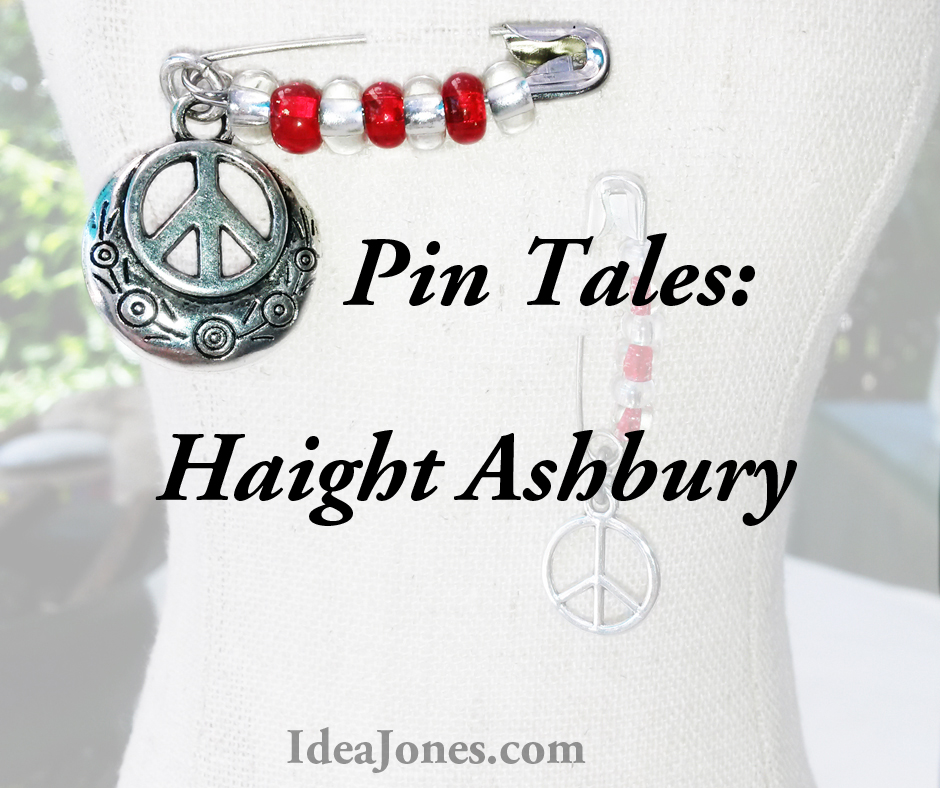
    Pin Tales: Haight Ashbury


    The one that almost killed the rest.

    This was the site that almost killed the project, but I learned something important — don’t let the negative blind you to the positive.

    I thought that if any place on Earth would be receptive to this project, it would be the Haight Ashbury district of San Francisco. It’s famous for its role in the Summer of Love and hippie culture. Admittedly, 50 years have passed since the Summer of Love, and much of the imagery of that time and the hippie movement have become marketing tools. Still, I thought that the residents, and tourists who flock to see the famous places, would be open to receiving a Safe Harbor Pin.

    Within minutes it was clear how wrong I was. Mark said it best (which often happens): “This has the feel of a busy city street in New York.” People were in a hurry, many with ear buds in their ears, walking quickly, not making eye contact. Presented with a smiling stranger holding something out, they averted their gazes and quickened their paces. Some muttered, “I don’t have any change” as they passed, and I realized they had very quickly sized me up, determined I was a panhandler, and couldn’t get away from me quickly enough. Most of them never even had a chance to accept a pin or reject it — they rejected me on first sight and that was that.

    It’s the first time I’ve gotten that reaction. Not that everyone wants a pin, which is fine, that’s their choice. And sometimes a person is too busy to stop, or having a bad day. But this is the first time a large number of people have quickly assigned me an identity and rejected me. It was quite an experience and I have a new appreciation for street hawkers and panhandlers and how hard a job it is.

    I’m an introvert, and shy, so it’s hard for me to approach strangers anyway. Buffeted by a wave of rejection in a short time, I was ready to curl up in an introvert ball like an armadillo. Even so, I made myself continue to approach people, and a few gave me a hearing. Of those, two agreed with the premise but didn’t want a pin (one said she never wears jewelry and another didn’t explain, which is fine). Those I thanked and said goodbye to.

    Others accepted a pin, including:

    A group of women, maybe 18-30, accompanied by two young  girls and a baby in a stroller. They listened politely to my brief explanation, showed enthusiasm for the idea, asked questions about the pins, and thoughtfully chose the ones they wanted, urging the girls to get pins as well. The two girls asked me to repeat what the color patterns mean, and chose pins based on that, as did the adults. One adult asked for a second set for another family member as she planned to give her own second pin to her mother. They smiled broadly at the explanation of the meaning of the pins, and at the information that each card had two pins so they could give pins to other people. They thanked me and we wished each other a good day.

    A young woman with dreadlocks listened to my explanation, smiled and said, “That is such a good idea. We need to make other people feel wanted. May I hug you?” I agreed. We hugged, she selected a pin, wished me a good day and left.

    A woman about 40, jogging past with headphones heard me tell someone that I wasn’t going to bother her. She stopped, pulled out one ear bud, said, “It’s okay, I’m on hold, what’s up?” I quickly explained and offered her a pin. She laughed, said, “I love this!,” selected a pin, thanked me, and strode off.

    A young couple debated whether it was “fair” to take a set of pins each to share with others, asking if they should just share a set with each other. One mentioned the person he would give his second pin to. I told them it was fine to take a set each to share, which they did.

    We left the Haight Ashbury area earlier than planned because we couldn’t even gauge the rate of acceptance — most people never even had a chance to say yes or no. I was feeling dejected — it’s hard to stand on a corner being sized up and dismissed by herds of people before you say a word. We moved on to Mission Dolores Park, which was a very different experience.

  • Pin Tales: The Church Ladies

    This project is about human interaction — how we choose to treat other people.

    With thanks to Janice Jow, who suggested writing down and sharing the stories from The Love Bead Safe Harbor Pin Project.

    This is about the day I met the Church Ladies.

    I was “churched” growing up, which is to say we were members of a congregation and attended services every Sunday. Eventually, my family moved, and we stopped going to church, mostly for reasons having to do with my Dad and how he was. I remained a Christian in my heart, if a confused one (it took a lot of time to process Dad, his demons, and his effect on our family and on me). I did attend a church for a while during high school as a friend was becoming a lay minister and leaving to attend a seminary, and he asked me to go to give moral support. Then I graduated and moved away, and while I attended the occasional service, I was no longer churched and belonged to no one sect or congregation.

    Even though I was brought up in a fairly conservative Christian church, it never made sense to me that only one group of people had all the answers. I took classes in comparative theology, and have always respected other faiths and their adherents, and the right of any person to believe what he believes, whatever it is. Some people don’t believe in any god at all, and while I disagree with them, I recognize that they disagree with me as well, and we both have the right to think as we do. I no longer have much contact with churches or organized religion any more, though, except for a few friends who are members of (very) different religions.

    Some of my family members were very conservative, very evangelical, very good at lecturing and not listening, and frankly quite unpleasant human beings. The word “evil” would not be out of place when describing them. And I’ve certainly met additional people who might not be evil, but certainly use their beliefs to judge, condemn and make themselves feel superior to others. These people belong to different religions, or none, but they share an unappetizing determination to Tell You The One True Way. It’s made me wary of anyone who is quick to discuss matters of faith.

    So when I saw a group of ladies, dressed nicely, carrying a church banner at a rally… honestly, I was going to edge past them in the crowd. Which is judgemental of me. And an especially odd choice for a Christian woman to avoid a group publicly claiming their own faith. It was instinctive, pain avoidance, based on years of unpleasant experiences. It was so immediate I didn’t even make the choice consciously. It was more like the automatic reaction that sees a shadow, thinks “snake!” and recoils.

    One of the women watched with curiosity as I explained Safe Harbor to a young man with spiky, bright green hair and many piercings. He jangled as he sorted through the pins, and it made me smile. I looked up and there she was, watching us, a woman a few years older than I am, dressed in a tasteful skirt and blouse, standing under a banner proclaiming her membership in, let’s say, “Good Shepherd of the Rock Church.” She tilted her head slightly, peering at us.

    I was ready to be defensive on behalf of the young man sorting through the pins, on his behalf, certain she disapproved of him, maybe of me. Then she smiled, trying to see into the bag, clearly wondering what we were doing. It was the universal human expression that says, “Hm, that looks interesting and that person is having a good time. I wonder what’s going on?”

    As he chose his pin and left, she made eye contact. Okay, I sighed to myself, let’s get this over with. I trudged over (on my crutches), forced a smile, and said, “Would you like a free Safe Harbor pin?” I held out the bag of pins.

    She glanced into the bag, still smiling. “What is that?”

    I explained Safe Harbor, expecting her to politely refuse. Instead, she turned to the other ladies in her group. “Come here! You have to hear this!”

    The other ladies gathered around us. I explained Safe Harbor, showed them the pins, made the offer again to the group. They took pins, just reached in and grabbed a pin without the usual sifting through them. I explained that some of the pins they were taking symbolized support for LGBTQI rights, or civil rights, or…  They glanced at the pins in their hands and just nodded. It was information, okay, good to know. Nobody asked to exchange or return her pin.

    “Would you mind explaining how you made these,” one of them asked. “We’ve been looking for something like this,” said another. “There are people where our church is, they don’t belong to our church, but we talk from time to time, and they feel unwanted, rejected,” explained the first woman. “They feel unsafe,” added another. “We’ve been looking for a project we could do to show solidarity with our neighbors,” she added.

    I explained how to make the pins, answered a few questions.  “We have to let people know that if they feel unsafe, or rejected, they can come to us,” one of the ladies said. “They don’t have to join the church. They can just come in if they want to.”

    “We want them to be safe,” said another.

    Judge not, lest ye be judged, indeed.  We said goodbye, and went our separate ways.

    Save

  • Field Guide To Love Bead Safe Harbor Pins: The Health Care Pin

    Field Guide To Love Bead Safe Harbor Pins: The Health Care Pin

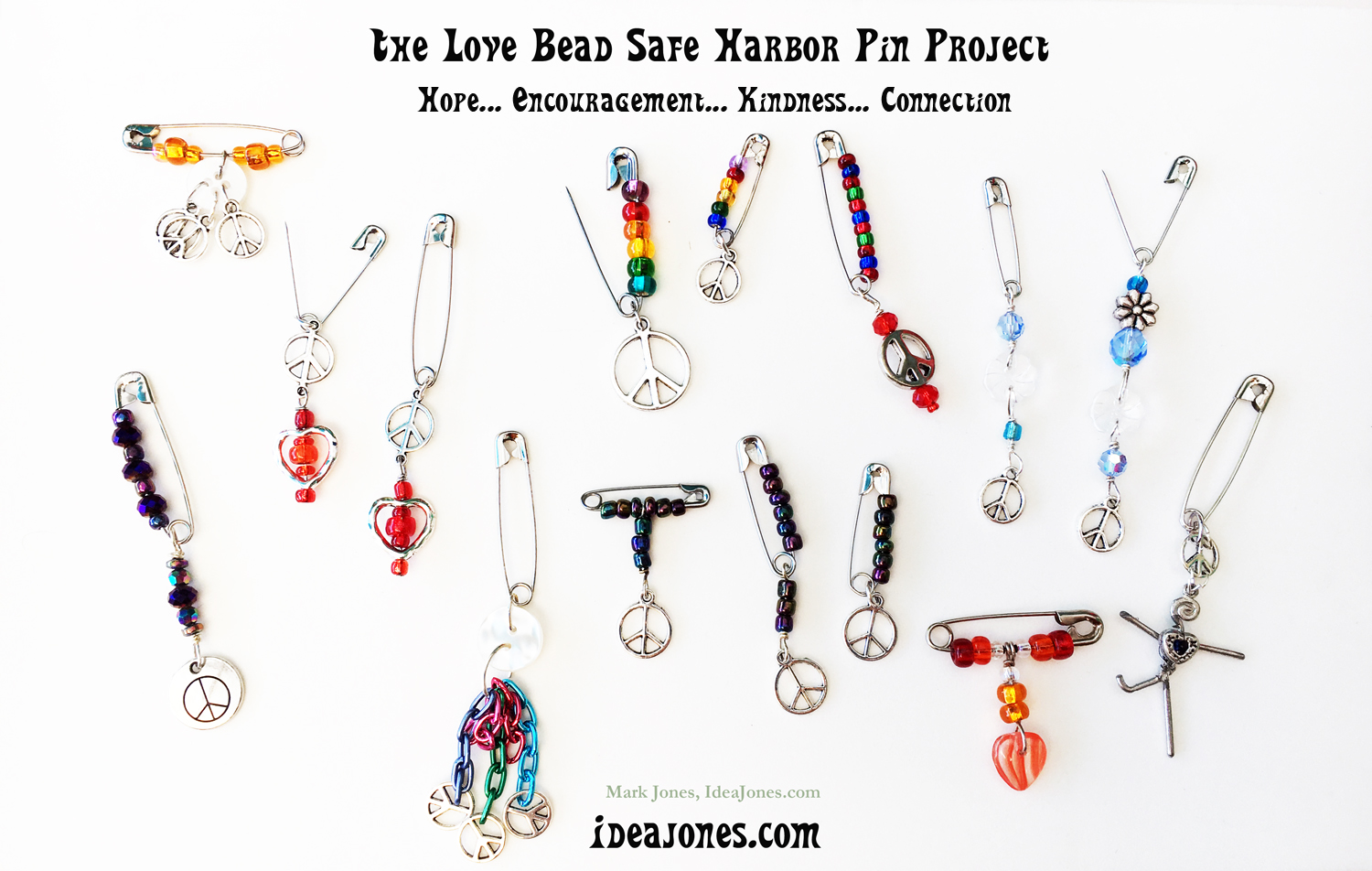
    If you’re new to the Love Bead Safe Harbor Pin and you see one “in the wild,” on someone on the street, in a restaurant, at school, at work, or any of the places you might find cool people, you might wonder if there’s any significance to the color, or the charm hanging from the pin. The answer? Sometimes yes, sometimes no.

    The safety pin is what makes it a “safe harbor” pin. So no matter the color or decoration, it’s still a Safe Harbor Pin. The rest is about standing up for a special cause that is close to your heart. It doesn’t mean you don’t care about anything else, just that this particular cause is one you’re especially passionate about, or is especially relevant to your life, or in the lives of people you know.

    The Health Care Pin:

    Whether your life is saved or not shouldn’t depend on your income.

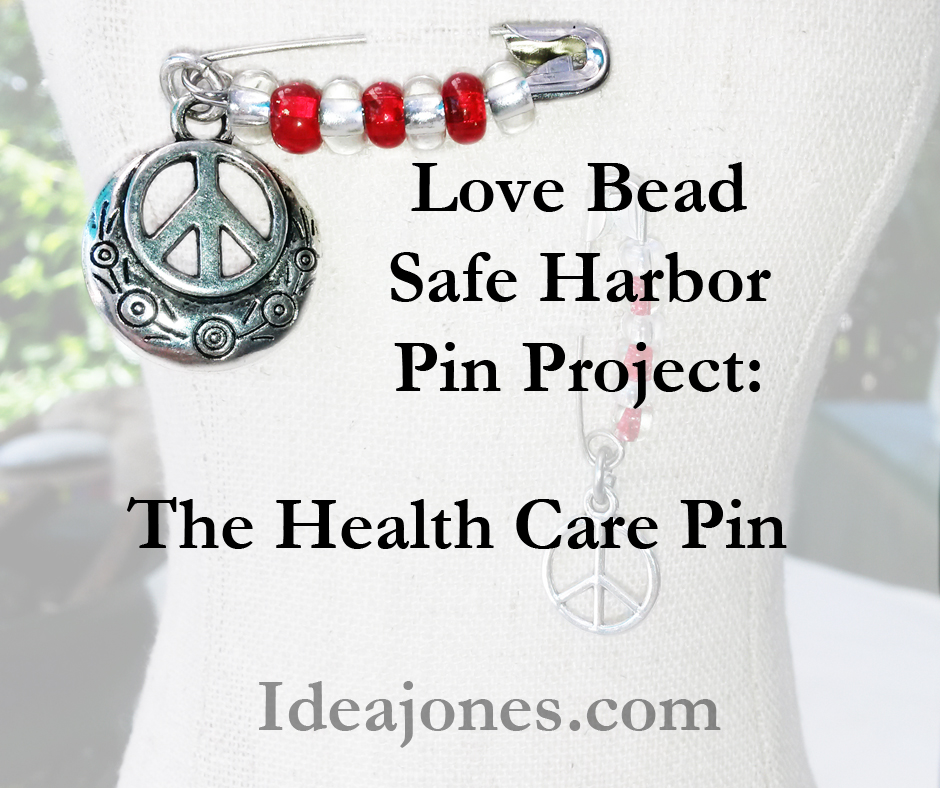
    This was something suggested to me by a Pin Sponsor, one of the fantastic people who got online and asked to buy a set of pins and sponsor a set to be distributed free to someone else (maybe you?).  She wanted a pattern that signifies a commitment to seeing that people are able to find and afford the health care they need. She suggested the red and white pattern, which is also used by emergency health care providers and disaster relief organizations.

    Wearing this pin shows that access to affordable health care is an issue close to your heart (a phrase which takes on added meaning in this case). You believe that you, and that person over there, and people you don’t even know exist (which, if you think about it, is almost all people, since there are billions of human beings and you probably can’t name them all) deserve access to affordable, effective health care.

    Sure, there is a debate to be had about whether or not society should pay for treatment that doesn’t have a lot of scientific evidence to support its effectiveness. Or whether or not society pays for, say, somebody’s plastic surgery to change the shape of a nose that works fine, as a nose. Those are things we should debate and decide.

    But should your neighbor die of heart disease because he can’t afford to see a cardiologist? Should kids be crippled or killed by disease because their families can’t afford the vaccine that would prevent it? Is there a basic level of health care that should be accessible to everyone?

    Note that I don’t say “this is about universal health coverage.” It’s true, I do think that’s our best option, for a host of non-huggy-feely, practical reasons, but this isn’t about any one approach. It’s simply a starting place, “Yes, I believe there is some basic level of health care that should be available to all of us, so  now let’s figure out what that looks like and how we pay for it.”

    Here’s one reason why society (meaning all of us) benefits when there is general access to decent health care: no matter how wealthy a person may be, he isn’t self-sufficient. We depend on millions of other people to make, sell, repair, clean and cook things we need or want. Those people do a better job if they’re healthy. And if they don’t have to wait to be treated until whatever it is becomes an emergency, our own health care costs go down. And they aren’t hocking up germs on whatever it is they’re working with because they couldn’t see doctors, which means we’re healthier. We need lots of people at work, earning a living (and they have more available income to spend if they don’t have to go into bankruptcy due to health care costs), making things, buying things. Healthy people do a lot more of all of that stuff.

    Sometimes, when one of us is trying to make a decision and getting bogged down in details, Mark or I say, “The first question is: Do you want to do this at all? If you don’t, the details don’t matter.”  So this isn’t about what the program looks like, or the funding mechanism. It’s about that first question, “Should we do this at all?,” and the answer, “Yes!”

    Yes, you should be able to get your eyes checked, the cavity in your tooth filled, your flu shot, your blood pressure checked and treated if needed. So should I. So should that person over there, and that one (What’s his name? He looks kind of familiar…), and her over there (I think she works at the supermarket…). Yes, that baby with the inherited muscle problem should be able to get it treated so she can walk. Yes, that toddler who ate a watch when nobody was looking should be able to get it removed, by a doctor, in a safe facility.

    The peace sign on this pin? Peace of mind. Freedom from anxiety about how we’ll manage to see doctors, or dentists, or get whatever medical treatment we need. For you, for me, for everyone (yes, even that guy whose name we can’t remember. Him, too).


  • Love Bead Safe Harbor Pin Weekend Is Here!

    814 chances to choose radical respect!

    If you’re going to be within driving distance of San Francisco this weekend (June 2-4), and you’d like a free Safe Harbor pin (to show that you support treating everyone with respect), you can celebrate the 50th anniversary of the Summer of Love and get yourself a free Love Bead Safe Harbor Pin.

    We started out planning to distribute 250 sets of pins (each card has 2 pins on it, so that’s 500 pins). We just finished packing up to make the trek, and we’re coming with 407 sets! 814 pins that promote “radical respect,” the idea that we can choose to treat everyone, even people we don’t understand, or with whom we disagree, with respect. We can recognize our common humanity.

    After this, we’ll try to carry a few spare sets with us (because, as other people who’ve gotten pins and worn them can tell you, it’s a conversation starter), but this is the last big pin giveaway we have planned. We’ll put a few in our Etsy shop with part of the money going to charities (like Opening Doors, helping refugees resettle, or Mustard Seed School, helping kids from homeless families), but this last distribution in San Francisco marks the end of the project.

    We have a couple of “pop up” sites that won’t be announced until just before they start, and one we can announce now. Here’s the schedule — for updates, like the pop-ups, check our Facebook page, https://www.facebook.com/Ideajones/

    Friday, June 2:

    2-3 pm: Haight Ashbury Free Clinic, 558 Clayton Street, San Francisco, CA

    558 Clayton Street, San Francisco

    3-4 pm : Pop-up (location TBA, check our Facebook page) — we’ll announce it here when it’s time

    Saturday, June 3:

    10-11 am: Pop-up (location TBA, check our Facebook page) — we’ll announce it here when it’s time

    noon – 1 pm: SCRAP, 801 Toland Street, San Francisco

    A note about times — it’ll start at the listed time, and I’ll be there until I run out of pins. So far, they’ve gone quickly (I’ve given out more than 100 in 15 minutes). So if you really would like to get your hands on a set, best to be there as close to the start time as you can.

    If you know anyone in the Bay Area who might like a set of pins, please share this. Hope we see you soon! #safeharbor