IdeaJones

Tag: LGBT

  • Pin Tales: The Waitress

    Pin Tales: The Waitress

    This project is about human interaction — how we choose to treat other people.

    With thanks to Janice Jow, who suggested writing down and sharing the stories of The Love Bead Safe Harbor Pin Project.

    This is the story of The Waitress.

    My friend and I went out for brunch one Sunday. My friend is learning to drive  (which is badass when you never planned to learn and didn’t especially want to, but you just got a job you like and they want you to drive).  When we go out now, she drives at least part of the time, and we stop to eat.

    We went to a diner, ate, caught up on what was going on in our lives, and laughed.  I approached the register, making my way through the crowd.

    The waitress who had pulled cash register duty was young, maybe mid-20s, with big, serious eyes and dark hair pulled into a ponytail, which is close to being the Universal Waitress Hairdo (I used to be a waitress, years ago, and almost all of the younger waitresses wore their hair that way. It’s a practical thing). She glanced at the Love Bead Safe Harbor pin on my blouse. “I really like that,” she said quietly.

    She wasn’t familiar with Safe Harbor pins (most people I meet aren’t), but said she really liked the idea. I offered her a set of pins, holding out several types. I explained that one was Civil Rights and Social Justice, one was Women’s Rights, and the rainbow set was LGBTQI Rights. She bent closer and pointed to the rainbow set. “I’d like to have those, please.” Her voice was almost a whisper.

    I get it. You have to be careful when you work with the public. Some people feel it is their bound duty to give you their unsolicited opinions about how you live your life (instead of, say, keeping their opinions to themselves and going about their own lives. Whenever people do that, I want to ask for all the details about their lives so I can pass judgement on them. I should get to have fun, too).

    She took the pins, met my eyes, and said, “Thank you.”

    My friend and I left the restaurant. Not everyone is in a position to bravely trumpet their beliefs everywhere they go. If putting food on the table, or paying for school, or other necessities of life depend on not offending people, your march is harder than that of someone who won’t lose much by standing up. Which means that standing up is all the more important for anyone who can, because then you’re standing up for yourself, and for someone not so fortunate.

    She picked those pins, making her public commitment to the importance of people treating each other with true respect, in a time and place when it wasn’t easy for her to do that. Sometimes heroics are quiet, life-affirming acts taken by people for whom standing up at all is hard.
    Save

    Save

  • Field Guide To Love Bead Safe Harbor Pins: The LGBTQI Pin


    Because we’re all human and valuable.

    A Field Guide To The Love Bead Safe Harbor Pin (kind of like a bird watcher’s guide to birds).

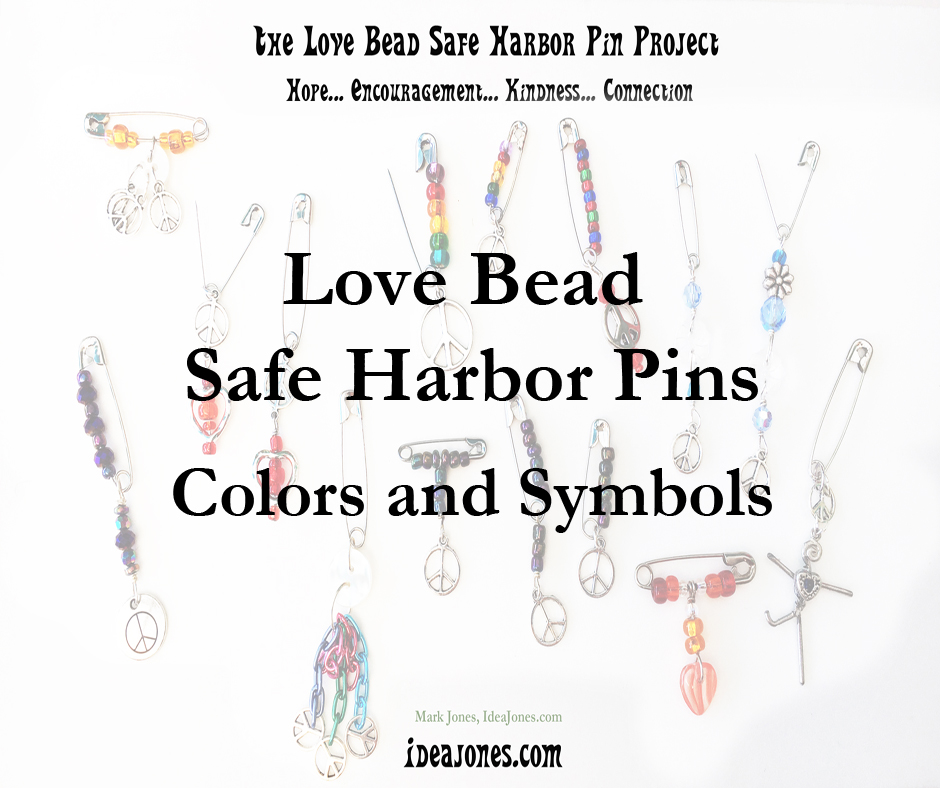
    If you’re new to the Love Bead Safe Harbor Pin and you see one “in the wild,” on someone on the street, in a restaurant, at school, at work, or any of the places you might find cool people, you might wonder if there’s any significance to the color, or the charm hanging from the pin. The answer? Sometimes yes, sometimes no.

    The safety pin is what makes it a “safe harbor” pin. So no matter the color or decoration, it’s still a Safe Harbor Pin. The rest is about standing up for a special cause that is close to your heart. It doesn’t mean you don’t care about anything else, just that this particular cause is one you’re especially passionate about, or is especially relevant to your life, or in the lives of people you know.

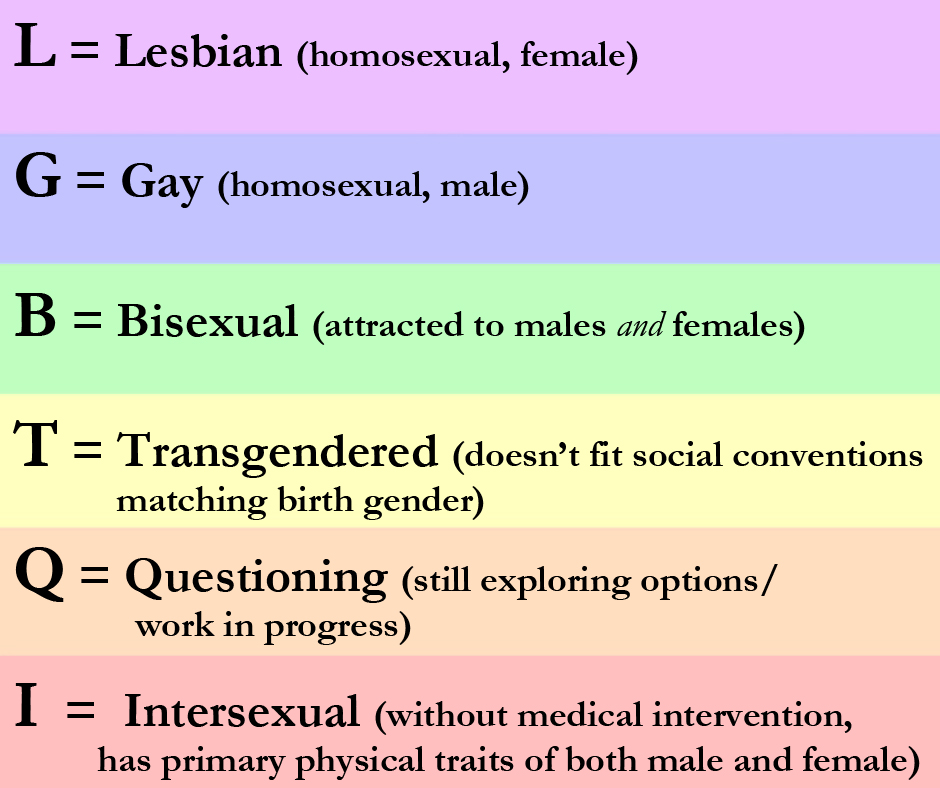
    A (very) simplified guide to the LGBTQI acronym.

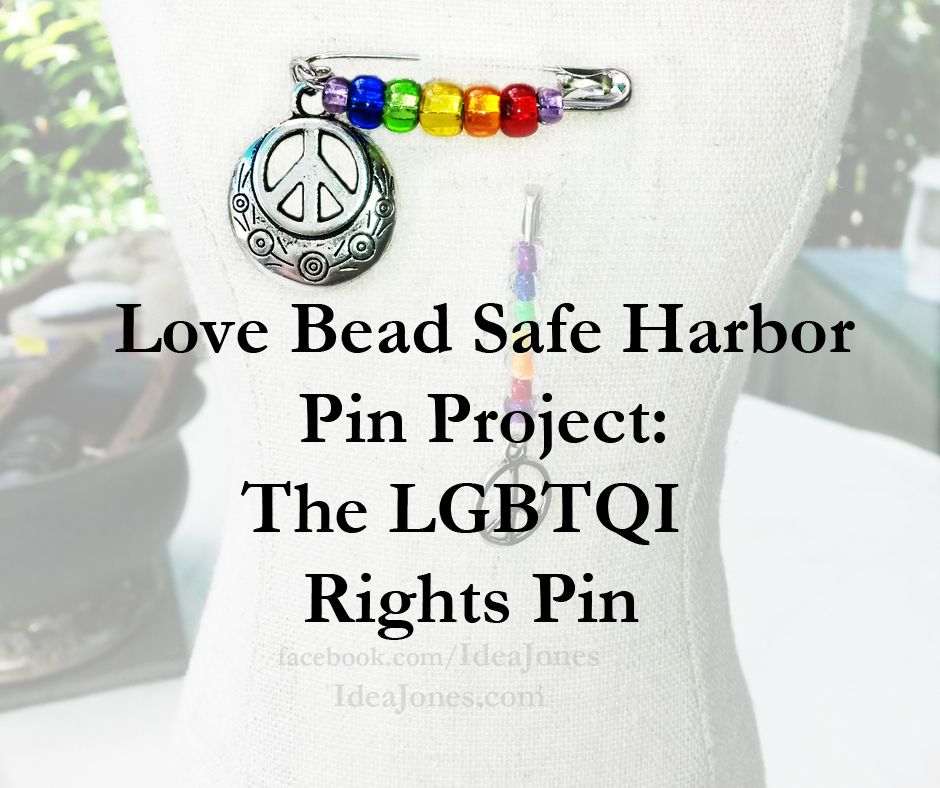
    The LGBTQI Rights Pin:

    I’m such a fossil, I didn’t know what the “Q” and “I” were until a friend explained it to me (and I did a bit of research of my own). In case you don’t know, here’s a very basic breakdown of “LGBTQI:”

    The most important thing to know about this issue:  It’s none of my (or your) business who neighbors/ coworkers/ random people we encounter conduct their sex lives.  If you find out someone is doing something illegal, call the cops. Otherwise, it falls under “ANOYB,” or “Ain’t None Of Your Business.” People have the right to conduct their lives as they see best, in safety, and be treated with respect, whether we understand or approve of their personal choices or not.

    So wearing an LGBTQI pin doesn’t mean you approve of someone else’s life, because the point is, you don’t have to in order to believe that person deserves to be treated with respect, and his or her civil rights respected. Think of it as “radical good manners.”

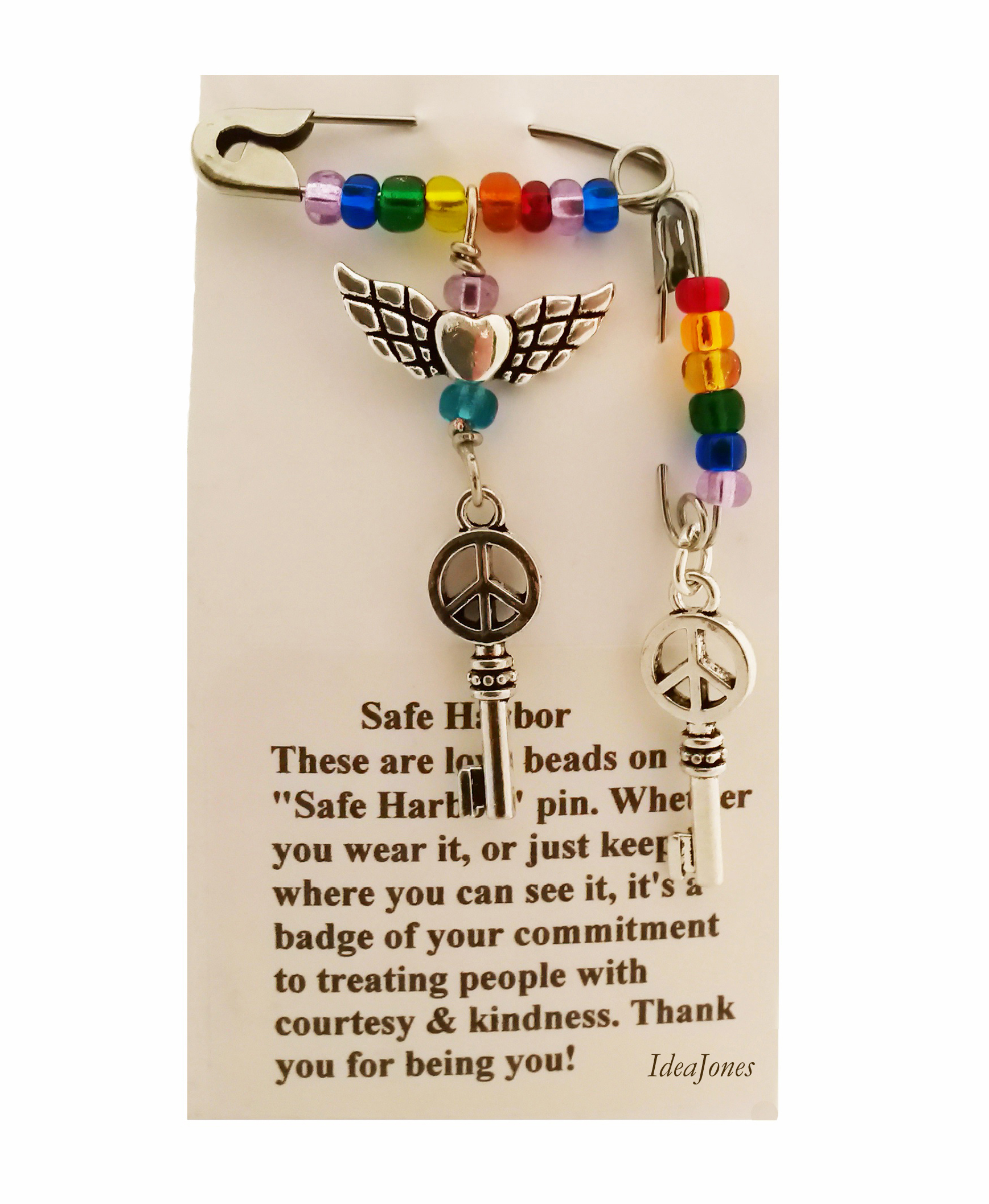
    This is the rainbow pin. The type and finish of the beads may vary, but the rainbow color pattern makes this pin an LGBTQI pin.

    For me, the sex lives of other people fall under “things I don’t have to have an opinion about.” If I’m not being asked to participate or watch, it doesn’t concern me. So I really don’t have any opinion about whether people “should” or “should not” be, say, homosexual. “Judge not, lest ye be judged.” I’m too busy trying to get my own stuff straight. Other people are human and I respect their humanity and right to live without feeling threatened or abused, and I don’t need to suss their private lives because it’s not my job to judge the “worthiness” of my fellow human beings. I don’t have any “gay friends.” I have friends who are gay (or somewhere in the LGBTQI spectrum), but we don’t talk about their sex lives, or mine. It’s not relevant. It’s simply a fact about that person, about on the level of height and eye color.

    You can wear the LGBTQI pin and be fully supportive of, indifferent to, or somewhere in between, on any of the many ways human beings experience or express their gender or sexuality. You can even feel uncomfortable with all of this and wear the pin. Wearing this pin says “I believe in the rights of human beings to be treated with respect,” and a recognition that those who don’t conform to what is expected based on the gender they “seem” to be face an uphill battle in this world, and can use allies.

    The peace symbol charm on this pin signifies your feeling that people, regardless of what they look like or what they do with their personal lives, should be free to live in safety without fear of being attacked, bullied or discriminated against.


  • Pin Tales:  The Boy With The Hat

    Pin Tales: The Boy With The Hat

    I’m 137 pins distributed into this project as of today. This means about 140 interactions with people so far, and as you might expect, those interactions vary widely. This project is about human interaction — how we choose to treat other people. I was telling my friend Janice about some of them, and she said, “You’re writing these down, aren’t you? It’s part of the project! You should be telling the stories that go with this.” So begins “Pin Tales.” These are the stories associated with this project, both the good and the bad. When you feel like a bit of light reading, join us on Tuesdays for the latest Pin Tale. First up:

    The Boy With The Hat

    Mark and I went to a theme park (we love theme parks). As we were leaving, we found staff lined up to wish everyone a good night (and probably to answer last-minute questions). I was passing by a young man (every year, more of the population is younger than I am. He was probably in his 20s). As I passed, we smiled, but then he looked at the Love Bead Safe Harbor Pin (let’s say “Love Beads”) I was wearing. He approached me, speaking softly.

    “Do you know what it means to wear the safety pin?,” he asked. I said that yes, I did, it was a Safe Harbor Pin and that I’d made it. I always carry a few with me, so I offered him a set.  As he took it, he said, “You made this?”

    “Yes,” I answered, “I make them and give them to people.”

    He didn’t say anything for a moment. He just stared at the set of pins, lying in his palm on their little card. “People are getting harassed,” he said quietly. “I know people who’ve been bullied, and…” He looked up and made eye contact. “Is it all right if I hug you?”

    As people who know me can tell you, I’m not big on physical contact with anyone I’m not close to, but I couldn’t say “no.” I nodded, and he hugged me quickly. “I can’t wear this while I’m working,” he told me, “but I will wear it. Thank you.” We said our goodbyes, and Mark and I headed for the Administration Office at the park (we had a quick errand there).

    As we came out of the Admin Office, I heard my name. Looking around, I saw the young man jogging toward us, with something in his hand. “This is the hat I wear when I’m not at work,” he said, showing me a hat with his new Love Beads front-and-center. “I’m going to tell my friends,” he said, “that this came from someone I didn’t even know, who makes these and gives them away. I’ll tell them that we aren’t alone, that there are people we don’t even know who want us to be safe.”

    “There are people hoping good things for you who don’t even know you,” I said.

    “Can I hug you one more time?,” he asked. We hugged, said goodbye, and Mark and I left.

    I’m a big ol’ introvert, so just talking to strangers is a stretch for me, but a very wise friend once said, “If it’s important to you, don’t wait until you feel like it, or feel up to it. Do it scared.”

    When I started this project, I wasn’t even sure of the purpose of it myself. It was instinctive, divine inspiration, a need to react to the increasing negativity and hostility I was seeing and hearing. Soon, I realized that it’s about the potential in every human interaction. Every time we meet, or talk, we make a choice about who we are and how to treat other people. Friends can tell you there are no signs of incipient diety about me. No aura of sainthood. I fall short of my expectations on a daily basis, if not hourly (some days are like that). So this project reminds me of the potential in every moment.

    With each interaction, I make a choice of how to approach or speak with someone, and he or she makes a choice about how to treat me. All the choices we make become who we are, in our own eyes, and in the eyes of others. We are largely who we decide to be.

    In that moment, I decided to come out of my comfort zone, and so did The Boy With The Hat. We decided how to treat each other, and how to respond to how we were treated. In that moment, we both decided to cooperate to build something small and beautiful.


    Save

  • A Field Guide To Love Bead Safe Harbor Pins: The Civil Rights & Social Justice Pin

    A Field Guide To Love Bead Safe Harbor Pins: The Civil Rights & Social Justice Pin

    Why this color? What does this charm mean?

    A Field Guide To The Love Bead Safe Harbor Pin (kind of like a bird watcher’s guide to birds)

    If you’re new to the Love Bead Safe Harbor Pin and you see one “in the wild,” on someone on the street, in a restaurant, at school, at work, or any of the places you might find cool people, you might wonder if there’s any significance to the color, or the charm hanging from the pin. The answer? Sometimes yes, sometimes no.

    The safety pin is what makes it a “safe harbor” pin. So no matter the color or decoration, it’s still a Safe Harbor Pin. The rest is about standing up for a special cause that is close to your heart. It doesn’t mean you don’t care about anything else, just that this particular cause is one you’re especially passionate about, or is especially relevant to your life, or in the lives of people you know. First up:

    The Civil Rights and Social Justice Pin

    Equality before the law and human rights.

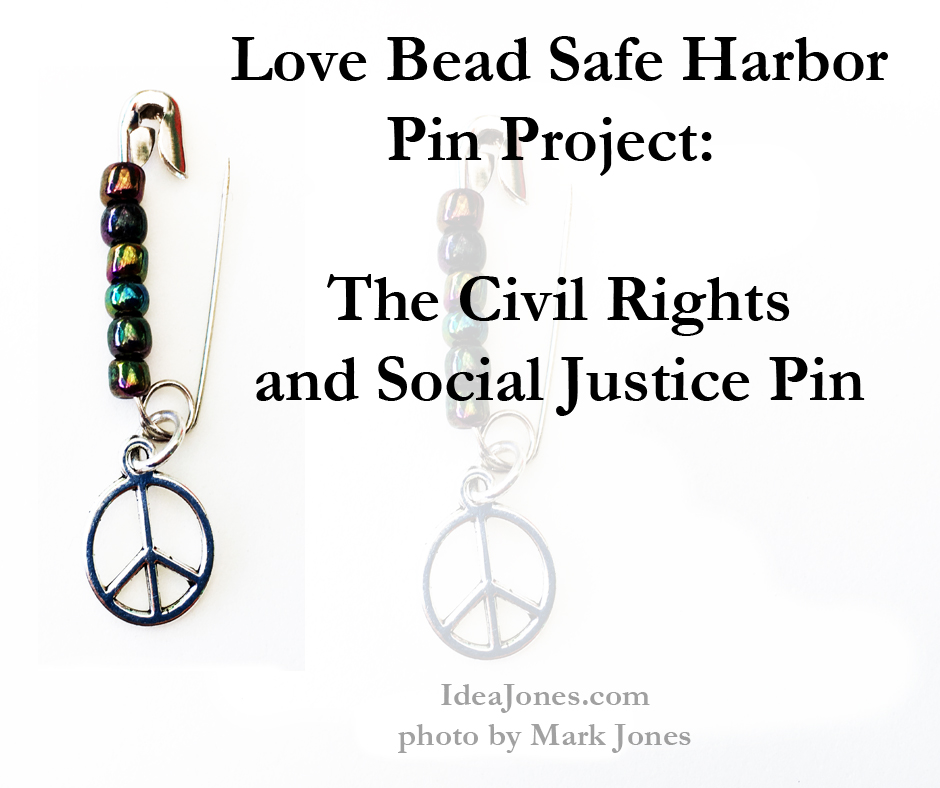
    This pin will be iridescent black (the individual beads shine with a lustrous finish like the colors of the rainbow, so in this case, a black bead that has a shiny finish that shifts in the light, like light playing on water). It looks kind of like very dark steel. The color signifies the strength and durability of steel, like the strength and durability people have to show fighting for freedom and justice. (I know, “Oooooh, deeeep!” But it’s true).

    Mine have a peace symbol charm, or a heart. The peace symbol is a charm I use on most of my Love Bead Pins. In addition to the usual meaning of the peace symbol, on the Civil Rights Pin, the peace symbol also honors those who, like Dr. Martin Luther King, Jr. and Mahatma Gandhi, use nonviolent means to fight for their causes. That is probably the hardest route to take, to not lower yourself to the level of those who oppose you and hold to your principles in the face of opposition or even danger.


    Save

    Save

  • Why I Fly My Flag (Or Wear My Pin)

    Why I Fly My Flag (Or Wear My Pin)

    As you probably know, I make Safe Harbor pins and give them away. This has been an almost entirely positive experience. I have given them to young people, old people, people of every religion and none, of every color (it seems like I should say “and none” to balance the sentence, but truthfully, there are no colorless people. We’re all some shade of brown from pale tan to burnt umber). I’ve had people hug me, get teary-eyed, get excited… so it’s not the people getting or wearing the pins that are raising dust.

    Most people I’ve met while doing this get it. It’s meaningful for them. Still there are a handful of malcontents who say that the Safe Harbor pin is “just a badge of white guilt,” and meaningless. They’re frustrated, angry and scared, so they’re lashing out, and making a big mistake.

    No symbol, on its own, solves a problem. That isn’t what symbols do. To quote the Oxford Dictionary, a symbol is “a thing that represents or stands for something else, especially a material object representing something abstract.”  Safe Harbor pins are a symbol worn by people who want to act to solve the problems, as a reminder to themselves of their commitment, and a signal to others that they are not alone in the fight. That is the value. They offer a tiny bit of hope and unity in a divided, angry world. Humans have and create symbols because we need them.

    When you are low, or feeling threatened and beaten, a kind word is far from meaningless. Seeing someone sporting a rainbow Safe Harbor pin, or any Safe Harbor pin, is a reminder that there are people, people you don’t even know, may never meet, who want you to be safe and well. I know this because I’ve been told just that by people who saw me wearing one, people who were feeling marginalized, as though their human dignity and worth was being questioned.  Of course, there must be actions behind that symbol, and there are. People calling on their elected representatives to act, to make changes. People marching, people gathering to help those in need. They are part of a movement that is just finding its feet. They wear their safety pins with pride, and I am one of them.

    No one group is feeling more undervalued or disrespected. Point a direction and you are bound to hit someone who feels isolated and scared, for being female, for being gay, or transgendered, or an immigrant, or… There is good in reminding people that we share a common humanity, common concern for ourselves, our families and friends, our country, our world. That is what the Safe Harbor pin says. “We are both human and in this together.”

    I’ve given pins to people who cried, who were at a low point when a kind word meant a lot. And I won’t stop making them. I won’t stop handing them out. I’ve seen the good it does. Symbols matter. Statements matter. They are the flag behind which a movement marches, and without movement, there is no improvement.

    I am proud to wear my Safe Harbor pin, proud to give them out, to share encouragement and hope. It is my symbol, not of guilt, but of determination.