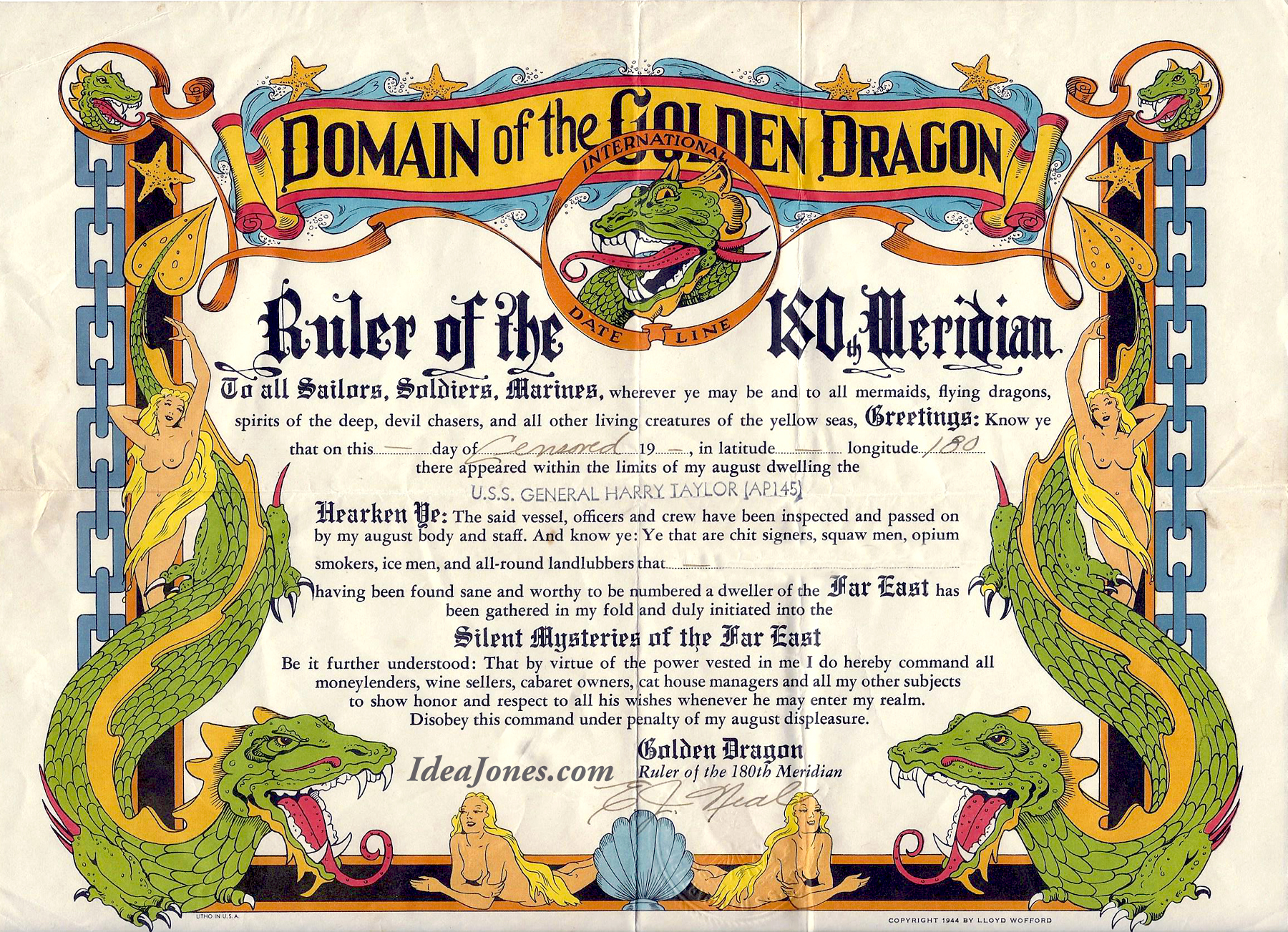
This is a certificate awarded during WWII (the recipient’s name has been removed for this picture). Certificates were awarded to Navy sailors who crossed the International Date Line aboard ship. The recipient of this certificate earned both this one and the Imperium Neptuni Regis (more about that in another post).
With so much activity during WWII, there probably wasn’t much of an award ceremony. There are some interesting things to note here, though…
The date is listed as “Censored,” and only the longitude is filled in. This is common for WWII paperwork. Security was a serious consideration (still is), and if the enemy knew where ships had been and were, they could guess where they were headed.
The ship given is the U.S.S. Harry Taylor. The Harry Taylor was a General G.O. Squier Class Transport, or troop carrier that was used in WWII from 1944 to 1946. Thousands of soldiers slept in its bunks and walked its decks en route to battle or coming home. After that, it transported all sorts of people, including refugees. It made over 30 trips ferrying refugees to their new homes, then was used to track missiles. Now? It’s part of an artificial reef helping to protect marine life.
The sailor who earned this certificate? He survived WWII, although many of his friends did not. He got married, had kids, tried to work though the problems he carried with him, some of them due to his wartime experiences. Is there more to that story? Of course. But for now, he rests, under the protection of the Golden Dragon.
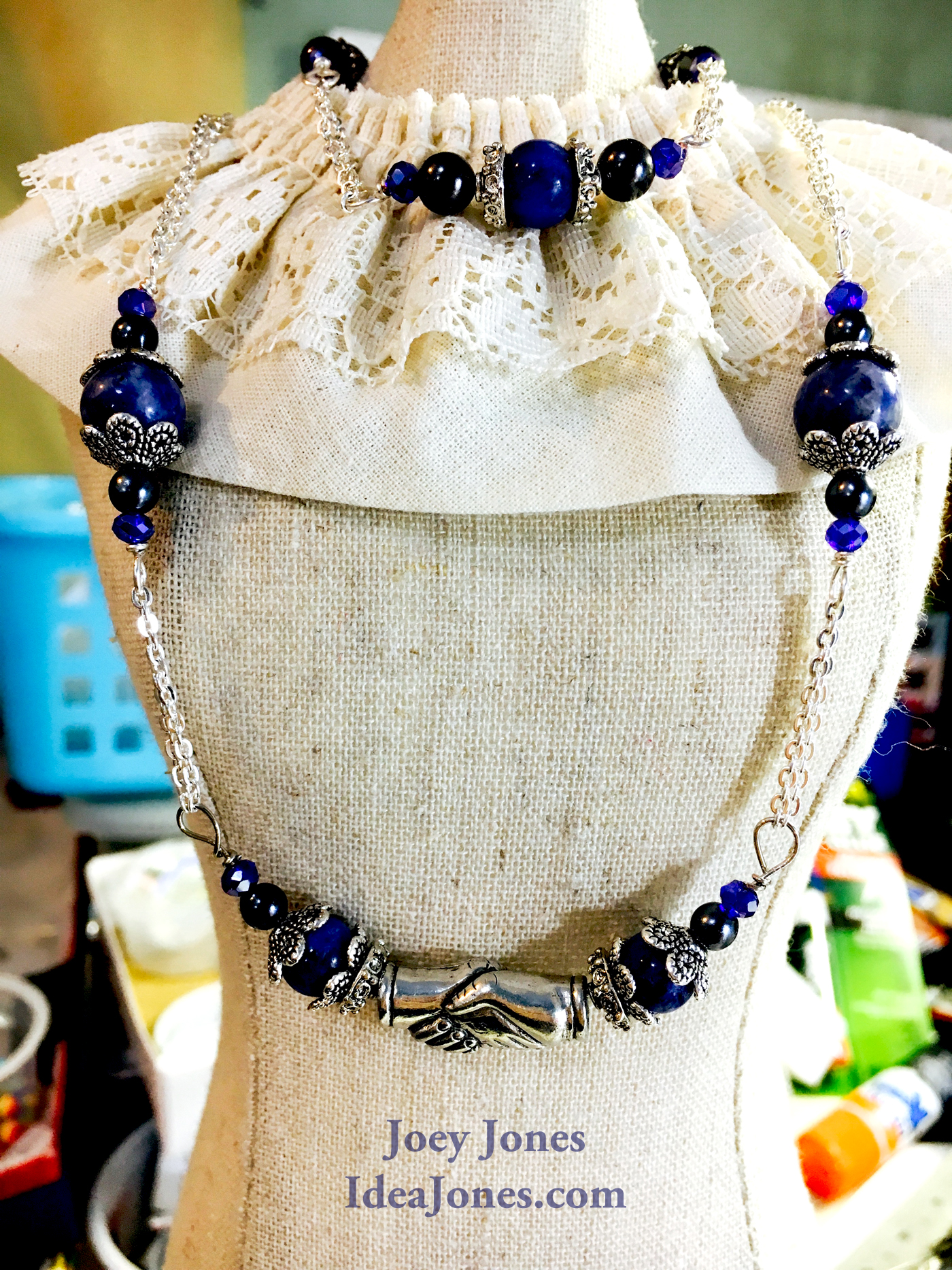
“Guv’nor,” our donation to the PAWS fundraiser, Petitecture, inspired by the auction winner’s beloved dog.
Waiting for the address to mail this to the person who won it at auction at the Pets Are Wonderful Support fundraiser in San Francisco. It was inspired by her dog, Guv’nor (who is, from the photo, adorable). PAWS is a great organization, helping people who are chronically ill keep their beloved pets. From their website:
“PAWS believes that the healing impact of the human-animal bond is one of the best supports available for medically vulnerable individuals, and mounting evidence indicates that this bond can yield valuable health outcomes. For many people, having a companion animal is part of living a happy and fulfilling life. For some individuals, especially those who are chronically ill, frail, and isolated by disease or age, having a companion animal can be central to their health and well-being. Animal companionship becomes even more important when our human contacts diminish because of aging or illness.”
I don’t make a lot of jewelry now (if you don’t count the 1,000+-and-counting Love Bead Safe Harbor Pins we have given away this year). Writing takes up most of my time, and artwork that I create for Redbubble.com and other online businesses. But we’ve been supporting PAWS for years now, and the mission is one we really believe in. Once, I stopped in to drop off jewelry for an event. Ahead of me was an elderly couple with their dog. As I waited, I heard them explain that they were checking in because their dog needed to see the vet. As they checked in, they told the receptionist how important the dog was to both of them. “He gives us a reason to get up in the morning,” the wife said. They expressed how grateful they were for PAWS, who helped with food and vet care they couldn’t afford.
I was so glad to be a small part of what they do. PAWS is now partnered with another organization, Shanti Project, still helping those who are ill keep the pets who give them comfort and support, and keeping those pets out of shelters.
We went to see “Newsies,” (a Broadway musical) in a movie theater (yay, Fathom Events, bringing such things to movie theaters across America), then “Despicable Me 3.” Guess which audience deserved a standing ovation?
The Newsies screening was lightly attended. We got there early as I’d been looking forward to it, got great seats and settled in to enjoy. One group settled behind us and began a symphony played on cellophane wrappers and purse zippers. Not just “zip,” or even “zip, zip,” but “zip-crinkle-zip-zip-crinkle-zip-zip-zip!” At the last minute, in walks a group of teenaged girls. Loud teenaged girls. I was a teenaged girl. I remember what it’s like, out with your friends, having fun. But these girls were talking (loudly) about theater. Auditions they had gone to/were going to. They talked (loudly) even during the special added moments, like members of the cast of Newsies singing new interpretations of songs. The sorts of things real theater people enjoy. Which we couldn’t hear. Because of them.
Real artists respect the craft. Music, acting, painting, whatever it is, it’s hard work if you do it right, and you respect other artists and respect an audience. They have their part to play, buying tickets, paying attention, being present for whatever it is. They paid to see/hear/experience something and a pro respects that and doesn’t get in the way of it. As a friend once told someone in my presence, “Nobody here paid to see you, so sit down.”
Then we went to see “Despicable Me 3.” An audience of parents and little kids. These kids, who weren’t together, by the way, behaved like champs. Sure, they talked a bit, quietly. If they kept talking, parents quietly told them to keep it down so people could hear. They reacted to the movie, laughing, etc. But they didn’t talk loudly, or run around, or otherwise ruin the experience for the people around them. They were great. When the movie ended, I told Mark I wished I could stand at the door to the theater and thank every parent there. “There’s some rock star parenting going on in this theater,” I said.
Now, I didn’t say it for effect. It was just a comment to Mark. “There are kids here behaving better than the adults in the other theater.” I saw a dad sitting ahead of us nudge his wife. Mark told me later the man’s wife was beaming. She should be. They are raising considerate kids who know how to be with other people, enjoying and participating, without selfishly getting in the way of what’s going on around them.
Thank you, rock star parents who are taking care of business in the most classy way possible. The rest of us who share this planet with your kids owe you our gratitude.
And to those girls, just know that nobody was impressed by your discussion of what songs you plan to sing for your auditions. You were just the jerks who disrupted the movie for the rest of us.
I missed the whole 1960s-hippies-coffeehouse-folk music thing. For me, the 1960s was learning to tie my shoes (some day I’ll tell you my penny loafer story, but let’s just say it wasn’t easy to learn shoe tying when one parent was right-handed and the other was left-handed), reading, playing with my dog and trying to “fly up” from Brownie to Girl Scout. Weird my parents might have been, but they weren’t going to let their five-year-old hang out with the hippies at the coffee house. I saw that stuff on tv and in movies.
But guess what? If, like me, you missed out on the 60s or you were there and you’re nostalgic, or you just like seeing music in small venues where you can actually hear and nobody’s blocking your view by standing on a chair, you’re in luck, if you can get to Berkeley, CA. Next time you’re in the San Francisco Bay Area, make time to go to a show at The Back Room.
It’s got that funky, comfortable feeling, brick walls, sofas (they also have some tables and chairs in the back). It’s “intimate,” both in the usual way that word is used to describe a venue (small) and in a real, accessible, welcoming way. My friend Janice and I saw James Lee Stanley there (and James Lee Stanley is a whole separate post, or will be), and it was all kinds of fun. The overall feeling is of seeing a performer at a house party. In the case of James, he chatted with the audience, asked for (and got) requests… it felt more like watching a friend perform in his living room than, say, an arena show. You feel like an insider.
This is a venue that, based on our visit, deserves to thrive. It’s fairly new, so I’m hoping people get the word and try it, so it continues. If you live in the area, you’re in luck. If not, but you want to visit San Francisco in the future, make sure you bookmark their website, which is here: backroommusic.com
This project is about human interaction and conscious choices.
You’ve found a project you’re passionate about. You think you’d be good at it. You’re excited! You tell your friends and family and… pfffft, the air goes out of the balloon. Nobody’s interested. What now?
This has happened to me more than once over the years, so I feel you. The natural feeling, when you’re excited about something, is that the people around you will see how great it is and get excited about it, too. Or at least be excited for you. You’re hoping for encouragement, for someone else to be excited for you, happy that you’re happy. If you run headfirst into a wall of indifference, it can bring your momentum to a halt. There you stand, looking around, baffled and hurt — why doesn’t anybody seem to give a fig? Don’t they care about you?
I used to let that stop me. If the people around me weren’t interested, then ( so I thought) either (1) whatever I was excited about wasn’t important, or not “worthy,” or (2) I wasn’t important or worthy. That is not true, and here’s why.
People who like you like you. They may or may not like your work, or be interested in the same things you are. They may enjoy your company and think you’re great and still not get your work. I have a couple of really good friends who, so far as I can tell, don’t get what I do. Everything isn’t for everyone, just as every person isn’t for everyone. I don’t much care for cauliflower, or the paintings of Jackson Pollock. This doesn’t mean that cauliflower is bad, or that Jackson Pollock’s paintings aren’t “worthy.” It means that neither does much for me.
Yet I might have liked Jackson Pollock, and I can like someone who is passionate about the paintings of Jackson Pollock (a passion for cauliflower might be harder to take. I really don’t like the smell). The people who like you have found something they enjoy, or admire, or both, in you. But they might look at your painting, or whatever your project is, and be mystified, or disinterested. It doesn’t move them — you do.
The flip side of this is that you shouldn’t let their reactions determine how you view your project. Get it out there and let your work find its tribe. Chances are there will be someone who will look at it and know just what you were trying to do, and be excited about it. Just as you have your tribe, so will your work.
Case in point… I put together an art show for a local radio station. Eight artists were involved (including me). It was, by design, a range of styles, disciplines and media. Everything from painting and sculpting to jewelry and clothing. The reception was a crush, a great crowd, many of them very enthusiastic. But there was one man, nicely-dressed, who looked over the gallery and asked, “Why jewelry? Why clothes? I understand why you’d include sculpture and painting, but,” and here he actually sniffed in disdain, “why would you include crafts?” And he said “crafts” with great condescension.
The inclusion of jewelry and clothing was deliberate, I explained. Personal ornamentation is one of the oldest forms of art, possibly the oldest. Most major museums have collections of jewelry and clothing. He wasn’t convinced, but said that it did offer “the uneducated” something they could “understand,” which was “probably clever” on my part. (*sigh*). So he clearly didn’t get it. That didn’t make my choices wrong. Most of the people at the show didn’t even question the “why” of that, and enjoyed the show.
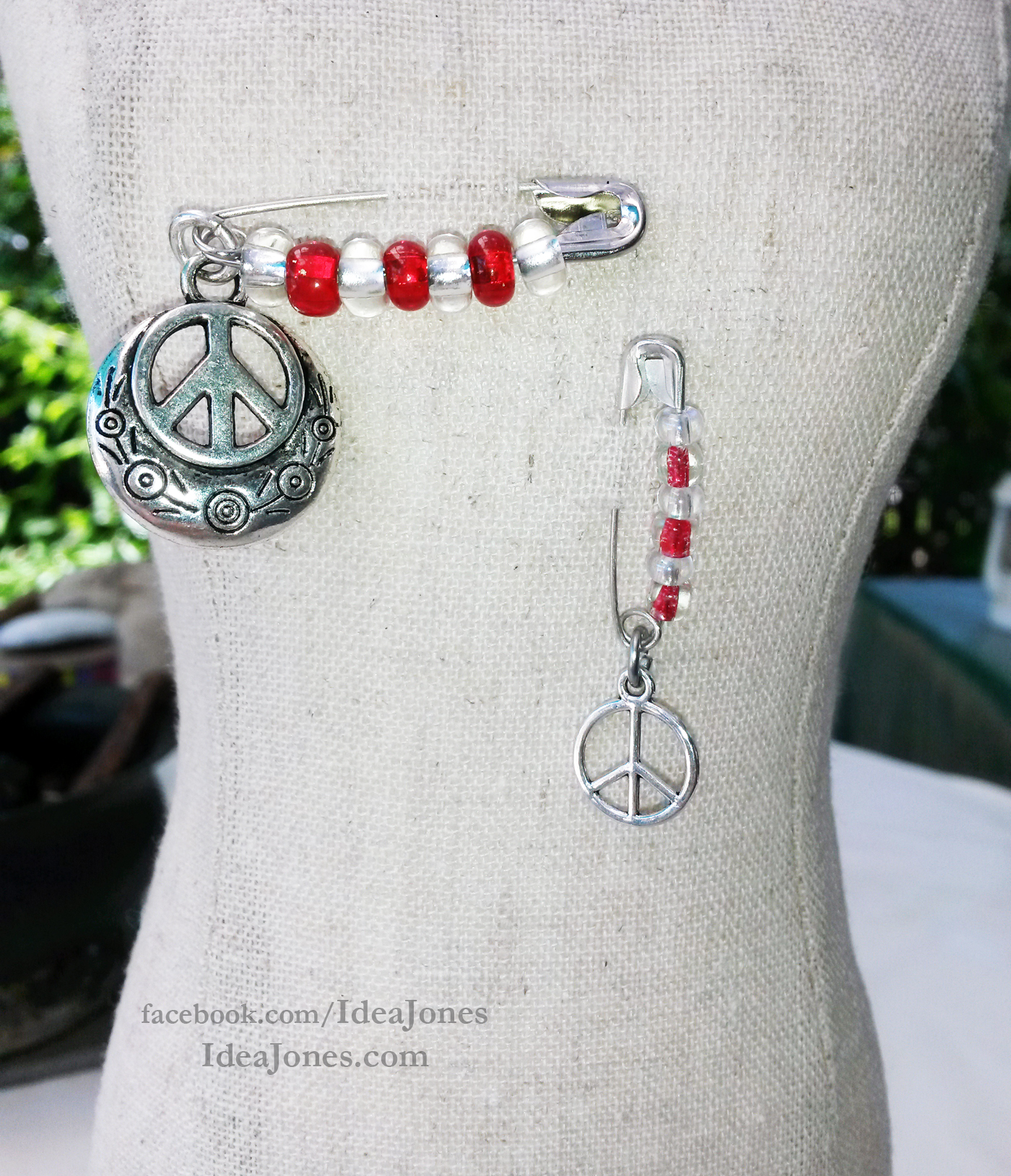
My latest project, the Love Bead Safe Harbor Pin Project?Most people who know me could not possibly care less about it. They like me, but they aren’t interested in my work or this project. But over 500 people so far are. They get it. They understand that those little pins are a symbol of an important idea. They think the pins are fun. They get that the pins start conversations. They like the idea of deciding, consciously, to try to treat other people, even people they might not understand or approve of, with respect. They are my project’s “tribe.”
The “Access To Health Care” Pin
The acceptance rate for the pins is about 91%. Nine out of ten people offered pins accepted them. Their reactions range from mildly pleased to very enthusiastic. I get to have interesting, challenging, enjoyable conversations with so many people about respect, who we give it to and why, what it means… all because of a pair of little, beaded safety pins in a packet. Another artist said she thought this was “the most important work of social art” she had heard of in years, and I’m still dumbfounded by that. People hug me. They tell me their stories. Parents talk to their kids about respect. It has been amazing — and had I not put it out there, I’d have missed it.
Yes, you might put your work out there and it might prove hard to find its tribe. But for sure you won’t find that tribe if you don’t try. People can’t want what they can’t conceive of, and they can’t conceive of your project before you put it out there. If the people in your life don’t get it, accept that and keep moving.
The people who like you, but don’t get your work? Appreciate the role they play in your life, even if it’s just to enjoy your company. You need them. It’s great to have people like your work… but it’s just as great to have people like you as a person. On days when the work just won’t cooperate, you’ll be glad to have someone who, independent of your work, looks forward to talking to you, to seeing you.
And when you do find people who get your work, listen to them! Let the opinions of people who have experienced what you’re trying to do weigh more than those who haven’t. When I would get discouraged, my husband Mark kept saying, “Listen to the people who have experienced what you’re doing and told you that it meant something to them. They know what you’re doing.” They are my project’s tribe, and I wouldn’t have found them if I hadn’t taken a chance that they might be out there.