IdeaJones

Tag: #civilrights

  • Pin Tales: The Waitress

    Pin Tales: The Waitress

    This project is about human interaction — how we choose to treat other people.

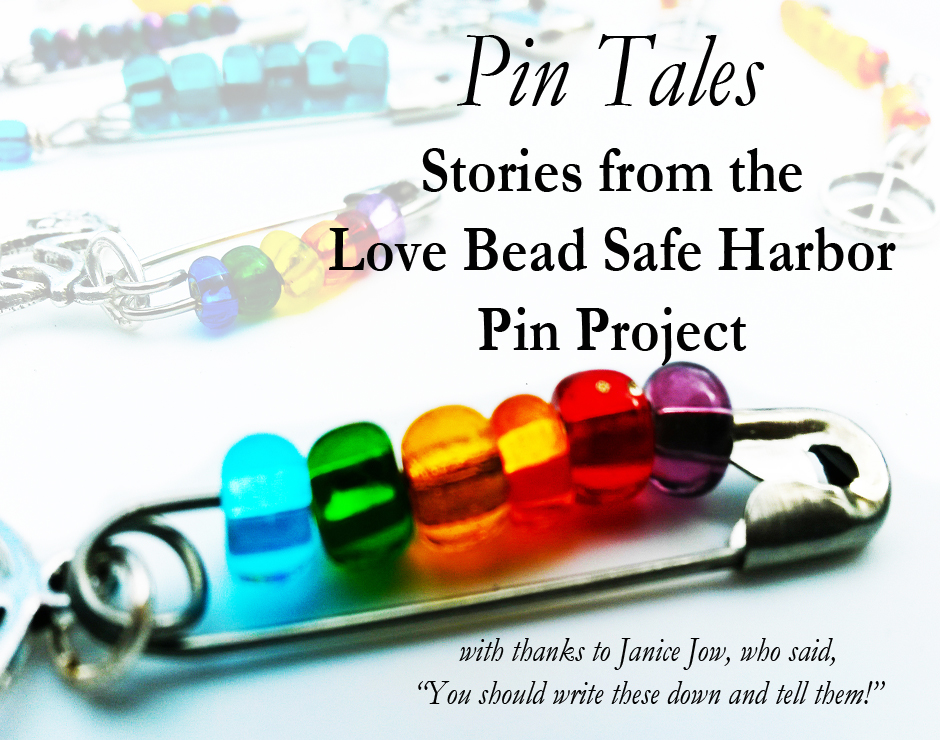
    With thanks to Janice Jow, who suggested writing down and sharing the stories of The Love Bead Safe Harbor Pin Project.

    This is the story of The Waitress.

    My friend and I went out for brunch one Sunday. My friend is learning to drive  (which is badass when you never planned to learn and didn’t especially want to, but you just got a job you like and they want you to drive).  When we go out now, she drives at least part of the time, and we stop to eat.

    We went to a diner, ate, caught up on what was going on in our lives, and laughed.  I approached the register, making my way through the crowd.

    The waitress who had pulled cash register duty was young, maybe mid-20s, with big, serious eyes and dark hair pulled into a ponytail, which is close to being the Universal Waitress Hairdo (I used to be a waitress, years ago, and almost all of the younger waitresses wore their hair that way. It’s a practical thing). She glanced at the Love Bead Safe Harbor pin on my blouse. “I really like that,” she said quietly.

    She wasn’t familiar with Safe Harbor pins (most people I meet aren’t), but said she really liked the idea. I offered her a set of pins, holding out several types. I explained that one was Civil Rights and Social Justice, one was Women’s Rights, and the rainbow set was LGBTQI Rights. She bent closer and pointed to the rainbow set. “I’d like to have those, please.” Her voice was almost a whisper.

    I get it. You have to be careful when you work with the public. Some people feel it is their bound duty to give you their unsolicited opinions about how you live your life (instead of, say, keeping their opinions to themselves and going about their own lives. Whenever people do that, I want to ask for all the details about their lives so I can pass judgement on them. I should get to have fun, too).

    She took the pins, met my eyes, and said, “Thank you.”

    My friend and I left the restaurant. Not everyone is in a position to bravely trumpet their beliefs everywhere they go. If putting food on the table, or paying for school, or other necessities of life depend on not offending people, your march is harder than that of someone who won’t lose much by standing up. Which means that standing up is all the more important for anyone who can, because then you’re standing up for yourself, and for someone not so fortunate.

    She picked those pins, making her public commitment to the importance of people treating each other with true respect, in a time and place when it wasn’t easy for her to do that. Sometimes heroics are quiet, life-affirming acts taken by people for whom standing up at all is hard.

    Save

    Save

  • Field Guide to Love Bead Safe Harbor Pins: The Women’s Rights Pin

    Field Guide to Love Bead Safe Harbor Pins: The Women’s Rights Pin

    A Field Guide To The Love Bead Safe Harbor Pin

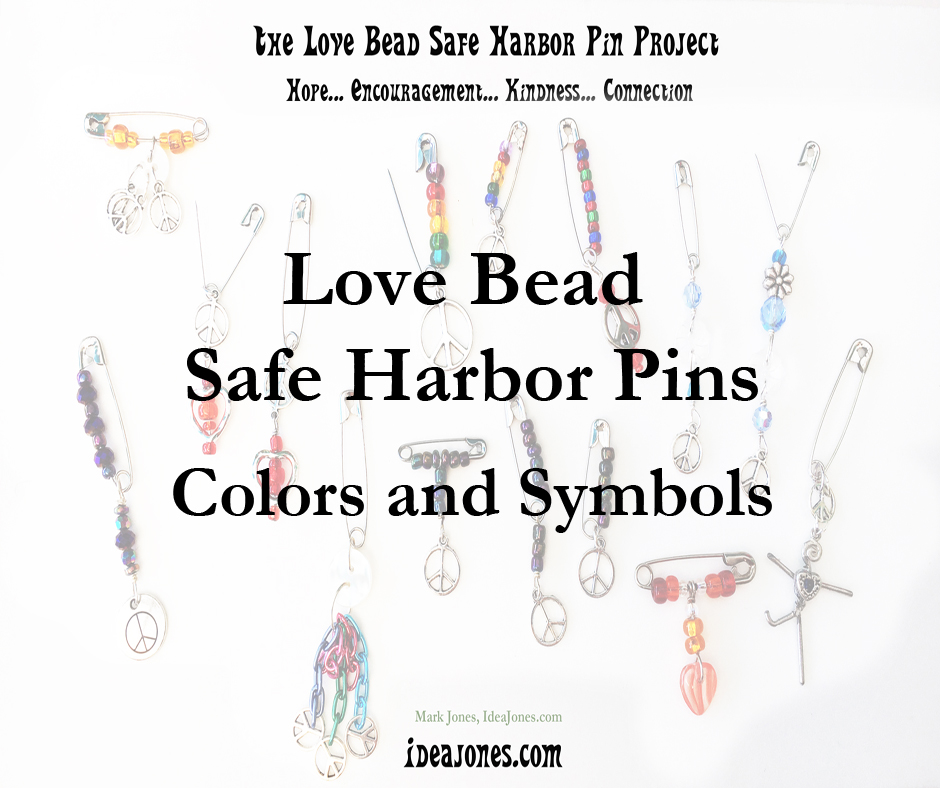
    If you’re new to the Love Bead Safe Harbor Pin and you see one “in the wild,” on someone on the street, in a restaurant, at school, at work, or any of the places you might find cool people, you might wonder if there’s any significance to the color, or the charm hanging from the pin. The answer? Sometimes yes, sometimes no.

    The safety pin is what makes it a “safe harbor” pin. So no matter the color or decoration, it’s still a Safe Harbor Pin. The rest is about standing up for a special cause that is close to your heart. It doesn’t mean you don’t care about anything else, just that this particular cause is one you’re especially passionate about, or is especially relevant to your life, or in the lives of people you know.
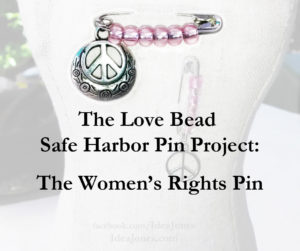
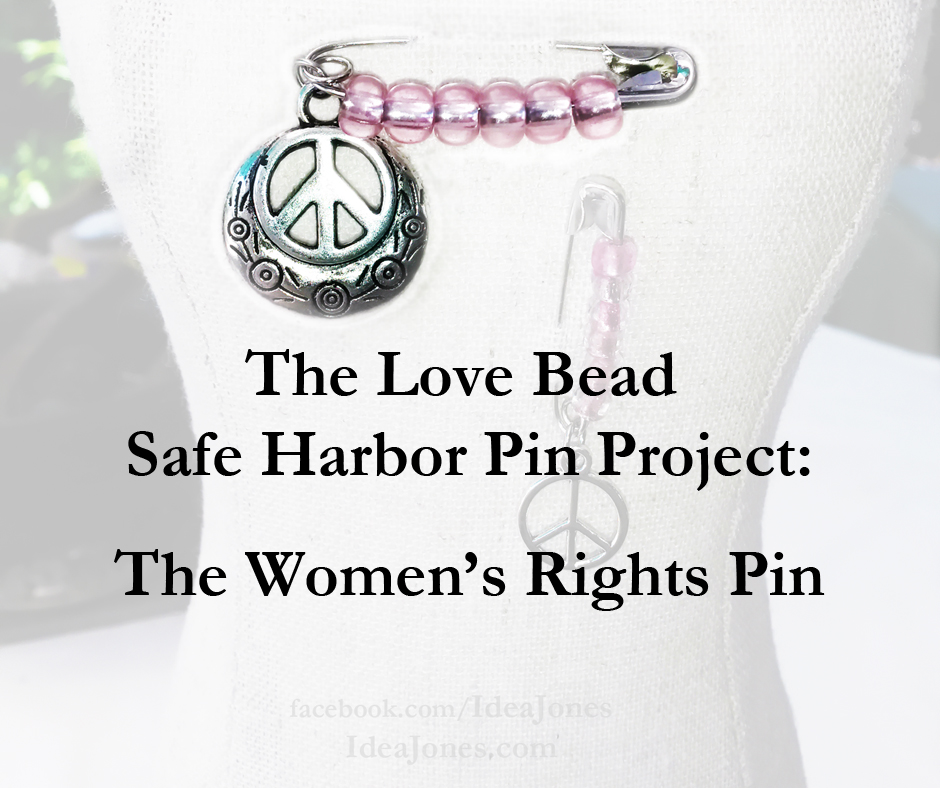
    The Women’s Rights Pin:

    I’ve really never understood why some people think being a feminist is a bad thing. I keep hearing women say, “Oh, I’m not a feminist!,” as though to assure other people they aren’t dangerous, or contagious. One day, I engaged a young woman in conversation, just asking what it was about feminism she didn’t like. This was only a couple of years ago, mind you. She said something like, “Well, I like men!”

    I nodded. “So do I, the nice ones, anyway.” I asked her if she thought people should be paid for doing the same work, about as well. “Sure!” But, I protested, men have to support families. Women don’t. “What?,” she protested. “There are a lot of women who have kids and aren’t married, you know.”  Yes, I admitted, I suppose that’s true. But what about child care? Women should be home taking care of their kids, right? “Most women can’t,” she said. “They have to work.”  And some might want to work, I added. “Right.” But it doesn’t matter much what child care you use or how expensive it is. She looked at me like I was nuts. I had to laugh. “You’re a feminist,” I told her.

    She really didn’t know. You might think everyone knows this stuff by now, but a lot of people don’t. They don’t know that at its base, feminism is about women being treated not like men, but on an equal basis with men. That how you are treated and what your options are shouldn’t be determined by your gender, whether you are male or female, in your personal or your professional life. The only two jobs I can think of that are gender-specific are sperm donor and surrogate mother.

    There are, however, problems that are either unique to one gender or the other, or far more common for one gender or the other. You are far, far more likely to be raped if you’re female, for example. Breast cancer can hit either sex but is more common in women. Ovarian cancer? Women, obviously. So while feminism is really for any reasonable person, there are a few “women’s issues.” Women still lag behind men in pay for the same jobs, and you can debate how much the disparity is, but that’s not the important issue. It’s that women are paid less, not how much less.

    Health care? An issue for everyone, but there are certain things that strike women more. Lack of access to contraceptives. Prenatal care. Lack of access to screenings like pap smears and mammograms that can catch disease when it’s early and treatable.  By the way… Planned Parenthood? Its most common services, by far, are health checks for women who either can’t afford or don’t have access to other sources of health care. So defunding  Planned Parenthood sentences a lot of women with low incomes to illness and death.

    Rape? Do I even need to spell this one out, with the slap-on-the-wrist trial of a college athlete who dragged an unconscious woman behind a dumpster and raped her fresh in our minds? Yep, “She was asking for it because she (went there at all/wore what she was wearing/danced/you name it)” is still alive and well. Women are being held accountable for men’s choices. If I said, “I bashed him on the head, but it’s his fault because he walked past me dressed (fill in the blank) and he had a head,” I’d be sent to jail so fast my own head would spin. But rape kits expire untested and judges give offensively mild sentences and the justification is always that the victim was responsible for the choices of her attacker.

    Child care? Women still get tasked with the bulk of the responsibility for child care, but this is an issue everybody can rally around . For most women, not working isn’t an option. The family needs their income. So access to affordable, quality child care is an issue that hits women, men, children, employers, everyone. Remember, we will live in the world those kids run. We need them sane, healthy, educated and safe. Employers need those women on the job, not taking off work because they can’t find child care. Any man worth the name wants his kids safe and healthy. Even if you don’t have kids, you can get behind this one.

    Childhood education and nutrition? Another “everybody in/everybody wins” issue. We will grow old in the world that these kids will grow up to run. And once they reach young adulthood, our economy will count on them being employable, and employed. Which means we all need those kids educated, healthy and ready to work. Think you don’t need to worry about this because you have no kids, or you have money so your kids are okay? What planet will you be living on where you don’t need other people to do things? When I’m older, I want to be surrounded by people who are educated, healthy, employed and don’t have any reason to clobber me and steal my purse.

    There’s probably at least one issue on that list that you can get behind, which would make you… take a deep breath… a feminist.

    That’s why we have a “Women’s Rights” pin. So women and men who really do like women (not just want them) can say that they believe a woman’s life is as valuable as a man’s, and women shouldn’t suffer or be penalized for being female. Sounds pretty “Well, duh, of course!,” but it’s still a problem.


    Save
  • Field Guide To Love Bead Safe Harbor Pins: The LGBTQI Pin


    Because we’re all human and valuable.

    A Field Guide To The Love Bead Safe Harbor Pin (kind of like a bird watcher’s guide to birds).

    If you’re new to the Love Bead Safe Harbor Pin and you see one “in the wild,” on someone on the street, in a restaurant, at school, at work, or any of the places you might find cool people, you might wonder if there’s any significance to the color, or the charm hanging from the pin. The answer? Sometimes yes, sometimes no.

    The safety pin is what makes it a “safe harbor” pin. So no matter the color or decoration, it’s still a Safe Harbor Pin. The rest is about standing up for a special cause that is close to your heart. It doesn’t mean you don’t care about anything else, just that this particular cause is one you’re especially passionate about, or is especially relevant to your life, or in the lives of people you know.

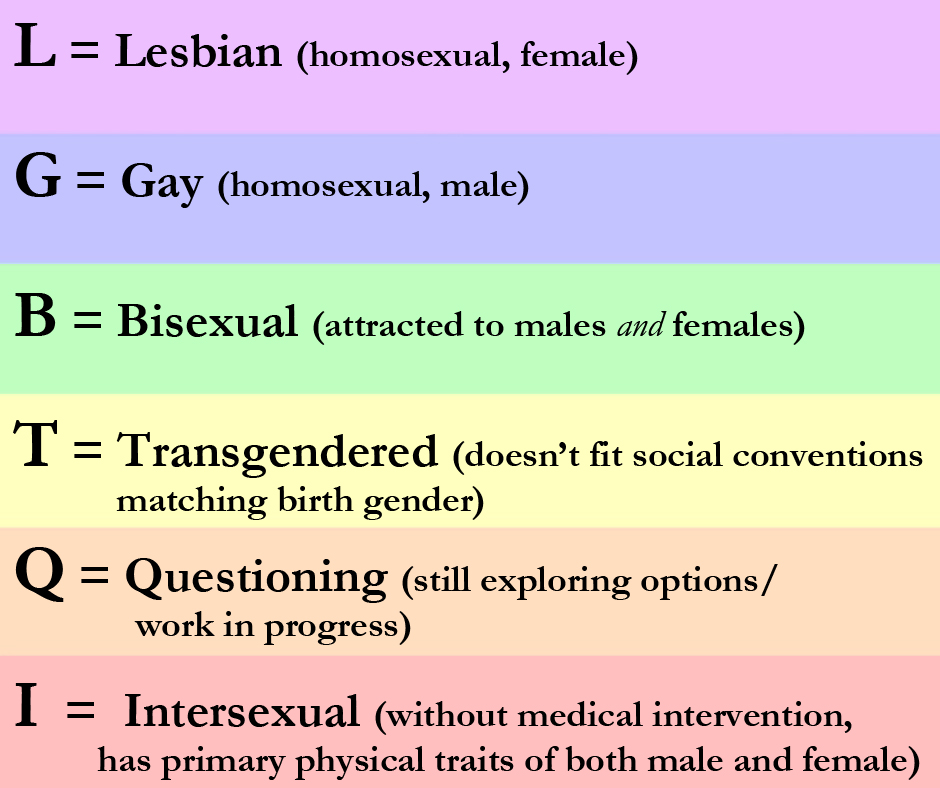
    A (very) simplified guide to the LGBTQI acronym.

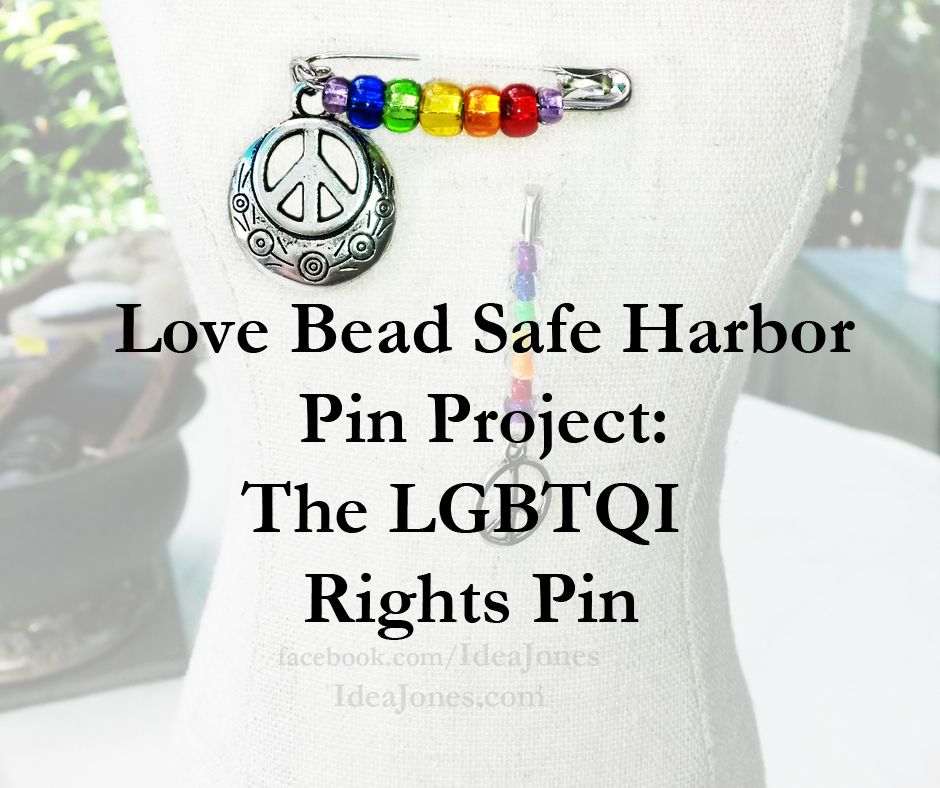
    The LGBTQI Rights Pin:

    I’m such a fossil, I didn’t know what the “Q” and “I” were until a friend explained it to me (and I did a bit of research of my own). In case you don’t know, here’s a very basic breakdown of “LGBTQI:”

    The most important thing to know about this issue:  It’s none of my (or your) business who neighbors/ coworkers/ random people we encounter conduct their sex lives.  If you find out someone is doing something illegal, call the cops. Otherwise, it falls under “ANOYB,” or “Ain’t None Of Your Business.” People have the right to conduct their lives as they see best, in safety, and be treated with respect, whether we understand or approve of their personal choices or not.

    So wearing an LGBTQI pin doesn’t mean you approve of someone else’s life, because the point is, you don’t have to in order to believe that person deserves to be treated with respect, and his or her civil rights respected. Think of it as “radical good manners.”

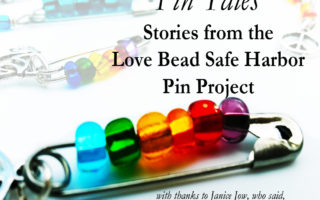
    This is the rainbow pin. The type and finish of the beads may vary, but the rainbow color pattern makes this pin an LGBTQI pin.

    For me, the sex lives of other people fall under “things I don’t have to have an opinion about.” If I’m not being asked to participate or watch, it doesn’t concern me. So I really don’t have any opinion about whether people “should” or “should not” be, say, homosexual. “Judge not, lest ye be judged.” I’m too busy trying to get my own stuff straight. Other people are human and I respect their humanity and right to live without feeling threatened or abused, and I don’t need to suss their private lives because it’s not my job to judge the “worthiness” of my fellow human beings. I don’t have any “gay friends.” I have friends who are gay (or somewhere in the LGBTQI spectrum), but we don’t talk about their sex lives, or mine. It’s not relevant. It’s simply a fact about that person, about on the level of height and eye color.

    You can wear the LGBTQI pin and be fully supportive of, indifferent to, or somewhere in between, on any of the many ways human beings experience or express their gender or sexuality. You can even feel uncomfortable with all of this and wear the pin. Wearing this pin says “I believe in the rights of human beings to be treated with respect,” and a recognition that those who don’t conform to what is expected based on the gender they “seem” to be face an uphill battle in this world, and can use allies.

    The peace symbol charm on this pin signifies your feeling that people, regardless of what they look like or what they do with their personal lives, should be free to live in safety without fear of being attacked, bullied or discriminated against.


  • A Field Guide To Love Bead Safe Harbor Pins: The Civil Rights & Social Justice Pin

    A Field Guide To Love Bead Safe Harbor Pins: The Civil Rights & Social Justice Pin

    Why this color? What does this charm mean?

    A Field Guide To The Love Bead Safe Harbor Pin (kind of like a bird watcher’s guide to birds)

    If you’re new to the Love Bead Safe Harbor Pin and you see one “in the wild,” on someone on the street, in a restaurant, at school, at work, or any of the places you might find cool people, you might wonder if there’s any significance to the color, or the charm hanging from the pin. The answer? Sometimes yes, sometimes no.

    The safety pin is what makes it a “safe harbor” pin. So no matter the color or decoration, it’s still a Safe Harbor Pin. The rest is about standing up for a special cause that is close to your heart. It doesn’t mean you don’t care about anything else, just that this particular cause is one you’re especially passionate about, or is especially relevant to your life, or in the lives of people you know. First up:

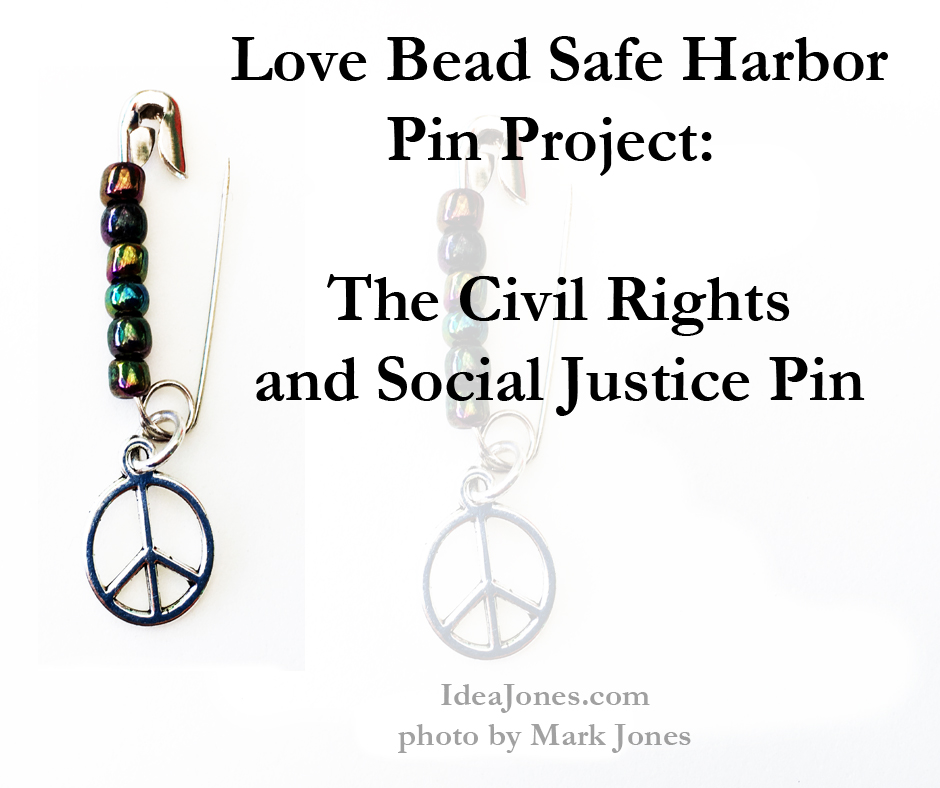
    The Civil Rights and Social Justice Pin

    Equality before the law and human rights.

    This pin will be iridescent black (the individual beads shine with a lustrous finish like the colors of the rainbow, so in this case, a black bead that has a shiny finish that shifts in the light, like light playing on water). It looks kind of like very dark steel. The color signifies the strength and durability of steel, like the strength and durability people have to show fighting for freedom and justice. (I know, “Oooooh, deeeep!” But it’s true).

    Mine have a peace symbol charm, or a heart. The peace symbol is a charm I use on most of my Love Bead Pins. In addition to the usual meaning of the peace symbol, on the Civil Rights Pin, the peace symbol also honors those who, like Dr. Martin Luther King, Jr. and Mahatma Gandhi, use nonviolent means to fight for their causes. That is probably the hardest route to take, to not lower yourself to the level of those who oppose you and hold to your principles in the face of opposition or even danger.


    Save

    Save