IdeaJones

Tag: arts

  • Dance Like Nobody’s Watching

    Dance Like Nobody’s Watching

    My mom used to say, “We’re on each other’s minds a lot less often than we think we are. While you’re worried about what people think of you, they’re worried about what other people think of THEM.”

    Mom was so right. Especially in this social media, selfie-driven age. Where you used to go through the world trying to figure out what the people in your immediate vicinity thought of you, now we wake up and check our phones for thumbs up or thumbs down from an entire world.

    Think about that symbolism for a moment. We’re taught that the thumbs up or down was used by Roman emperors to declare whether someone lived or died (not sure if it’s accurate, but for sure it’s what I was taught). Having incorporated those symbols into social media means that we’re not just saying, “I like this,” or, “I don’t like this.” We’re passing judgement on each other. Letting other people declare whether or not we are worthy. Which is why involvement with social media isn’t a good predictor of happiness.

    Increasingly, we’re not even bothering to hit “like.” It takes less than a second to do, but now even that often seems like too much trouble. I can’t tell you how many times someone has told me in person they really like what I do — and yet they don’t bother to literally “like” it online, or share it. Which can make creating feel like yelling into the abyss — you’re shocked when you hear a response. And yet, there is good news in this, for creators.

    Take Twitter. Writers are constantly told we must “build platforms” and increase our “social media presence.” Which can lead to having 2,000 followers, most of whom don’t actually follow what you do, in the sense of paying attention to it. They’re other writers or artists following you so you’ll follow them so it’ll look like you have a lot of followers, yet how many of those followers are truly engaged? One really engaged follower beats 100 (or more) courtesy followers.

    Where’s the good news? In creative freedom. You can stop reading tea leaves, casting chicken bones, and otherwise trying to figure out what other people think of you, or what you do. The idea that you actually know, based on numbers of followers, etc., is an illusion.

    Do what you do. Create the best version of what you do that you can. Experiment. Learn your craft. Try things, get some wrong, learn from the process. Edit, refine, examine and re-examine. Show the world as much or as little of all that as you choose. Be brave. Wallow, flail, find and develop your stroke, and learn to swim.

    In time, you may find your tribe, the people who get what you’re doing and enjoy it. Meantime, at least you’ll be enjoying it.

    And if you really want to be a Patron of the Arts, bother to hit “like” occasionally. Comment now and then. Share the stuff you like. Don’t just flood feeds with automatic retweets… make your opinion count by sharing what speaks to you and saying that it does (and even why). Be engaged.

    That, by the way, really is a good predictor of happiness — how engaged you are with people and the world around you.

  • Gatekeeper Secrets: 5 Ways To Start Off Ahead

    Continuing my online writer conference (since I had to miss the PNWA con this year). Day 5 — Gatekeeper Secrets

    Because I interviewed a bunch of “gatekeepers,” people who look over submissions and decide if they merit consideration, I have some advice to pass along. Also, I’ve been a gatekeeper (I was once an Editor for a magazine). So I’ve had to climb Mt. Slushmore in search of gold nuggets myself.

    Some of this may sound obvious. Most of it sounds obvious once you’ve heard it. But an agent at a recent conference talked about some of this stuff and it reminded me that it’s still the place most hopeful beginners fall on their climb to “published.” It also applies to other arts as well, fine art, music, acting, etc.

    Even for people who have been published, it’s good to be reminded that The Basics still count. I’m trying to go from “published in newspapers and magazines” to “published book author,” so I’m climbing Mt. Slushmore again myself. Since we’re trying to climb Mt. Slushmore and reach the peak, let’s start at the bottom:

    5) Don’t bother anyone until you’re ready to go. This is at the bottom not because it’s unimportant, but because it’s the first step, and you shouldn’t even attack the mountain until you complete it.  Agents want to know you have AT LEAST one book COMPLETED (or, if you’re an actor, have actually acted in something, taken classes, etc.).  You have a great idea? Good for you!

    Now make it. Write the songs, paint the painting, write the screenplay, etc.  If you’re trying to get an assignment to write an article (say for a magazine), and you haven’t had anything else published, be ready to work “on spec” and get paid only after you’ve written the article and the editor has decided to buy it and run it.

    I keep meeting nice people who have ideas for books, articles, radio stories, etc. that they “just need someone to write up,” or that they are writing and have yet to finish, who expect to find buyers for their uncompleted (or in some cases, unstarted) debut projects. You are up against people who are working at their craft. Taking it seriously. Developing their chops.  Be a professional.  Respect your idea by taking it seriously.

    After you’ve created it… edit, revise, polish. You’re trying to convince people you are a producer of diamonds. Have at least one polished diamond to show them.

    4) Get your supplies in order. Your book, your article, needs to be as good as you can make it. Professionally edited, if you aren’t an editor (and even if you are, have someone else check it, proofreading, notes, etc.).

    Workshop your novel, and pay attention to audience reaction. The best advice I’ve gotten so far (regarding improving my work) was, “Read it aloud.” Mark and I started participating in an open mic night for writers, in a book store, reading our work and paying attention to the reactions, both from the other writers, and the people in the book store. If attention is wandering, make a note where it starts to drift. I have to tell you, watching people linger in the stacks, taking a book off the shelf, putting it back, repeat, repeat, to hear the end of your story is a high.

    If you’re only writing for  yourself, great, you don’t need to know what people think. If you’re writing for an audience, you do.

    3) Research the mountain. No matter what professional mountain you want to climb, someone has climbed it before. Never in the history of humanity has information been so easy to come by. Sure, you have to look at the source and figure out how reliable that information is… but that’s doable. And you can average. If 25 people with professional credentials tell you that you need a certain sort of rope to climb that sort of mountain, you need to look closely into getting that sort of rope.

    For writers, you can go to professional conferences, join writing organizations, and yes, read. I mean, if you don’t like to read, why do you want to write? Take writing classes. Do writing exercises. In California, the California Writers Club, for example, has chapters all over the state, with workshops, speakers and sometimes even those open mic nights.

    If you were an acrobat, you would stretch a lot and do muscle-strengthening exercises (or you’d plunge to your death. At least writing isn’t that dangerous).  Whatever profession you’re trying to break into has its own series of stretches and exercises. Expect to do them.

    2) Don’t Be An Asshole. Good advice generally, but in the arts? Crucial. Plus, in the internet age, everything lives forever and comes back to haunt you. Be polite to the Receptionist. Don’t argue with people and get defensive (especially the people you’re trying to get to consider you. Have you ever been argued into liking someone? No, and neither have they). And every career has its ups and downs. You meet the same people going both directions, and sometimes they can give you enough of a boost to stop you from falling off the mountain entirely. It’s good ethics, good karma. Don’t fawn (don’t lick boots unless you’re addicted to the taste of shoe polish). Just be polite.

    This includes other people in your field. Again, both for professional reasons, and so you can like yourself. It’s not like there are only so many cookies, and if someone gets a cookie, you get none, so don’t run down other people.  It makes you look insecure. And it’s nice to be able to talk to people who get what you’re trying to do and think it’s worth doing (because they are, too). In radio, I’ve referred other engineers and field producers when I couldn’t take a gig — and they’ve referred me when they couldn’t.

    1) Follow. The. Guidelines. The most obvious advice is still the advice most people don’t bother to follow. If you’re submitting to agents or editors (or whatever is the equivalent in your art form), look at the website. Read the Submission Guidelines. Treat them like gospel.

    Every publication, every agent, has The Way We Do Things Here. By not reading and following those guidelines, you come off as an arrogant amateur. It’s basic courtesy, really. If you rang on someone’s doorbell and asked to come in, and he said, “Well, okay, but we have a white carpet, so you have to take your shoes off,” would you say, “I paid a lot for these shoes and matched my outfit to them, so even though everyone else takes his shoes off, I’m special?”  If you did, you should expect to feel the door slamming shut on your snout. It’s rude. It’s inconsiderate. And it’s dumb.

    It doesn’t matter how you like to do things. You are approaching that publication, that editor, that agent, and asking to be considered. You are ringing their doorbells. They aren’t ringing yours. Don’t cheese them off by swanning about, expecting them to bend the rules for very special  you.

    Some agents, for example, want the first ten pages. Others want the first  two chapters. Some want a bio and a synopsis of the book. Others don’t care about that unless they like the first chapter. Some want a letter. Others don’t.  Whatever they want to see, that’s what they feel they need to see in order to get a feel for whether or not they’re interested in you.

    As the agent at the workshop said, “By following the guidelines, you lift yourself above 50% of the people who submit from the start. And I’m not kidding. It might even be more than that.”

    Why start climbing by stepping on your own toes?

    Whatever mountain you’re trying to climb, be it Mt. Slushmore, the Hollywood Hills, or your mountain of choice, climb smart and you might just make it. I hope we both do. Good luck!
  • In Praise of Rock Star Parents

    We went to see “Newsies,” (a Broadway musical) in a movie theater (yay, Fathom Events, bringing such things to movie theaters across America), then “Despicable Me 3.” Guess which audience deserved a standing ovation?

    The Newsies screening was lightly attended. We got there early as I’d been looking forward to it, got great seats and settled in to enjoy. One group settled behind us and began a symphony played on cellophane wrappers and purse zippers. Not just “zip,” or even “zip, zip,” but “zip-crinkle-zip-zip-crinkle-zip-zip-zip!” At the last minute, in walks a group of teenaged girls. Loud teenaged girls. I was a teenaged girl. I remember what it’s like, out with your friends, having fun. But these girls were talking (loudly) about theater. Auditions they had gone to/were going to. They talked (loudly) even during the special added moments, like members of the cast of Newsies singing new interpretations of songs. The sorts of things real theater people enjoy. Which we couldn’t hear. Because of them.

    Real artists respect the craft. Music, acting, painting, whatever it is, it’s hard work  if you do it right, and you respect other artists and respect an audience. They have their part to play, buying tickets, paying attention, being present for whatever it is. They paid to see/hear/experience something and a pro respects that and doesn’t get in the way of it. As a friend once told someone in my presence, “Nobody here paid to see you, so sit down.”

    Then we went to see “Despicable Me 3.” An audience of parents and little kids.  These kids, who weren’t together, by the way, behaved like champs. Sure, they talked a bit, quietly. If they kept talking, parents quietly told them to keep it down so people could hear. They reacted to the movie, laughing, etc. But they didn’t talk loudly, or run around, or otherwise ruin the experience for the people around them. They were great. When the movie ended, I told Mark I wished I could stand at the door to the theater and thank every parent there. “There’s some rock star parenting going on in this theater,” I said.

    Now, I didn’t say it for effect. It was just a comment to Mark. “There are kids here behaving better than the adults in the other theater.” I saw a dad sitting ahead of us nudge his wife. Mark told me later the man’s wife was beaming. She should be. They are raising considerate kids who know how to be with other people, enjoying and participating, without selfishly getting in the way of what’s going on around them.

    Thank you, rock star parents who are taking care of business in the most classy way possible. The rest of us who share this planet with your kids owe you our gratitude.

    And to those girls, just know that nobody was impressed by your discussion of what songs you plan to sing for your auditions. You were just the jerks who disrupted the movie for the rest of us.


  • Hearts and Peace Signs

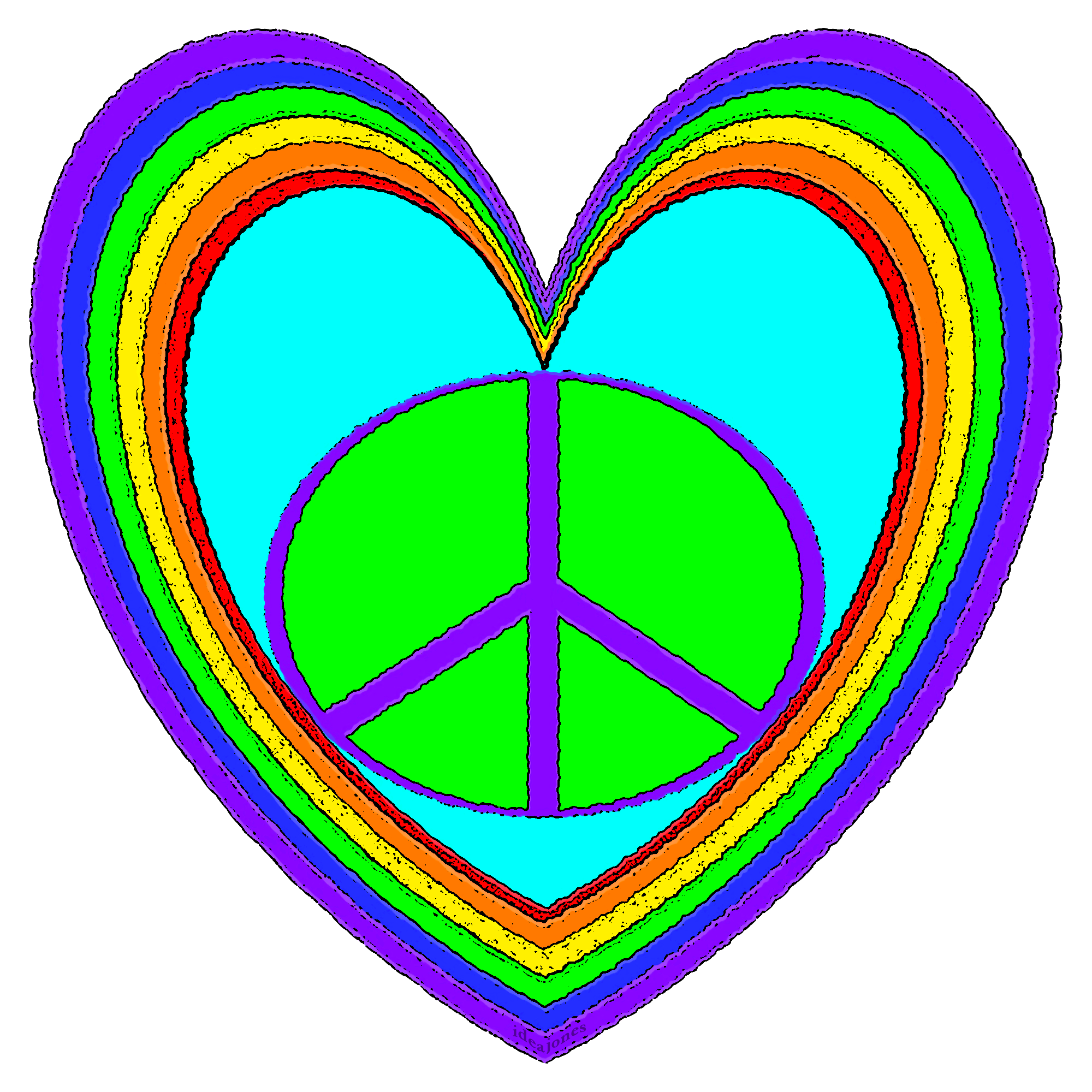
    Hearts and Peace Signs

    Available on zazzle.com or redbubble.com. Just search for “ideajones” and you’ll see it.

    The 50th anniversary of the “Summer of Love” is this year. Maybe that’s why I’m drawing so many peace signs, or maybe it’s just that everyone seems so angry and worried. It seems like a good time to remember that how we respond is always our choice.

    A portion of our commission goes to charities helping people or pets in need.

    Mom was always involved in projects for charity. When I was a toddler, she and my grandmother hand-made beautiful doll clothes for an annual toy drive. I wasn’t that much into dolls, but seeing my mom and grandmother so focused on making them, and seeing how beautiful they were (mom really could sew), I wanted them. I must have been about three when this happened. I told her I wanted (pointing) that one, and she handed it to me, but explained it was made for someone who had no toys. Someone who was going to have a very sad Christmas. Did I want to take that doll dress away from her?

    Let’s be honest — I did. Because mom made it, because it was beautiful, and because I was three. But I put it back.

    Later, she had our Girl Scout troop make presents for kids in hospitals (little paper chimneys full of candy and a little toy), and we grew meal worms for birds recovering after an oil spill. My dad, who ran a furniture store back then, organized employees into refurbishing furniture returned to the store for distribution to halfway houses. I trick-or-treated for Unicef.

    My parents weren’t hippies. Far from it. But they remembered The Great Depression and mom used to say, “There but for the grace of God go I.” She used to tell me that if you’d been really poor, if you’d been hungry, you knew what a kind gesture could mean.

    Whatever our leaders do, on a day-to-day basis, our world is in our hands. Yes, there are things our government should do, things that take all of us together. But if we (you, Mark and me) give a recent immigrant a bus pass, or a bowl of kibble to someone who’s having trouble feeding his dog or cat, or give art supplies to kids from homeless families, we don’t fix all of the world’s problems, but we make one thing just a little bit better.

    So if you’ve ever bought a onesie, or a tee shirt, or a cell phone case, or anything else from us, thank you. You supported a small business. You were a patron of the arts. You were a philanthropist helping someone in need. You hippie, you (lol).


    http://www.zazzle.com/rainbow_peace_heart_baby_by_ideajones_baby_bodysuit-235514816804770528?rf=238652286093066263

  • Pumpkin Dances and Good Vibrations

    Pumpkin Dances and Good Vibrations

    ideajones-happy-jackI created this short video as a holiday greeting for our Facebook page. It’s set to the music of Mick Martin & The Blues Rockers.


    Fortunately, we have good working relationships with a few artists who allow us to use their music for non-commercial projects.


    Too often, what could be a good moment, or a good project, goes down in flames for lack of basic courtesy. Case in point…

    My friend Janice and I volunteered to hand out information for a charity at a concert. We wanted to go to the concert (The Monkees, supporting their “Good Times” cd and the band’s 50th anniversary). The charity, The Davy Jones Equine Memorial Foundation, supports a herd of horses left behind by one of the founding members of the band (Davy Jones).

    We wanted to approach people who came for the concert and tell them about the charity. From the venue’s perspective, this can go very wrong. We could have arrived and just started approaching people in line — people who might not have want to be bothered. We might have slowed down the line of people entering for the concert, talking to people who were interested, and making things harder on the people charged with seating the audience and getting the show started.

    Janice and I went the day before, explained what we were going to do, and asked who we should speak with. Because we approached the people at the venue when they weren’t too busy to talk to us, and asked politely (1) if we could and (2) how they’d like us to do it, they were receptive.

    Eventually, we spoke with the head of Operations for the venue and he had the staff set up a table and chairs for us inside, and allowed us to enter early to set up. We were told a few times by various people at the venue that they appreciated how we went about it — that we asked beforehand, and were mindful of not wanting to interrupt the jobs other people needed to do. They checked on us a few times to see if we needed anything. When the wind picked up, they even taped the back of our poster to our table so we wouldn’t have to chase it.

    Janice and I had a great time. Lots of people who are fans of Davy Jones learned about his charity, and we enjoyed the concert. We also enjoyed working with the staff at Vino Robles.

    Which is how Mark and I approached people about using their music for videos. We did it far enough ahead so that nobody was rushed, explained what we wanted to do briefly and clearly, and asked permission. It sounds simple, but I’ve seen people just charge ahead without asking more times than I can count — and it usually doesn’t end well.

    Mom used to say “Respect other people’s work and don’t get in the way of it.” Good manners are good sense. They don’t guarantee you’ll get a “yes,” but they take a lot of obstacles out of the way and make that “yes” more likely.

    Btw, I can’t say enough about Vino Robles, which is a lovely venue, and Paso Robles, a lovely small town on the California coast. If you’re making vacation plans, it’s worth checking their event calendar, picking a concert, and making a trip. We stayed at the Best Western Black Oaks, which was clean, comfortable and has a friendly, efficient staff.