IdeaJones

Tag: #artlife

  • The Biggest Little Thing I’ve Done So Far

    The Biggest Little Thing I’ve Done So Far

    I think 2020 is called that because by September, this year has seemed 2,020 months long. It’s so easy to lose hope. I don’t spend a lot of time on social media, especially since I’m still recuperating after Covid19 and there’s only so much energy, but it seems every time I do go on Facebook or Twitter, there’s someone fighting sadness, anxiety and/or depression who asks for some sign that things can get better.

    When I feel that way, I think about 2016-2017. It seemed like a parade of the most hateful people in the world were just partying in the streets. Meanwhile friends who are gay, or non-binary, or non-white, or otherwise in some way didn’t fit what those jerks thought was “acceptable” were being trolled by morons saying that they should die. People were being harassed, injured, killed.

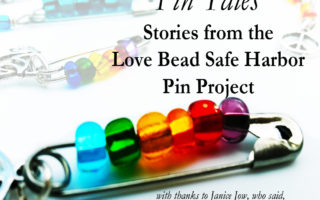
    I’d heard about Safe Harbor Pins, safety pins worn to signal that the wearer was safe to approach, especially if you felt threatened and needed someone, even a stranger, to help you feel, or be, safe. There was some controversy — some thought that too many people would congratulate themselves on wearing the pin and not do anything else.

    Symbols are powerful things. When you adopt one as part of your identity, you are making a statement about where you stand and what you believe. But then there were reports of white supremacists hijacking the symbol, wearing safety pins as a threat, or to fool others. Artists talked about how to take that symbol back.

    So I started making them, and beading them. Adding charms, buttons, all sorts of things. I didn’t think people would really want them, but I went to a local women’s march with a few pins, thinking it would take me hours to give them away, if I even could.

    I’m an introvert, and shy, so talking to strangers is not my thing in a big way, but I did approach some people. I’d put single pins on little cards explaining what they were. Withing 15 minutes, I’d given them all away, and people were asking how to make them.

    I felt the need to stand and make a statement, and others did, too. One young woman gave me the idea to put two pins on a card, one to keep, one to give away. I took time off from everything else I was doing and, with the help of my husband, made over 2,000 pins in total by the end of the project. I got hand cramps, calluses, and more pin pricks that I can count.

    We visited San Francisco during the anniversary of the Summer of Love. We visited Los Angeles. We talked to people from around the world and around the U.S., including people from every political party. We talked to people from many economic backgrounds, cultures, and belief systems. This was designed not to be a political project. Over 1,000 people were stopped by a stranger and asked if they would like a pin. The meaning of the pin was explained, and that wearing it was a symbol that you believed all people — including those you don’t understand, those you disagree with, even those you dislike — deserve to be treated with dignity and respect.

    And they did. In overwhelming numbers. Parents talked to their children about respect and how they treat people. Teens talked about why they give respect to some people but not others. Adults talked about their fears for friends, family.

    We were hugged fairly often. Kissed once by a tourist from Paris. Offered money (which we declined. A gift is a gift). Some people cried. Too often, we heard from people who had been going through rough experiences, being bullied, hurt and otherwise abused. People told us who their second pin was going to. We were privileged to be included in conversations people had with their kids, friends, significant others about how they choose who to be kind to and why – and that it is a choice.

    Now, with so much violence and anger, the threat of a global pandemic and a future that looks even more uncertain than usual, I think about more than 1,000 people, stopped by a stranger, standing up in front of other strangers, talking about freedom, kindness, and the worth of human life, and making a conscious choice to state their belief in the value of every human being.

    They walked away taller, beacons of light in the darkness. And they are still out there. THAT is what I reflect on when the world is chaotic and frightening. Over 1,000 people, and the even larger number who contributed to them being who they are.

    If you see this and you happen to be one of them. Thank you. You light my way in my dark hours.

    Should you want to read short stories from the project, just search for #lovebeads to find stories from our adventures.

  • Making It In The Covid Era

    We’re making what we can out of what we have to work with. How about you?

    April 14, 2020

    Hi! How y’all doin’?

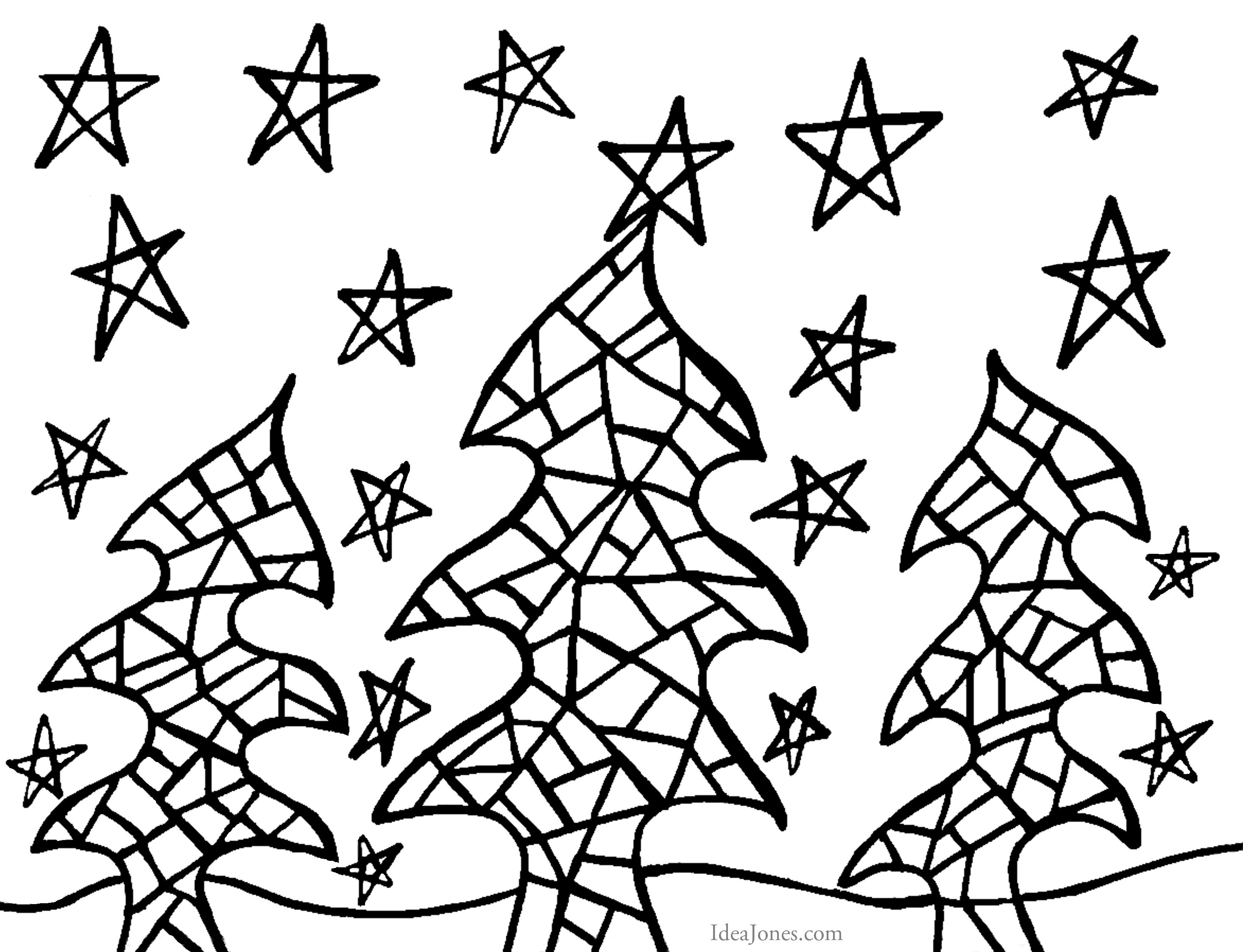
    My fifth week of being in medical isolation (isolation from everyone as ordered by a doctor) is winding down, with week 6 on the way. I’m going to need to create a new coloring page for my window! This one is almost filled in.

    When I walked in here and closed the door, shutting Mark, our dogs and everyone else on the other side, they thought I might be in here for two weeks. Then two weeks became four, and now it’s open-ended. It’s required some adjustment. I’m sure your life has, too.

    I was just talking to someone about how everything has changed. Grocery shopping. No more “Oh, we’re out of X, I’ll just dash down to the store…” No, Mark and I order our groceries two weeks in advance (“What do you think you’ll want for lunch in two weeks?”) and play the food lottery (“Did we get popcorn this time?”). For my friend, going to the store requires that she suit up in a home-grown hazmat suit and line up outside the store to be let in by the bouncers as if she’s trying to get into an exclusive night club. The whole trip she has to worry about people who won’t maintain proper distancing. By the time she gets home, she’s done. It’s exhausting.

    Of course, it’s worse for grocery store employees. People who just don’t seem capable of understanding what’s going on are angry and confused, and take it out on the grocery store employees, most of whom are doing their best in a difficult time and hoping not to get sick. Our local grocery store is really doing a good job of contact-free pick up, although the manager of a local Target went off on Mark, somehow thinking Mark would put the staff at risk sitting in his car, masked and gloved, with the windows rolled up, while someone put our order in the trunk of our car.

    It’s a surreal time to be alive, ain’t it?

    Meantime, although kids who went on Spring Break to party, then got sick, seem not to have talked to their friends, who think the “right to party” the Beastie Boys sang about is actually in the Constitution. They just had to shut down a club open in defiance of shelter-in-place orders. Did those kids have direct word from God that they and everyone they knew was immune? Are they just as dumb as a bag of hair? No idea.

    We are for sure seeing who is a team player and who, definitely, is not. Everyone on Team Survival is hanging in there, doing what they can, staying home if they possibly can, physical distancing… and it’s working. Where people are doing that, they’re flattening the curve.

    It’s clearly up to us to save each other. God knows the feds aren’t going to, not with Dear Donny at the helm. The thing he’s working hardest at right now is attempting to shift blame. He’s never worked so hard in his life. He wants the states to be responsible for themselves without looking to the federal government for help. Wait — isn’t that why we have a federal government? Our President-at-the-moment is, sadly, about as useful in a crisis as tits on a bicycle.

    So we stand together by standing apart. We wash our hands like it’s our holy calling, figure out what meals we can make out of what’s in the cupboard and whatever we were lucky enough to get from the grocery store, don’t go out or gather unless we must, wear our home-made masks when we do, and send this thing back to whatever suburb of hell it came from. When there’s a vaccine, we line up (is anyone still an anti-vaxxer now?), and stick out our arms, our butts, whatever’s required.

    And years from now, we sit down kids who weren’t yet born when this happened, and we bore them silly with our survival tales of how we got through the Great Pandemic of 2020. We will have earned that right. Most of us, anyway.

    If your story is how you ignored it all and went on partying, please keep quiet. These are impressionable children, and you shouldn’t help make them stupid.

    Hang in there, y’all!

  • Dance Like Nobody’s Watching

    Dance Like Nobody’s Watching

    My mom used to say, “We’re on each other’s minds a lot less often than we think we are. While you’re worried about what people think of you, they’re worried about what other people think of THEM.”

    Mom was so right. Especially in this social media, selfie-driven age. Where you used to go through the world trying to figure out what the people in your immediate vicinity thought of you, now we wake up and check our phones for thumbs up or thumbs down from an entire world.

    Think about that symbolism for a moment. We’re taught that the thumbs up or down was used by Roman emperors to declare whether someone lived or died (not sure if it’s accurate, but for sure it’s what I was taught). Having incorporated those symbols into social media means that we’re not just saying, “I like this,” or, “I don’t like this.” We’re passing judgement on each other. Letting other people declare whether or not we are worthy. Which is why involvement with social media isn’t a good predictor of happiness.

    Increasingly, we’re not even bothering to hit “like.” It takes less than a second to do, but now even that often seems like too much trouble. I can’t tell you how many times someone has told me in person they really like what I do — and yet they don’t bother to literally “like” it online, or share it. Which can make creating feel like yelling into the abyss — you’re shocked when you hear a response. And yet, there is good news in this, for creators.

    Take Twitter. Writers are constantly told we must “build platforms” and increase our “social media presence.” Which can lead to having 2,000 followers, most of whom don’t actually follow what you do, in the sense of paying attention to it. They’re other writers or artists following you so you’ll follow them so it’ll look like you have a lot of followers, yet how many of those followers are truly engaged? One really engaged follower beats 100 (or more) courtesy followers.

    Where’s the good news? In creative freedom. You can stop reading tea leaves, casting chicken bones, and otherwise trying to figure out what other people think of you, or what you do. The idea that you actually know, based on numbers of followers, etc., is an illusion.

    Do what you do. Create the best version of what you do that you can. Experiment. Learn your craft. Try things, get some wrong, learn from the process. Edit, refine, examine and re-examine. Show the world as much or as little of all that as you choose. Be brave. Wallow, flail, find and develop your stroke, and learn to swim.

    In time, you may find your tribe, the people who get what you’re doing and enjoy it. Meantime, at least you’ll be enjoying it.

    And if you really want to be a Patron of the Arts, bother to hit “like” occasionally. Comment now and then. Share the stuff you like. Don’t just flood feeds with automatic retweets… make your opinion count by sharing what speaks to you and saying that it does (and even why). Be engaged.

    That, by the way, really is a good predictor of happiness — how engaged you are with people and the world around you.

  • It’s Time To Color For A Cause!

    It’s Time To Color For A Cause!


    Time to Color For A Cause!

    For the third year, we’re hosting Color For A Cause, a free event you can participate in wherever you are!

    The idea is to draw or color cards for distribution at hospitals and nursing homes.  We have designs you can print out and use for any non-commercial (no money involved) use, or you can draw your own. Coloring makes a nice break from holiday stress, and you can also have kids color cards to keep them busy around Thanksgiving and during school breaks!

    We take cards to places like the local Shriner’s Hospital, to be given to kids who must be in the hospital over the holidays. This year, we hope to expand to a nursing home as well. Wherever you are, you can participate by making cards and taking them to the local hospital or nursing home.

    If you print our cards to color, it works well on cardstock (the kind you can easily find at any office supply store), white works well, but they work on any color (it’s just that colored card stock limits your coloring choices). We also take cards to the hospital that aren’t colored in, for the kids to color and give out themselves.

    If you make the cards 3.5″ x 5″, you can get two on an 8.5″x11″ sheet of paper. There are 4″x6″ envelopes available in office supply stores. Don’t seal the envelopes — they need to be able to see them at the hospital.

    Messages? Keep it simple. The basic guideline is “nothing obscene, nothing overtly religious (as you don’t know what religion the recipient practices), and positive.” A short message is fine and you can sign just your first name (no personal info like addresses).

    If you want to join in and send cards to go with ours, the deadline is Nov. 30. You can find info on our Facebook page, facebook.com/IdeaJones.

  • Gatekeeper Secrets: 5 Ways To Start Off Ahead

    Continuing my online writer conference (since I had to miss the PNWA con this year). Day 5 — Gatekeeper Secrets

    Because I interviewed a bunch of “gatekeepers,” people who look over submissions and decide if they merit consideration, I have some advice to pass along. Also, I’ve been a gatekeeper (I was once an Editor for a magazine). So I’ve had to climb Mt. Slushmore in search of gold nuggets myself.

    Some of this may sound obvious. Most of it sounds obvious once you’ve heard it. But an agent at a recent conference talked about some of this stuff and it reminded me that it’s still the place most hopeful beginners fall on their climb to “published.” It also applies to other arts as well, fine art, music, acting, etc.

    Even for people who have been published, it’s good to be reminded that The Basics still count. I’m trying to go from “published in newspapers and magazines” to “published book author,” so I’m climbing Mt. Slushmore again myself. Since we’re trying to climb Mt. Slushmore and reach the peak, let’s start at the bottom:

    5) Don’t bother anyone until you’re ready to go. This is at the bottom not because it’s unimportant, but because it’s the first step, and you shouldn’t even attack the mountain until you complete it.  Agents want to know you have AT LEAST one book COMPLETED (or, if you’re an actor, have actually acted in something, taken classes, etc.).  You have a great idea? Good for you!

    Now make it. Write the songs, paint the painting, write the screenplay, etc.  If you’re trying to get an assignment to write an article (say for a magazine), and you haven’t had anything else published, be ready to work “on spec” and get paid only after you’ve written the article and the editor has decided to buy it and run it.

    I keep meeting nice people who have ideas for books, articles, radio stories, etc. that they “just need someone to write up,” or that they are writing and have yet to finish, who expect to find buyers for their uncompleted (or in some cases, unstarted) debut projects. You are up against people who are working at their craft. Taking it seriously. Developing their chops.  Be a professional.  Respect your idea by taking it seriously.

    After you’ve created it… edit, revise, polish. You’re trying to convince people you are a producer of diamonds. Have at least one polished diamond to show them.

    4) Get your supplies in order. Your book, your article, needs to be as good as you can make it. Professionally edited, if you aren’t an editor (and even if you are, have someone else check it, proofreading, notes, etc.).

    Workshop your novel, and pay attention to audience reaction. The best advice I’ve gotten so far (regarding improving my work) was, “Read it aloud.” Mark and I started participating in an open mic night for writers, in a book store, reading our work and paying attention to the reactions, both from the other writers, and the people in the book store. If attention is wandering, make a note where it starts to drift. I have to tell you, watching people linger in the stacks, taking a book off the shelf, putting it back, repeat, repeat, to hear the end of your story is a high.

    If you’re only writing for  yourself, great, you don’t need to know what people think. If you’re writing for an audience, you do.

    3) Research the mountain. No matter what professional mountain you want to climb, someone has climbed it before. Never in the history of humanity has information been so easy to come by. Sure, you have to look at the source and figure out how reliable that information is… but that’s doable. And you can average. If 25 people with professional credentials tell you that you need a certain sort of rope to climb that sort of mountain, you need to look closely into getting that sort of rope.

    For writers, you can go to professional conferences, join writing organizations, and yes, read. I mean, if you don’t like to read, why do you want to write? Take writing classes. Do writing exercises. In California, the California Writers Club, for example, has chapters all over the state, with workshops, speakers and sometimes even those open mic nights.

    If you were an acrobat, you would stretch a lot and do muscle-strengthening exercises (or you’d plunge to your death. At least writing isn’t that dangerous).  Whatever profession you’re trying to break into has its own series of stretches and exercises. Expect to do them.

    2) Don’t Be An Asshole. Good advice generally, but in the arts? Crucial. Plus, in the internet age, everything lives forever and comes back to haunt you. Be polite to the Receptionist. Don’t argue with people and get defensive (especially the people you’re trying to get to consider you. Have you ever been argued into liking someone? No, and neither have they). And every career has its ups and downs. You meet the same people going both directions, and sometimes they can give you enough of a boost to stop you from falling off the mountain entirely. It’s good ethics, good karma. Don’t fawn (don’t lick boots unless you’re addicted to the taste of shoe polish). Just be polite.

    This includes other people in your field. Again, both for professional reasons, and so you can like yourself. It’s not like there are only so many cookies, and if someone gets a cookie, you get none, so don’t run down other people.  It makes you look insecure. And it’s nice to be able to talk to people who get what you’re trying to do and think it’s worth doing (because they are, too). In radio, I’ve referred other engineers and field producers when I couldn’t take a gig — and they’ve referred me when they couldn’t.

    1) Follow. The. Guidelines. The most obvious advice is still the advice most people don’t bother to follow. If you’re submitting to agents or editors (or whatever is the equivalent in your art form), look at the website. Read the Submission Guidelines. Treat them like gospel.

    Every publication, every agent, has The Way We Do Things Here. By not reading and following those guidelines, you come off as an arrogant amateur. It’s basic courtesy, really. If you rang on someone’s doorbell and asked to come in, and he said, “Well, okay, but we have a white carpet, so you have to take your shoes off,” would you say, “I paid a lot for these shoes and matched my outfit to them, so even though everyone else takes his shoes off, I’m special?”  If you did, you should expect to feel the door slamming shut on your snout. It’s rude. It’s inconsiderate. And it’s dumb.

    It doesn’t matter how you like to do things. You are approaching that publication, that editor, that agent, and asking to be considered. You are ringing their doorbells. They aren’t ringing yours. Don’t cheese them off by swanning about, expecting them to bend the rules for very special  you.

    Some agents, for example, want the first ten pages. Others want the first  two chapters. Some want a bio and a synopsis of the book. Others don’t care about that unless they like the first chapter. Some want a letter. Others don’t.  Whatever they want to see, that’s what they feel they need to see in order to get a feel for whether or not they’re interested in you.

    As the agent at the workshop said, “By following the guidelines, you lift yourself above 50% of the people who submit from the start. And I’m not kidding. It might even be more than that.”

    Why start climbing by stepping on your own toes?

    Whatever mountain you’re trying to climb, be it Mt. Slushmore, the Hollywood Hills, or your mountain of choice, climb smart and you might just make it. I hope we both do. Good luck!