IdeaJones

Category: IdeaJones

Items about IdeaJones, Joey Jones, or Mark Jones:

  • We thank you, they thank you…

    (Quick note — if you haven’t gone to Rebubble.com and signed up for their emails, you really should. For example, they have a sitewide 20% sale going today. Getting great stuff from talented artists is wonderful, but getting a deal on it? Awesome!).

    If you've made a purchase from us, you've helped a refugee start a new life in America!
    If you’ve made a purchase from us, you’ve helped a refugee start a new life in America!

    If you’ve bought anything from our Redbubble store, or from our Etsy store, in the past three months, you just did something very cool.

    Four times a year, we take 25% of everything we’ve sold and buy something for a charity. Right now, we’re supporting Opening Doors, a charity that helps refugees resettling in California. These people arrive in the U.S. with next to nothing. They’re often fleeing violence and the threat of death, so they don’t get to bring much. The charity finds them housing and helps them get started with language classes, help navigating getting the kids into school, how to get around using public transportation, etc.

    So what did you do? You helped buy bus passes so that people who don’t have the money even to ride the bus can get to the doctor, or get the kids enrolled in school, or buy groceries. Often refugees arrive from places that don’t have much in the way of public transportation, and they don’t know the city. Volunteers show them how to use public transit to get where they need to go, taking them to appointments. It makes a new and intimidating place just a bit more familiar.

    Opening Doors also collects items for “welcome kits,” including pots and pans, dishes, etc. When it’s time to turn part of our sales into donations, we contact the charity and ask what they need most. This time, Opening Doors asked for bus passes, so that’s what we donated.

    We. Not just Mark and me… if you bought anything from us in the last three months, you’re part of “we.” You bought bus passes and donated them to a charity. You are part of the day someone gets a bus pass, leaving $7 in his or her budget for food, or school supplies for the kids, or medicine.

    So thank you. We thank you, and they thank you. Enjoy being a patron of the arts (buying something from a small arts business like ours makes you a patron of the arts), and a humanitarian. As a friend of ours says, “You are awesome! Own it! Own it!”

  • Working Dark

    Working Dark

    Working with old photos is an art in itself.
    Working with old photos is an art in itself.

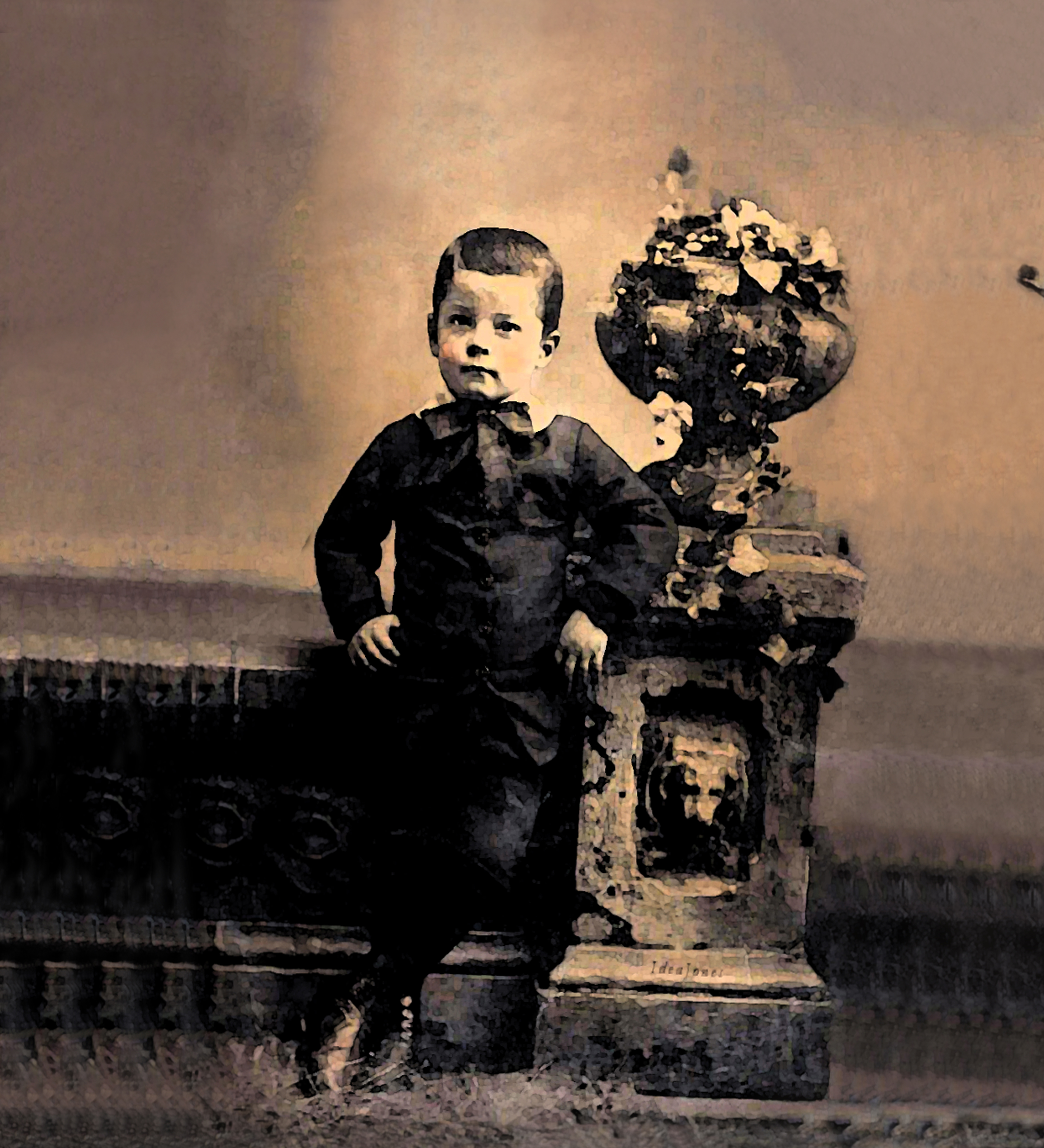
    I don’t usually create dark, moody artwork. Perhaps there are elements of “Simran: Altar of Memory” which are bittersweet, even sad (it’s about dementia, after all), but it’s not spooky. Recently, however, I decided to work with old tintypes and photos my grandmother gave me, and one in particular just seemed to pick up on the fact that it’ll be Halloween soon.

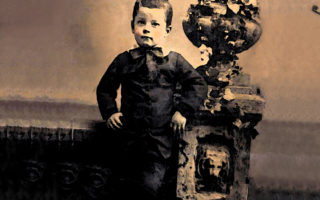
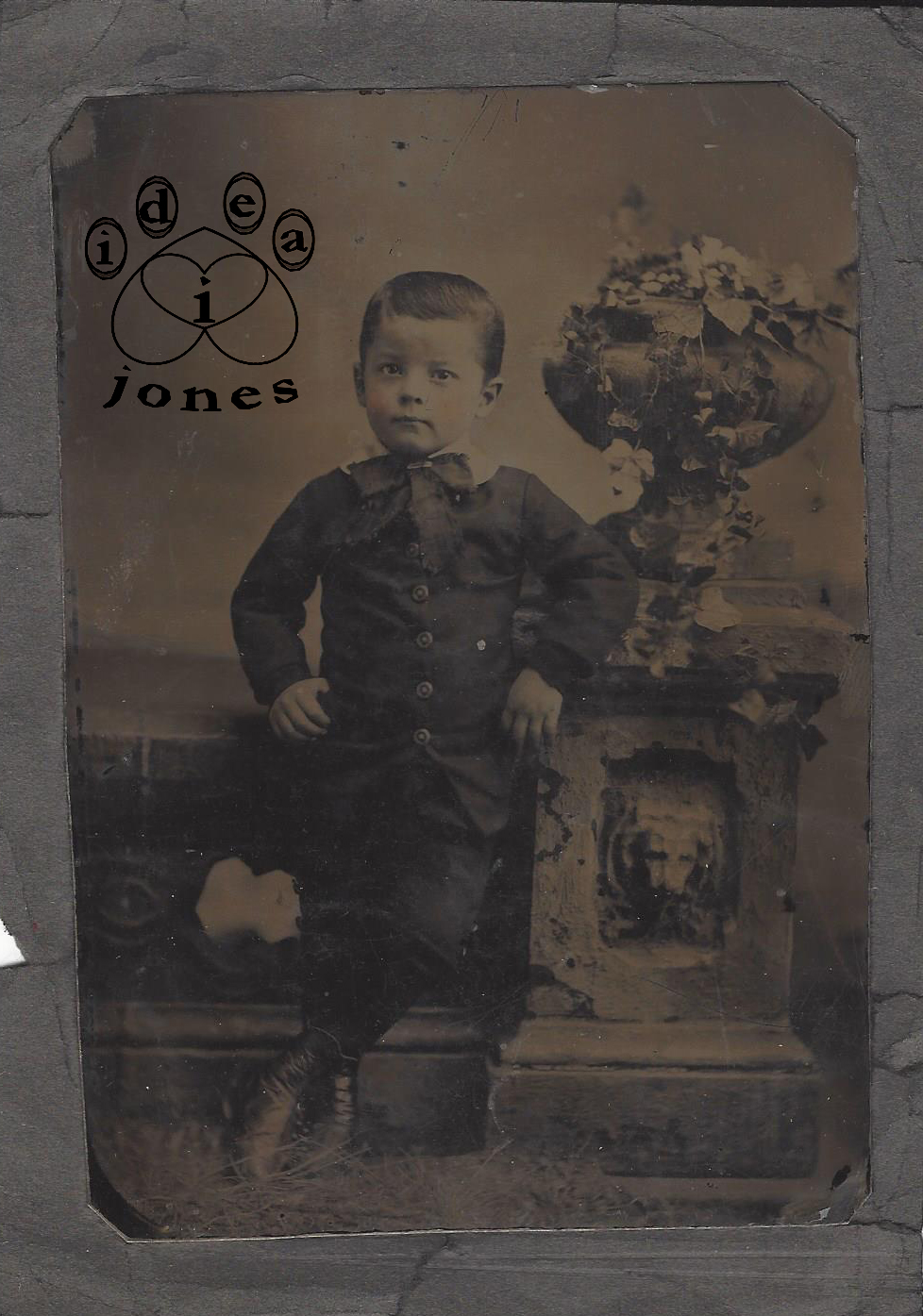
    This started with a scan of that old tintype. I work with old photos from time to time, healing scratches, brightening faded images. Working with this photo, I tried to heal some of the damage of time while only brightening it enough to reveal details. Once I did, I discovered details I wanted to emphasize, like the skull in the lower left. This might not have been a skull at the time the photo was taken, but when the image emerged in working with it, that became the theme of the picture, so I repeated it.

    That led to other repetitions. Ordinarily, I would smooth out the background, eliminating visual “stutter.” In this case, I cause the stutter. Patterns repeat in the background, in the setting, giving the photo a cluttered, neurotic feeling.

    When it felt like I’d reached that point, I turned it into a digital watercolor and continued painting, sometimes pixel by pixel. As I worked, I gave him a backstory. A brave boy, the son of parents who hunt the things that go bump in the night, he is comfortable in the graveyard, knowing his parents have banished evil and confident that one day, he will take his place beside them.

    His image is available in our IdeaJones Redbubble shop.

  • Healing the Old (Photo)

    Healing the Old (Photo)

    Mark visited a camera store the other day (we’re shopping around for a camera). While talking to the store’s owner about what we’re looking for, he mentioned that one of the things I do is work with old photos, including “healing,” improving faded, scratched images, and creating artwork based on that digital image. The man told Mark that working with old photos is a difficult skill to learn.

    It is. I’m still learning. And the first thing I learned is not to approach it as photography.

    Digital image manipulation has changed everything, and in a way, it’s brought us back to where we started.

    Before cameras, pictures and portraits had to be sketched or painted. Photography brought the ability to “capture” an image. To change it, you could change lighting, how the image is framed, how long it’s exposed, but for much of photography’s history, seeing was believing. Making composite images wasn’t easy and most didn’t look real. Before color photography took off, the most common way to add color was to physically paint on the photo. Retouching meant actual touching.

    But with digital photography, a picture ceases to be a photograph when it enters the computer.  Take a digital photo and increase the magnification until you can see the individual pixels. You’re seeing what the computer is telling you it sees. To the

    What seems to be one thing is a lot of other things, when it's a digital image.
    What seems to be one thing is a lot of other things, when it’s a digital image.

    computer, it’s not a photo — it’s data to be interpreted. Learning how the computer sees what you give it will help you figure out how to do what you want to do.

    To work with photographs digitally, you approach them… as paintings. Look at those pixels. When you back out and look at the whole image, that part may appear to be one color, but when you zoom in, it isn’t. Even “black and white” images contain dots of color in every digital photo I’ve worked with. If you need to heal a scratch, or change something, you have to put away what color you think it is. Look at the colors the computer sees. That’s what you’re working with.

    This isn't in bad shape for a picture from the 1890s, but there's a lot of work to do.
    This isn’t in bad shape for a picture from the 1890s, but there’s a lot of work to do.

    This is a family photo taken around the turn of the last century. It’s one of the few not labeled, so I don’t have a name. I decided to turn it into a digital art project for our Redbubble shop. This wasn’t a straight-ahead healing of an old photo. I wanted to emphasize certain things and omit others to produce an effect. Still, the process started with healing a scratched, faded photo over 100 years old.

    It appears to be lighter and darker tones of one color (sepia), but if you look at that magnified sample from the original, you can see greens, yellows, even a rose tint.  When you’re healing scratches, brightening or manipulating the image, that’s what you’re working with.

    It seems obvious, but the first thing I learned about working with digital images is you have to work with what you have, not what you think you have.

    Save

  • Art, Peace and Charity

    Art, Peace and Charity

    Hi — we’ve been very active on our Facebook page, but it’s been a while since we checked in on our website.

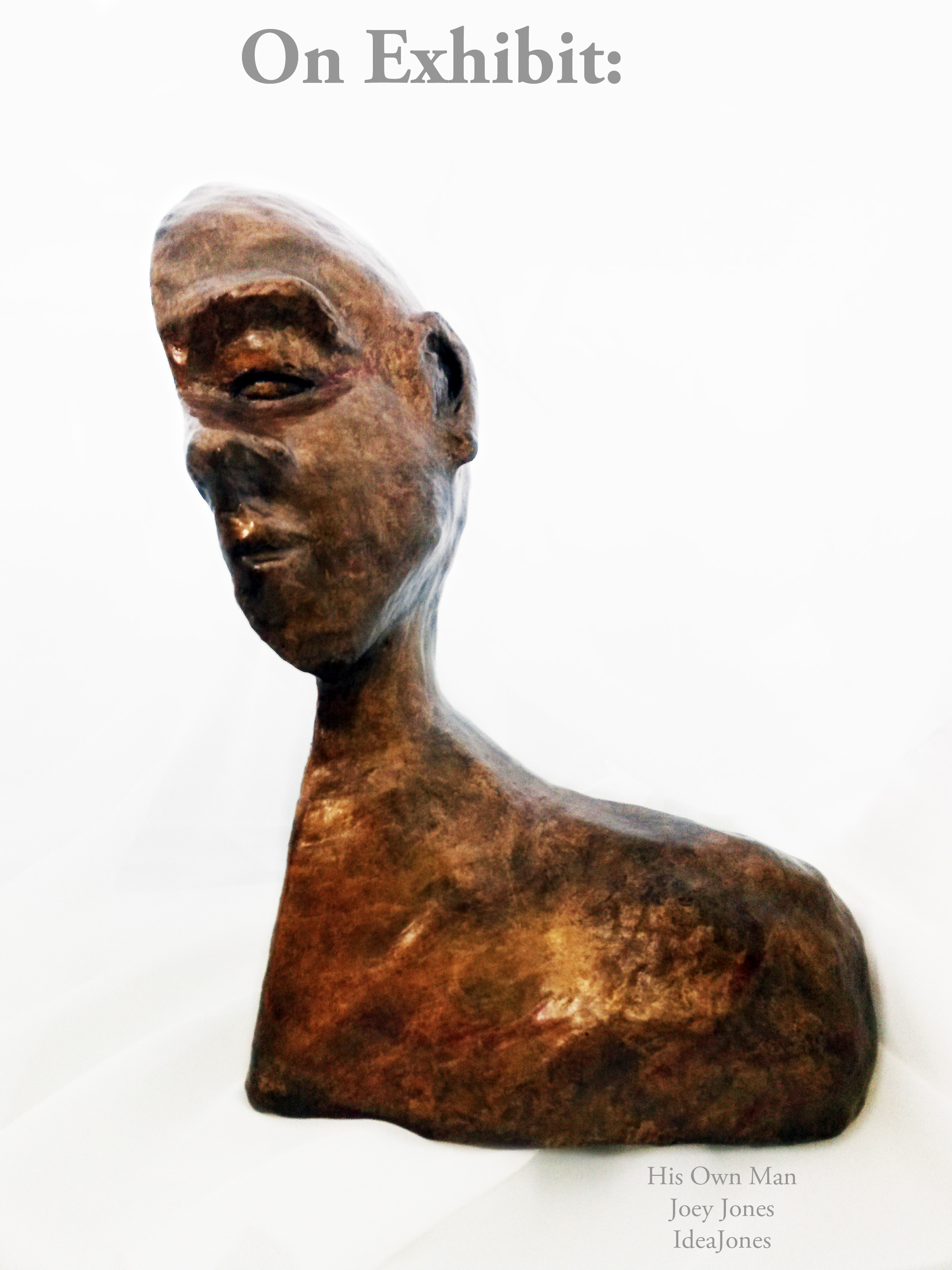
    There’s a lot going on! First, if you get a chance to go to Blue Line Gallery in Roseville, CA, we’ve got a sculpture on exhibit: 00 His Own Man On Exhibit Ideajones

    Second, our charity for the summer is Opening Doors, a charity helping refugees resettle. They provide everything from “welcome kits” with necessities (the refugees usually arrive with nothing) to volunteers helping drive people to appointments. A portion of each sale we make this summer will go to buy items for Opening Doors.

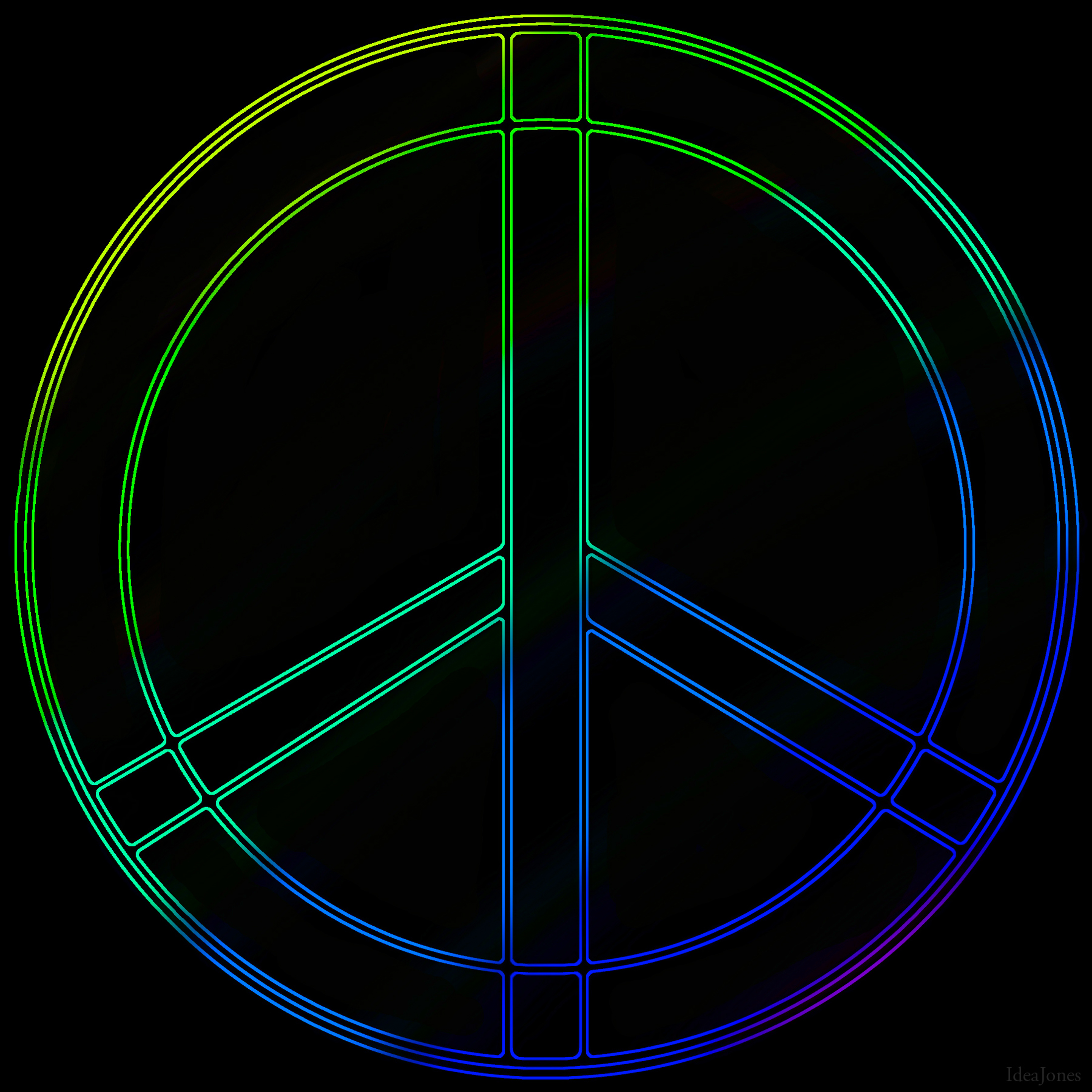
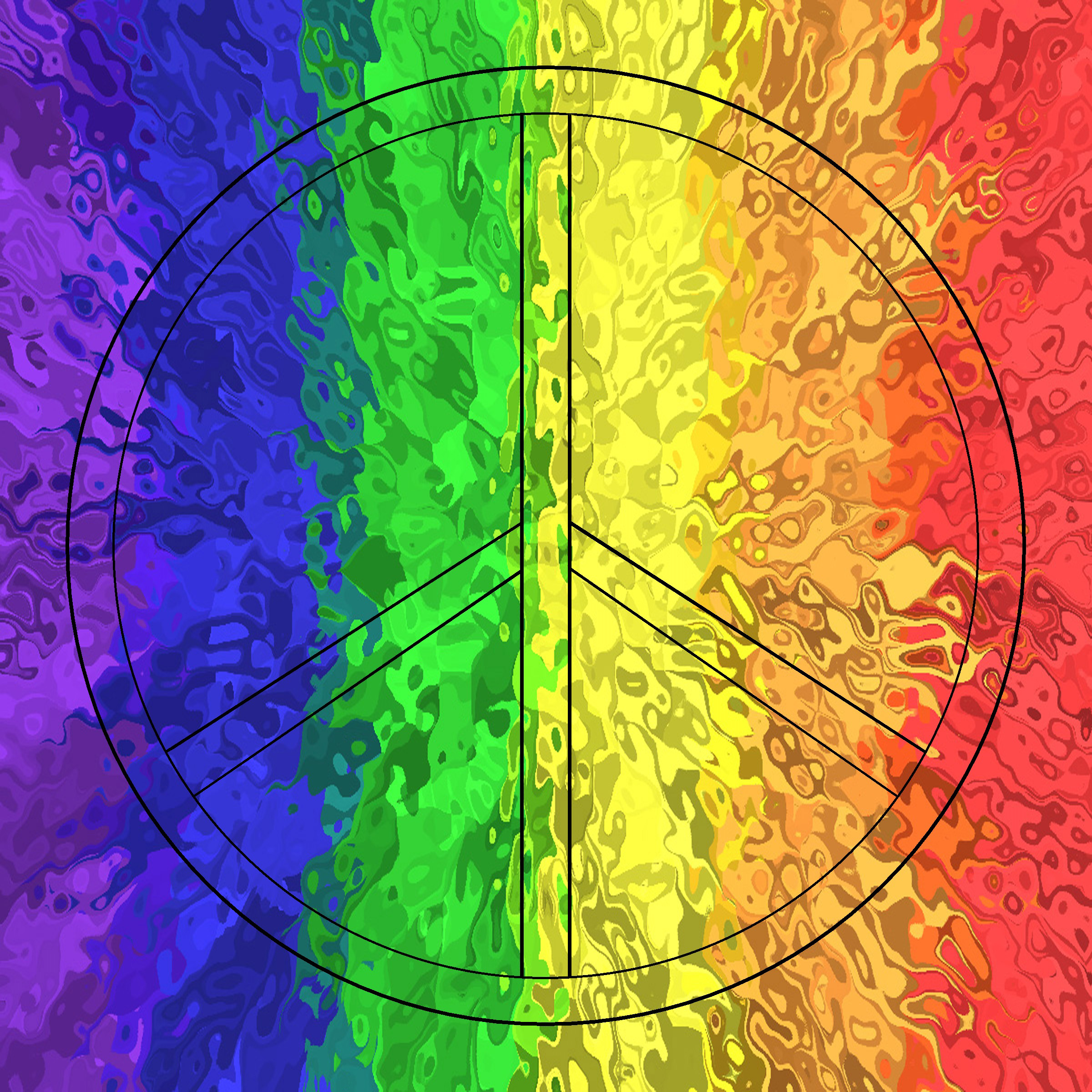
    Among the items we have are silver necklaces from Zazzle featuring our digital paintings, including these peace signs:

    Peace Neon Peace IdeaJones Peace Square Tie Dye IdeaJones


    Rainbow Ripple Peace Sign Necklace at Zazzle.com


    We also have items in our Redbubble shop and will be posting items to our Etsy shop as well. We’re hoping to buy a lot of welcome kits in September!

    We have a brand new sculpture, just finished — pics to come. We should find out soon if it’s about to go into its first show.

    Hope your summer is productive, fun, or both.


  • An Open Letter To My Species

    Dear Human:

    We are the only species in history that gets to decide whether or not to evolve. For everyone else, environment forces the issue. Adapt or die. If you can’t deal with warmer temperatures, or colder, or migrate to a place that suits you better, or develop a taste for something you weren’t eating before, that’s it, you lose your place on the planet.

    Owing to our opposable thumbs, humans have been more successful at forcing the environment to adapt to us. It’s given us a deceptive feeling of invincibility.

    But every species has to pay its bill in the end, and if you can’t foot that bill, you either fade out or the challenge you’re facing eats you, burps and that’s it.

    One of the universe’s waiters who’s been standing around holding out a check is our tendency toward tribalism. It’s natural. You could argue that it’s the main thing that got us this far, after those thumbs and a willingness to eat almost anything. Knowing who is “yours” and who is other kept your ancestors safe enough to reproduce up until you. Tribalism has two main components:

    1. Identity – figuring out who is your tribe;
    2. Outsiders – figuring out what to do about anyone who isn’t.

    Identity used to be easy. Your tribe was the people who were born, lived and died where you did. You might not like all of them, nor they you, but some social structure enabled you to coexist most of the time with those people. You were all related by blood, then as the world grew and changed, you were all related by an idea – religion, nation, etc. Either way, for most of history, the members of your tribe looked generally like you. Your survival depended on knowing who your tribe was and what you could expect from them.

    Now, that’s a life’s quest. People move around. Is your tribe people who go to the same church, or people who like the same music, or just people who seem to like you and you like them? It’s harder to tell on sight who is “yours” and who is not.

    Outsiders – again, that used to be easier. There are three main responses to the Outsider:

    1. Kill it.
    2. Trade with it
    3. Ignore it.

    There are complications attached to all three, but while options 1 and 2 are well-known and discussed, option #3 doesn’t get a lot of coverage. We’ve always had that option. “Not like me” does not equal “and must die.” Those are two different thoughts.

    It’s not reasonable to push for a “Kumbaya-and-hand-holding” world. We’re not there yet. Too big of a leap from millennia of “Not like me so trade with it or kill it.” Even “Not like me so trade with it” is only middling embedded in our history. No, option #1 has been the preferred option too many times. From there to “Let’s all love one another!” is like asking a baby to walk to the moon. He’s barely mastered the basics, let alone conquering all the other challenges that would entail. Ask him to walk across the room a few times first. It’s hard enough to work with people you don’t like. Welcoming their presence is too big of a stretch for most of us.

    What we need to do, and it will be a conscious choice, is to acknowledge that there will always be The Other, the person who does not share some basic view on how the world works. The idea that there will always be many people not like you in really fundamental ways, that it’s a fact, and doesn’t require anything of you, much in the way the rotation of the Earth doesn’t require you to get out and push, needs to be spread until it’s part of our concept of the world.

    The next will be adopting the idea that if you can’t bring yourself to be open to those people, your response should be to just let them be is the next part. We need to uncouple “Not like me” from “so must die.” We need to tell our children, and ourselves, that we have options when it comes to dealing with people who are not like us and killing them isn’t the best one.

    If you happen to believe homosexuality, or being Muslim, or Christian, or a woman, or whatever it is you don’t like, is wrong, more power to you. We disagree, but you have a right to think that. And feel however you feel about it all. But unless they try to hold you down and make you join them, that’s as far as you get to go.

    Because they are human, and real, and have value, and that isn’t because you awarded it to them. They just have it. You don’t give it to them and you can’t take it away. If your whole ego depends on believing you run the universe on that scale, wow, are you in for some bad days. Your life now probably isn’t much fun, come to think of it – being responsible for the universe is a big, thankless task. Ask God.

    Option #1 is a lose-lose scenario. You kill, their tribe comes to kill you, so you kill some of them, so they… until there’s nobody left on one side, or both. Guess again if you think that mean your side is victorious. The land you depend on to live will be decimated. Many of your own, maybe you yourself, will die. It won’t change the other people. It may convince still others to side with them. You will lose all of the things they know that might have made your life better. Even if you are the ultimate victor, your wounded tribe will inherit ashes. It’s a zero-sum game.

    And if you think God is waiting to reward you for killing His creations, you need to ask who has been “interpreting” your sacred texts and what’s in it for them – because you are being played like a cheap flute by someone who is using you for his own power and ego gratification.

    We have a choice here. We can opt out of evolution, choose to remain not only tribal but violently tribal, and end up in the garbage heap of history, played by people who are using our fears and prejudices to control us for their own gain. Or we can nudge ourselves forward, determined to allow people who are not like us their human worth.

    We can try for Option #2 in the hope that this time, it’ll go okay, and make our fallback Option #3, which leaves us alive to pursue our own paths. And if you really don’t like the other tribe, feel free to feel that way. Not like them to your heart’s content. But don’t flash it in their faces, because that’s rude and if you’re really superior, you aren’t rude. And don’t kill them, because that’s stupid and how can one be both superior and stupid?

    Let’s just decide to grow up. As individuals and as a species. If we manage it, it will give us more time to do other things that are a lot more fun.