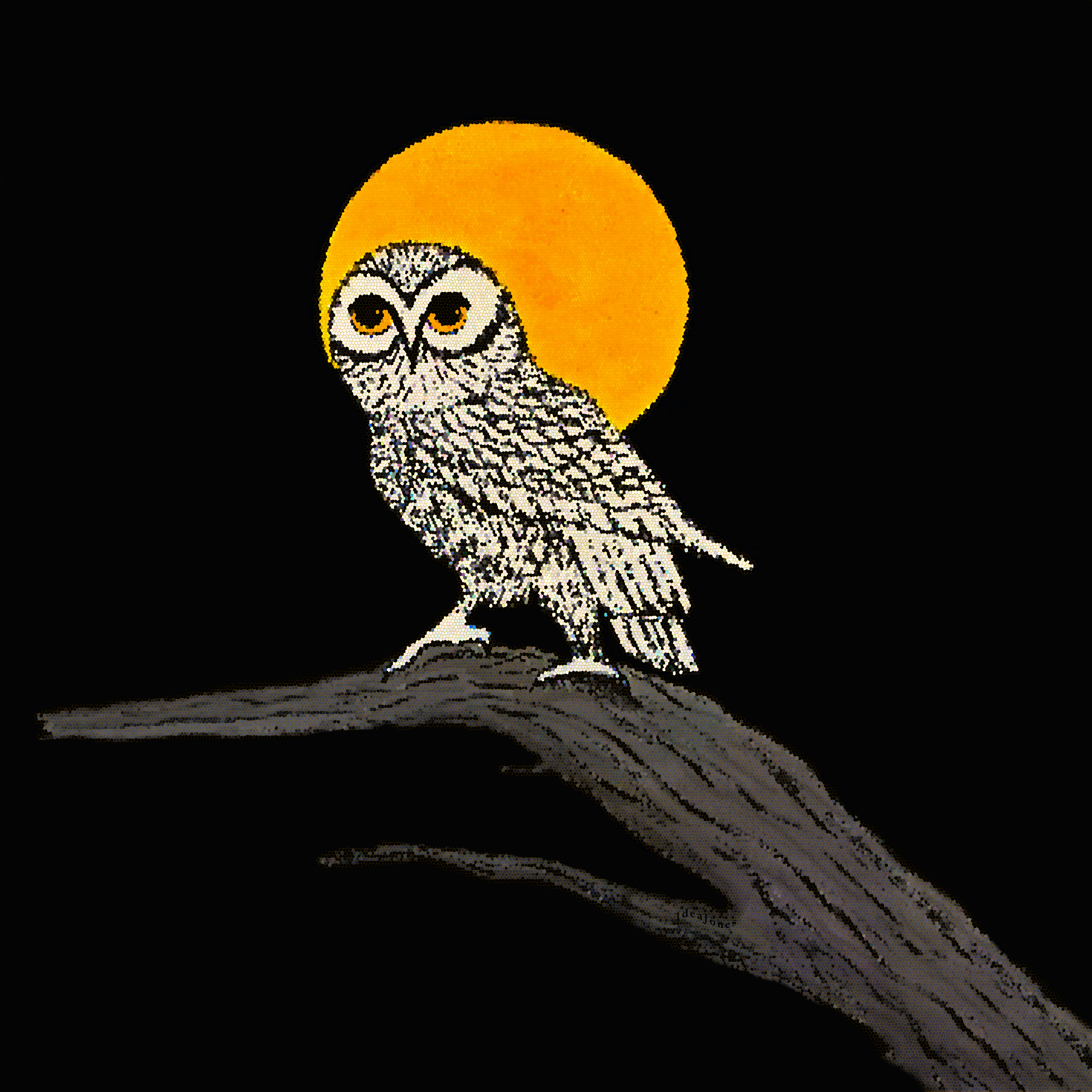
This is “Harvest Moon,” a digital painting based on my acrylic painting, “The Night Watch.”
Here it is, the fall holiday. If autumn had a mascot, it would be a kid draped in a sheet with holes cut out for the eyes, carrying a plastic pumpkin.
The holiday came from All Hallow’s Eve. It was believed that on that night, the border between the living and the dead became thinner and things such as ghosts could get through.
Before that, it was Samhain, a holiday that reminded people it was time to perserve and store food for the coming winter and lay in supplies.
The Irish and Scots brought traditions such as costume parties, carving pumpkins, and having bonfires to the United States. From the U.S. Halloween traditions have spread to many other countries, and each has put its own spin on the holiday.
A bit of trivia about trick-or-treating: in parts of Ohio and Iowa, Halloween is “Beggar’s Night.” I don’t know if knocking on a door and offering the person who answers a choice between giving you something or having a trick played on him is begging, exactly, but “Blackmail Night” sounds awful, so…
My most successful Halloween costume, in terms of candy collected? Santa Claus! Mom made my costumes. One year, I wanted to be a tomato. Yes, I was a weird kid. Anyway, Mom was talented and she really tried, but she just couldn’t come up with a good tomato costume, so she converted it to Santa Claus. I was horrified. Santa Claus? On Halloween? But I went trick or treating, and people loved it. “You’re way to early!,” they’d laugh, or “Santa Claus! That’s great — I’m tired of scary costumes!” They dropped extra candy into my sack (because Santa carries a sack, of course, not a plastic pumpkin). I made out that Halloween. Other kids were openly jealous (and yes, I shared).
Halloween is a chance to try on other personalities, play games, eat treats and either be a kid, or remember being a kid. Wherever you are, we hope you have a wonderful (safe), happy Halloween!
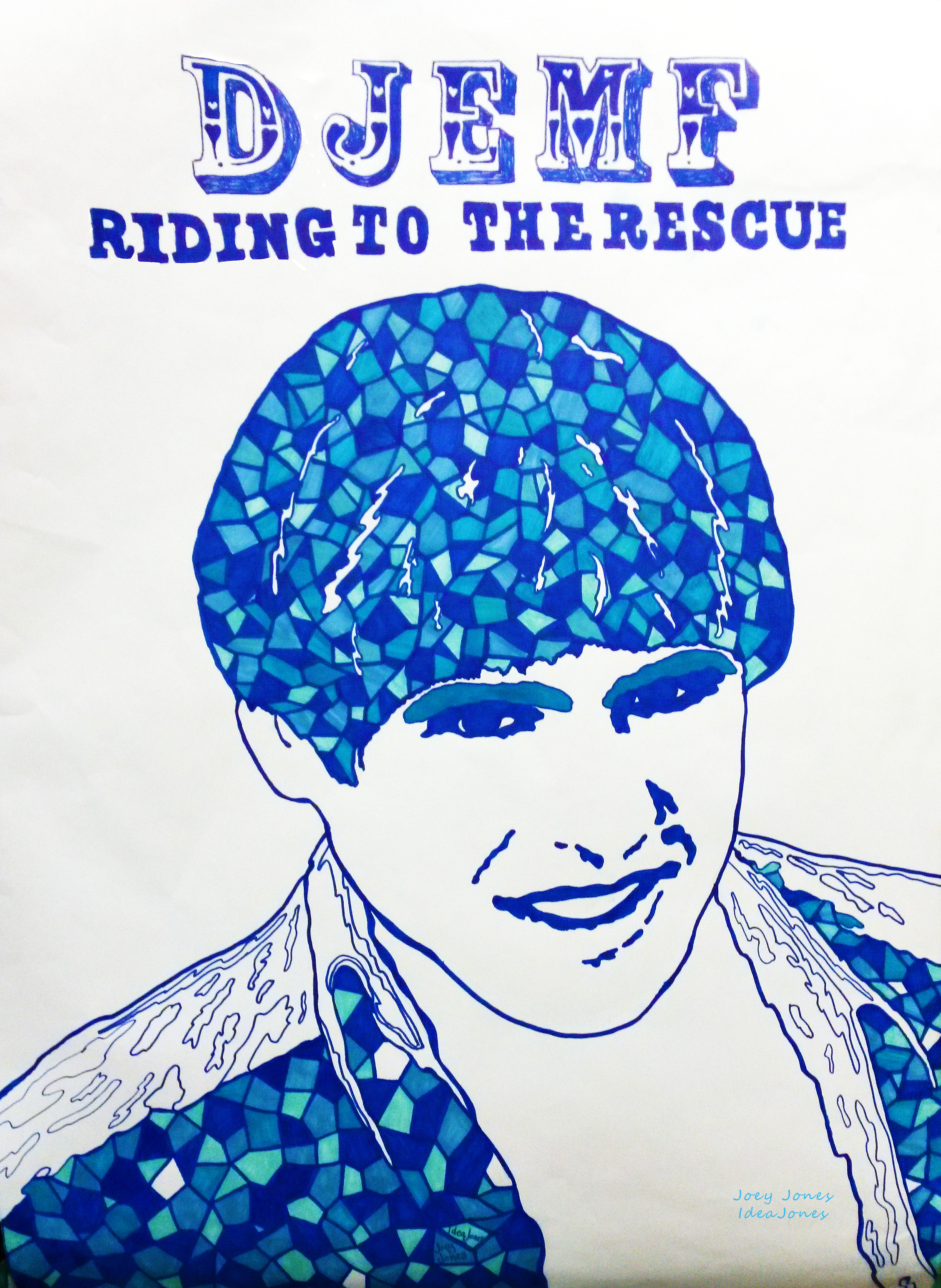
This poster, just finished, celebrates some great 60s memories.
This is the 50th anniversary year of a lot of 60s stuff:
The Monkees tv show (and band) launched September of 1966;
Star Trek (the original) debuted the same year;
The Chevrolet Camaro, The National Historic Preservation Act (preserving sites with historic significance in the U.S.), the last official Beatles concert, the Batman tv series, and Francie, the Barbie doll’s “hipper” cousin, all made their bows in 1966.
I was in kindergarten and Mom said that my older sister would be taking me to see The Monkees in San Francisco, CA the following January. To say I was thrilled would be an understatement. They were playing The Cow Palace and I hadn’t been there. They were playing San Francisco and I hadn’t been there (even though we lived in Santa Cruz, which isn’t that far away). And they were The Monkees. I played their records until they were so fuzzy it sounded like static.
Then Mom told me the concert had been canceled. Someone was sick. That was that.
Well, that wasn’t really that — Mom lied. I think she got a look at the chaos that was the audience at a Monkees concert and decided that she didn’t want her five-year-old daughter to be trampled to death. Or my sister, who was a hippie, adamantly refused to take me. I’ll never know. Either way, it would be years before I’d hear them live. I got to see “the Threekees,” which is any three members of the band, a couple of times in the 80s. Those times it was Peter Tork, Micky Dolenz and Davy Jones. The shows were a lot of fun. I even got pranked by Davy, which is a very special memory for me.
This year, Mark took me to see “the Threekees” again, in Monterey. Initially it was to have been “the Twokees,” in this case Peter Tork and Micky Dolenz, but Mike Nesmith came onstage for the last part of the concert. It was in an old “golden age” movie theater, The beautiful Golden State Theatre in Monterey, and we got to meet up with friends. Thanks to our friend Janice, we even ended up center stage, second row, and we had a lot of fun. And while I didn’t get to see them in San Francisco, I will be seeing them in Paso Robles, CA with Janice — which is why Mark and I made this poster.
Davy Jones died suddenly, leaving his daughters and a herd of horses, some of them rescues, behind. Horses are expensive to maintain (I grew up with them and it’s both labor-intensive and expensive to keep a horse), and his daughters set up a charity to keep their father’s little herd together. As my time in fandom comes to a close, it seemed like the right note to do something to support the Davy Jones Equine Memorial Fund. So Janice and I will be out in front of the theater before the show, passing out information.
This poster of Davy Jones is also a nod to one of my favorite artists of the 60s, Peter Max. I’ve been a fan of his work since I was a little kid. It’s colorful, flowing, and when I was a kid in Santa Cruz, psychedelic art was everywhere. Of course, I was much too young for the “tune in, turn on, drop out” 60s, but the aesthetic was in magazines, on tv, in the music, clothes, movies… Since Max’s work and The Monkees both came out of the 60s, it seemed right to mix a bit of Peter Max into the style. I’ve also got a thing for stained glass. Most often associated with churches, there’s something about stained glass that makes the subject more of a statement.
Stained glass is bold in its use of color and light, but fragile. It also forces the eye and brain to do one of the things they do best — find patterns. The face here is rendered minimally, but it’s clear what and who it is.
So I’ll be standing around this weekend in Paso Robles, hoping this encourages people to approach us and get information about Davy Jones’s charity (yep, official charity, 501(c)3, I checked), and making people smile. If you’re in the area I hope you stop by!
(Quick note — if you haven’t gone to Rebubble.com and signed up for their emails, you really should. For example, they have a sitewide 20% sale going today. Getting great stuff from talented artists is wonderful, but getting a deal on it? Awesome!).
If you’ve made a purchase from us, you’ve helped a refugee start a new life in America!
If you’ve bought anything from our Redbubble store, or from our Etsy store, in the past three months, you just did something very cool.
Four times a year, we take 25% of everything we’ve sold and buy something for a charity. Right now, we’re supporting Opening Doors, a charity that helps refugees resettling in California. These people arrive in the U.S. with next to nothing. They’re often fleeing violence and the threat of death, so they don’t get to bring much. The charity finds them housing and helps them get started with language classes, help navigating getting the kids into school, how to get around using public transportation, etc.
So what did you do? You helped buy bus passes so that people who don’t have the money even to ride the bus can get to the doctor, or get the kids enrolled in school, or buy groceries. Often refugees arrive from places that don’t have much in the way of public transportation, and they don’t know the city. Volunteers show them how to use public transit to get where they need to go, taking them to appointments. It makes a new and intimidating place just a bit more familiar.
Opening Doors also collects items for “welcome kits,” including pots and pans, dishes, etc. When it’s time to turn part of our sales into donations, we contact the charity and ask what they need most. This time, Opening Doors asked for bus passes, so that’s what we donated.
We. Not just Mark and me… if you bought anything from us in the last three months, you’re part of “we.” You bought bus passes and donated them to a charity. You are part of the day someone gets a bus pass, leaving $7 in his or her budget for food, or school supplies for the kids, or medicine.
So thank you. We thank you, and they thank you. Enjoy being a patron of the arts (buying something from a small arts business like ours makes you a patron of the arts), and a humanitarian. As a friend of ours says, “You are awesome! Own it! Own it!”
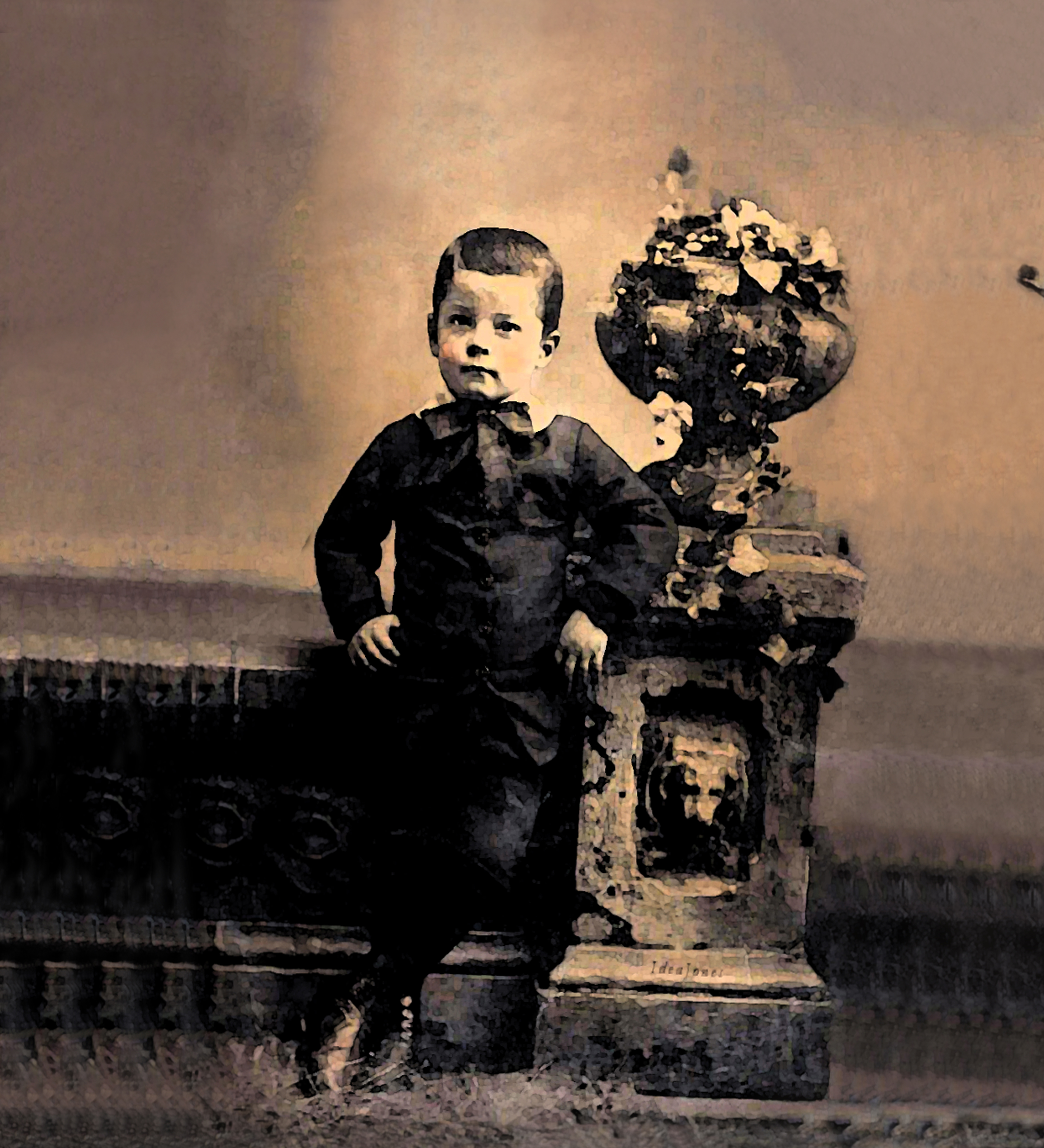
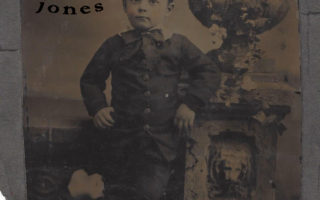
I don’t usually create dark, moody artwork. Perhaps there are elements of “Simran: Altar of Memory” which are bittersweet, even sad (it’s about dementia, after all), but it’s not spooky. Recently, however, I decided to work with old tintypes and photos my grandmother gave me, and one in particular just seemed to pick up on the fact that it’ll be Halloween soon.
This started with a scan of that old tintype. I work with old photos from time to time, healing scratches, brightening faded images. Working with this photo, I tried to heal some of the damage of time while only brightening it enough to reveal details. Once I did, I discovered details I wanted to emphasize, like the skull in the lower left. This might not have been a skull at the time the photo was taken, but when the image emerged in working with it, that became the theme of the picture, so I repeated it.
That led to other repetitions. Ordinarily, I would smooth out the background, eliminating visual “stutter.” In this case, I cause the stutter. Patterns repeat in the background, in the setting, giving the photo a cluttered, neurotic feeling.
When it felt like I’d reached that point, I turned it into a digital watercolor and continued painting, sometimes pixel by pixel. As I worked, I gave him a backstory. A brave boy, the son of parents who hunt the things that go bump in the night, he is comfortable in the graveyard, knowing his parents have banished evil and confident that one day, he will take his place beside them.
Mark visited a camera store the other day (we’re shopping around for a camera). While talking to the store’s owner about what we’re looking for, he mentioned that one of the things I do is work with old photos, including “healing,” improving faded, scratched images, and creating artwork based on that digital image. The man told Mark that working with old photos is a difficult skill to learn.
It is. I’m still learning. And the first thing I learned is not to approach it as photography.
Digital image manipulation has changed everything, and in a way, it’s brought us back to where we started.
Before cameras, pictures and portraits had to be sketched or painted. Photography brought the ability to “capture” an image. To change it, you could change lighting, how the image is framed, how long it’s exposed, but for much of photography’s history, seeing was believing. Making composite images wasn’t easy and most didn’t look real. Before color photography took off, the most common way to add color was to physically paint on the photo. Retouching meant actual touching.
But with digital photography, a picture ceases to be a photograph when it enters the computer. Take a digital photo and increase the magnification until you can see the individual pixels. You’re seeing what the computer is telling you it sees. To the
What seems to be one thing is a lot of other things, when it’s a digital image.
computer, it’s not a photo — it’s data to be interpreted. Learning how the computer sees what you give it will help you figure out how to do what you want to do.
To work with photographs digitally, you approach them… as paintings. Look at those pixels. When you back out and look at the whole image, that part may appear to be one color, but when you zoom in, it isn’t. Even “black and white” images contain dots of color in every digital photo I’ve worked with. If you need to heal a scratch, or change something, you have to put away what color you think it is. Look at the colors the computer sees. That’s what you’re working with.
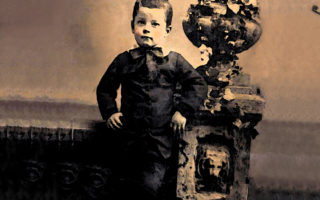
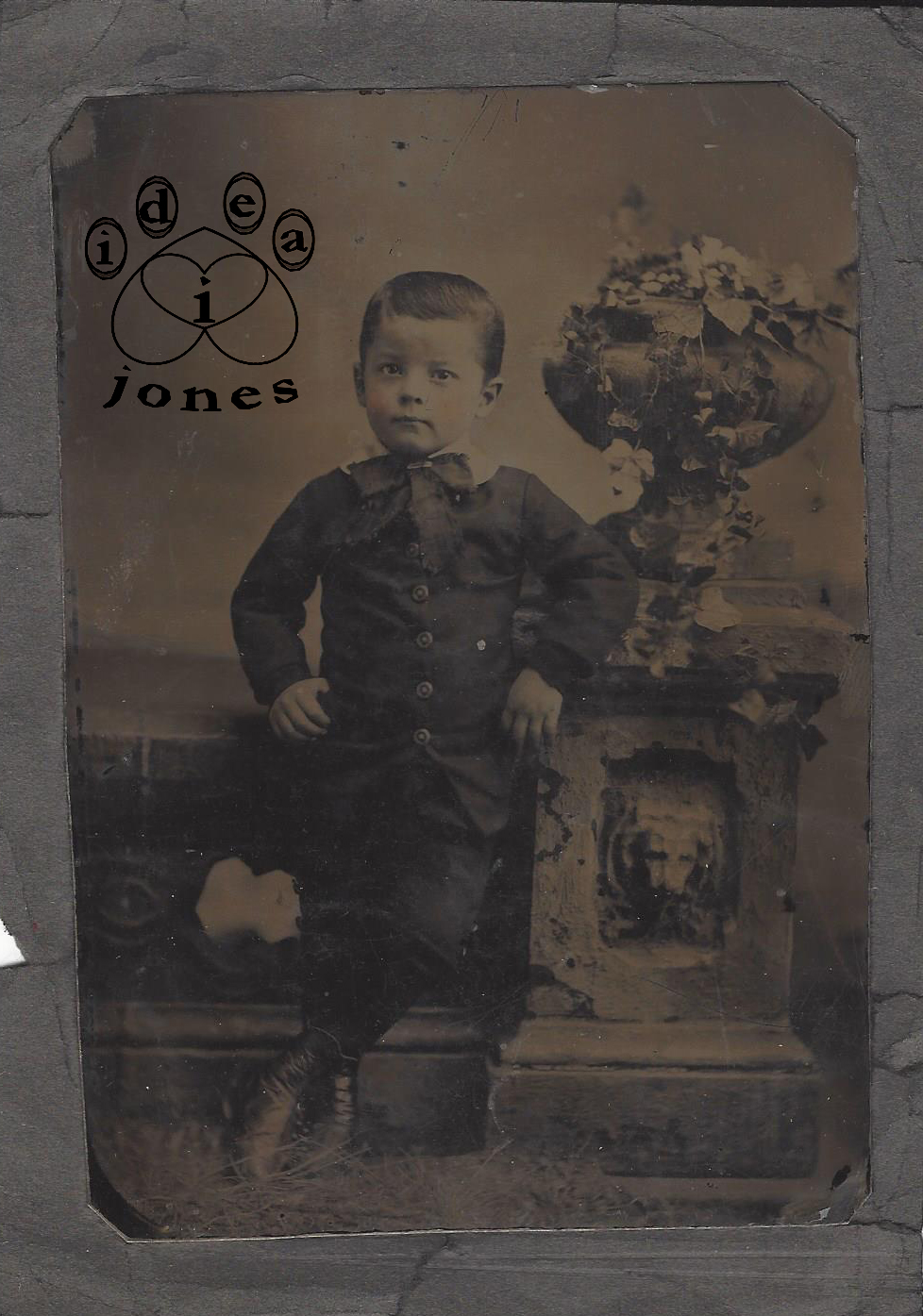
This isn’t in bad shape for a picture from the 1890s, but there’s a lot of work to do.
This is a family photo taken around the turn of the last century. It’s one of the few not labeled, so I don’t have a name. I decided to turn it into a digital art project for our Redbubble shop. This wasn’t a straight-ahead healing of an old photo. I wanted to emphasize certain things and omit others to produce an effect. Still, the process started with healing a scratched, faded photo over 100 years old.
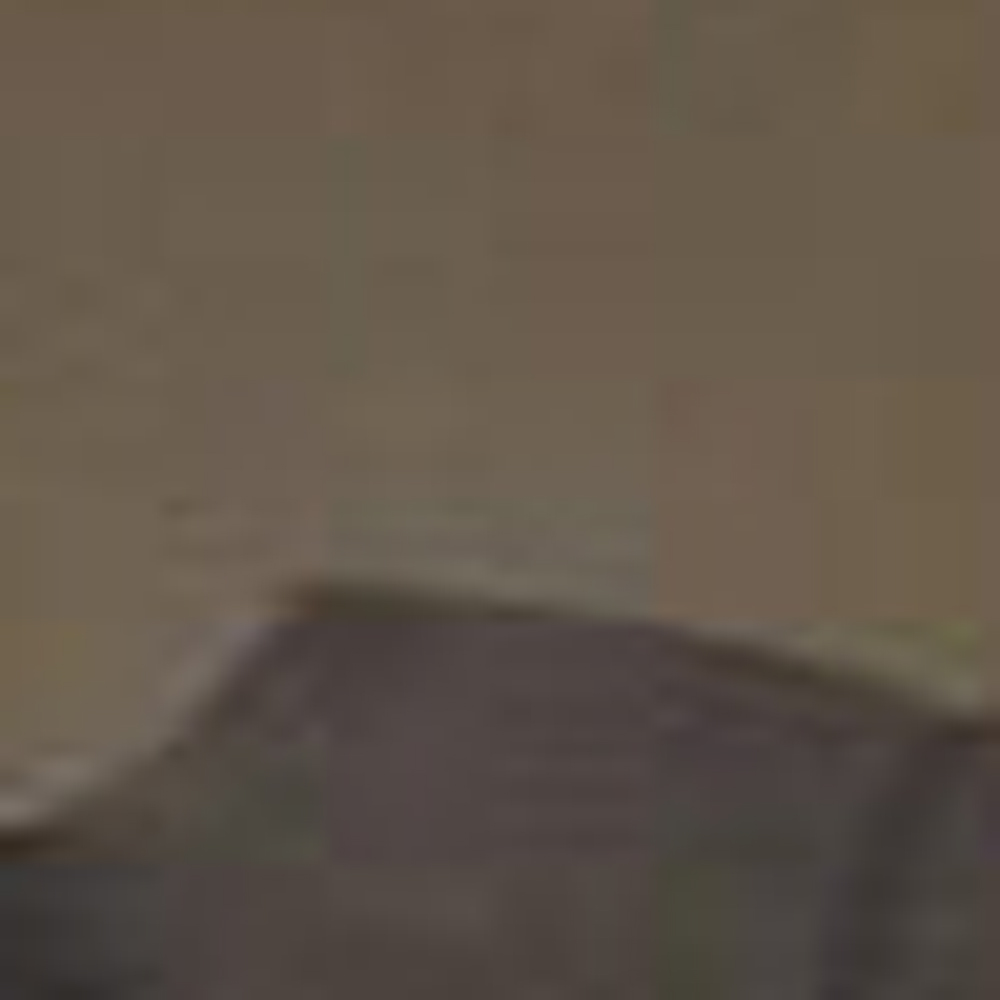
It appears to be lighter and darker tones of one color (sepia), but if you look at that magnified sample from the original, you can see greens, yellows, even a rose tint. When you’re healing scratches, brightening or manipulating the image, that’s what you’re working with.
It seems obvious, but the first thing I learned about working with digital images is you have to work with what you have, not what you think you have.