IdeaJones

Author: Joey@IdeaJones

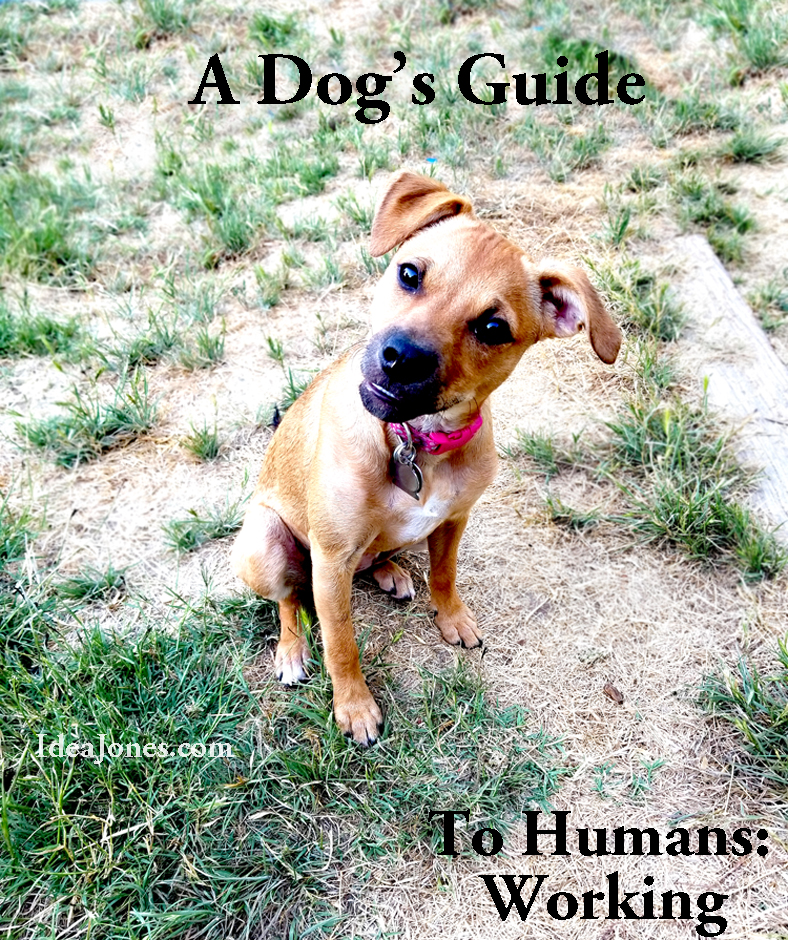
  • A Dog’s Guide To Working With Humans

    A Dog’s Guide To Working With Humans

    Humans are both fascinating and confusing.

    If you want to work with humans, there are a few important things you need to know.  I’ve been working with these humans for a couple of months now, and I can already tell that working with humans isn’t as easy as working with dogs:

    • Humans talk about cooperating a lot more than they cooperate.  Sometimes this is because they really don’t want to cooperate.  I overheard someone saying “This shit has too many captains.”  He pronounced it “ship,” but I’m not going to make fun of him for a speech impediment.

    As you know, among dogs, we all sort out who does what and do what we do best.  I have the best sense of smell in our pack, but Reo is better at spotting squirrels in trees. I’m little and fast, but Moby is big and strong. Humans can use can openers. We all have our role to play.

    Humans have an “all or nothing” approach to control. They don’t want to give up any, or they pretend they gave up all of it.  And nobody listens to anybody just because she’s good at that particular thing. They think listening to someone who knows what she’s talking about means giving her some sort of power over them… How do humans get anything done? They overcomplicate things so much.

    • Humans have the awareness of rocks.  Okay, their senses are, to be kind about it, very limited.  They stare, baffled, at the tree you’re barking at, because they can’t hear or see the squirrel right over their heads. They step in things because they can’t smell them.

    This lack of awareness of who or what is around them causes them endless problems. When a pack works together, we pay attention to where the other members of the pack are and what they’re doing. If Moby flushes a rat, Reo and I need to be able to help him catch it. If we don’t pay attention to each other, the rat gets away. Which means we’ll probably have to chase that same rat another day — plus a bunch of baby rats.  If I flush a rat, I need Reo and Moby to help me, because I’m a baby and the rat is probably almost as big as I am. If they aren’t aware of me, the rat gets away, or I’m rat chow.

    Humans engage in things far more complicated than chasing rats, but usually they don’t seem to be aware of the other people involved. If Reo chases a rat and it runs my way, I have to chase it toward Moby so he can take care of it. Moby needs me to do my part, so he can do his. But humans take on projects where each person  has to chase his rat, so to speak, on time, so the next person can chase her rat.  But they ignore all of the other people waiting for them and do whatever they feel like, whenever they feel like it, so the next person waiting for the rat to come his way misses it, or gives up and goes home.

    No wonder there are so many rats in the world.

    The humans are interesting animals with many bizarre habits, and the ones I have adopted are very nice, even if they are, as all humans seem to be, somewhat limited.  My studies continue, and I will send more dispatches as I can.

  • Creating While Distracted

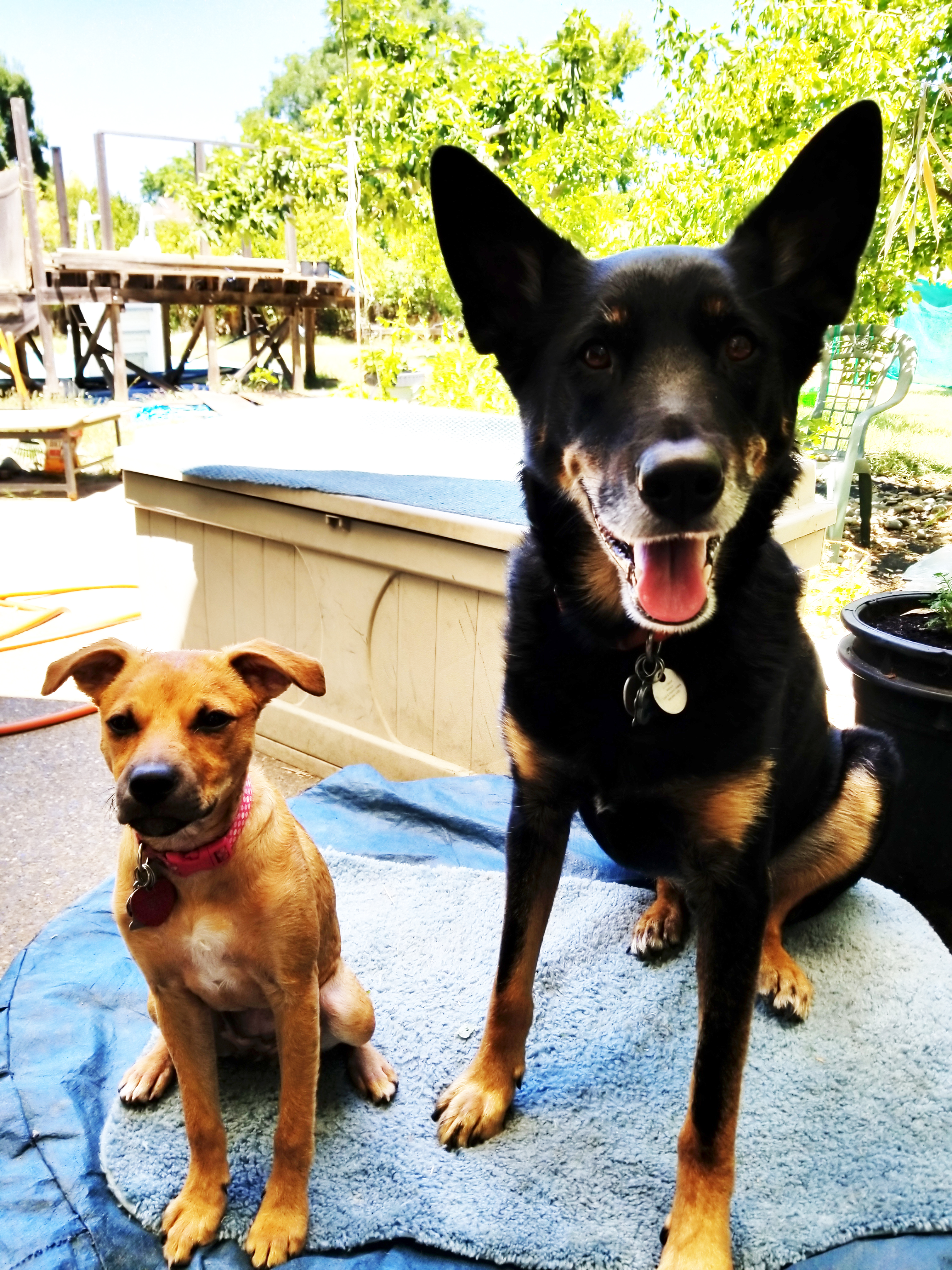
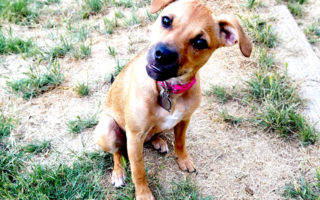
    Gingeroo and Moby, a puppy & her (adopted) dad.

    We have a new family member, Gingeroo, who joined us almost two months ago. She’s an adorable little girl and before anyone asks, she is 100% Pure Yorgess… “your guess is as good as ours!”  She’s a mixed breed, some sort of hound/terrier mix. We’re thinking she’s part Basenji, as Abby was (always miss you, Princess Hound!).  Gingeroo does a lot of things Abby did, from trying to climb on everything (including people –we’re working on it) to holding things with her paws like a raccoon. She even has the Basenji speaking voice, which sounds, so Mark’s mom used to say, like something from The Exorcist (think someone talking in a very raspy, growly voice).

    Moby loves his little baby (she’s almost five months old now). He lets her take tennis balls, roll in the grass with him, even cuddle up to his tummy.  And when she gets out of control, he gently but firmly corrects her. She’s a spitfire, lots of energy and focus, but once she settles down, very sweet and cuddly.

    We’re trying to work with a puppy in the house, and for other reasons, it’s been pretty stressful here.  There are a few things we’ve figured out:

    * When it’s not normal times, don’t try to pretend it is. Acknowledge whatever challenges there are and plan accordingly. You don’t have to let things stop you — but if there’s a hill in your path, it doesn’t help to pretend there isn’t. Make plans to climb the hill.

    * If a situation isn’t likely to resolve itself quickly, adjust your expectations. A friend said, “If it’s a marathon, not a sprint, train for a marathon.” She went on to say that you have to get your rest, drink plenty of water, exercise, eat a healthy diet, all that stuff, just as if you were going to run an actual marathon. This may be the smartest advice we’ve gotten in years.

    * “If the straight path is blocked, get creative about going where you need to go. Other paths may still get you there.” Great advice from another friend. Right now, my schedule revolves around little Gingeroo, who is learning to go outside to potty, but has to go outside about every other hour. Plus, I don’t want her to think if she goes, that’s it, back in the house, fun’s over, so after she goes, we play for a while. This is seriously cutting into my productivity, but will pay off in the future. So I take her out to play, bring her in, get her settled with a toy, and get some work done until we do it all again in 90 minutes. Which means that if I’m not as productive as I’d like, at least I’m productive, so I don’t lose patience with her, and she’s getting really good about housetraining, since it’s a positive experience.

    We’ve had other times when life was challenging, sometimes very challenging, and it was frustrating, on top of what was going on, not to be getting anywhere creatively. Fortunately, now we know how to navigate the rough patches in the road until they smooth out, which brings me to the other best advice I ever got:

    “The universe doesn’t recognize stasis. Things can grow or decay quickly or slowly, but they can’t stay the same.” This was our doctor and once we really understood it, we realized it meant that change is part of the system. Enjoy the good and survive the bad knowing it won’t last forever.

    “Better is always coming. The trick is to hang on until it gets there.”  Mom, who lived through The Great Depression, told me that.

    Hope your good stretches are longer than your bad.

    Gingeroo and Moby enjoy the summer.
  • East-West Crazy

    Below is an excerpt of the novel we’re working on. It’s fictionalized autobiography — fiction based on personal experience. I don’t seem to write straight-out autobiography. Until I get some distance from it, turning it into a story, it’s hard to have anything to say. It’s simply what happened. Once I start turning experience into story, I get that critical, objective distance that makes patterns and turns what was scary or tragic at the time into, very often, comedy. There is humor there, but I can’t see it if I’m too close to it — I need to back up until it’s clearer.

    This is a story about growing up in a family where people are mentally ill. It’s about mental illness as an experience, not as a clinical diagnosis, or a “condition.” It’s about the adjustments people make in order to live in a situation that an outsider might find impossible. Human beings are flexible, and it’s surprising what they can manage to adapt to, especially kids.  And if some bits of that experience are sad, or frightening, there are others  that are funny.

    It’s written from the point of view of Minerva, a precocious little girl who gets “mental crushes” on things — at the moment it’s food and recipe books. She knows she is “different” and is coming to see her family is really different, but she’s not so sure society is all that sane, either. I hope you enjoy this bit of “East-West Crazy.”

    EAST-WEST CRAZY (excerpt)

    I avoided looking at anyone, hunched over my desk, intent on my work, printing each letter and number with as much care as a monk illuminating a copy of the Bible. Show and Tell was forgotten, but the bottle, which I’d wanted to show to Laurel privately, was still in my pocket. When Mrs. Beauchamp told us to put our books and pencils away and fold our hands on our desks, I glanced at the clock, confused that the clock had marched so far around the day.

    “Does anyone have anything for Show and Tell?” Mrs. Beauchamp asked with forced enthusiasm. She smiled stiffly through the procession of rocks, toys, and dilapidated bird nests which followed. When the stream seemed to have dried up, Mrs. Beauchamp looked around the room. “Anyone else?” I, bored, stuck my hand in my pocket, and winced. The little bottle was a lump on my hip. I silently debated taking it home without enduring the Show and Tell process, decided not to raise my hand. If there was one thing I didn’t feel like doing at that moment, it was calling attention to myself.

    Mrs. Beauchamp surveyed the room, stopping on me. Something on my face drew her, and with the instinct of teachers everywhere, she spotted a reluctant pupil who needed nudging. “Minerva?”

    I shook my head.

    “Minerva,” Mrs. Beauchamp said with smiling force, “do you have something?” I’d once overheard her telling another teacher that little Minerva was, “an odd one, very bright, but positively leaden in social situations. Given her way, the girl would avoid speaking up at all. If someone doesn’t help her, she’s going to end up strange” Mrs. Beauchamp beckoned me to the front of the room.

    I passed by Nancy’s desk, and although I avoided looking her way, could hear the little snort she gave whenever she wanted to make her contempt clear without being caught by adults.

    Up at the front of the room, I stared at my shoes, hand clenched around the bottle in my pocket.

    “Eyes up, Minerva,” Mrs. Beauchamp said, a hint of pleading in her voice. “Stand up straight.”

    I nodded miserably, holding up my mandolin bottle. My first few words were lost in a choked whisper. Before Mrs. Beauchamp could prompt me, I took a deep breath, my voice coming out too loud as I focused my eyes on the bottle in my raised hand.

    This is a bottle of wine,” I said.

    Mrs. Beauchamp gasped.

    I made it myself,” I continued proudly. “Wine is made from grape juice that has…” I paused, going slowly to pronounce the word correctly, “fer-men-ted. That means it’s started to rot, kind of. If it rots the wrong way, it gets moldy, but if it rots the right way, it turns into alcohol.” Several kids looked interested.

    Nancy huffed, “It’s not real.”

    “Sure it is.” I handed the bottle to Kevin, the first kid in the first row, and fixed my eyes on Laurel’s encouraging smile. “My Dad gave me the bottle. He got it on an airplane flight.”

    Leaning toward April, Nancy hissed, “I bet she stole it.” April glanced quickly from me to Laurel, turned back to me, and laughed. My face, always red during presentations, felt ready to burst into flame. I glanced at Mrs. Beauchamp, waiting. This was the point where Mrs. Beauchamp would, with comforting predictability, smite the offender for interrupting. She would also land on Nancy for being rude, and lying. A simple phone call to my Mom would restore my honor, and Nancy might not see recess again for weeks. Stiff with humiliation, I waited for the justice I knew was coming.

    The look Mrs. Beauchamp turned on Nancy held, at best, distracted annoyance.

    Confused, I continued in a rush, “They give you all kinds of things to drink on airplanes, but I don’t know what all of them are, so I don’t know if the stuff I put in them looks right, except for wine.” The bottle passed from hand to hand, some pausing to sniff it. Mrs. Beauchamp’s mouth opened and closed soundlessly. I stumbled ahead, “I know what color wine is – it’s like grape juice. I didn’t mean to make wine – I just put grape juice in there so it would look right, but I know what it smells like, and after a few weeks…”

    Mindy Shaw unscrewed the metal cap and took a careful sip. Her face screwed up. “Eeew!” Mrs. Beauchamp shook her head quickly, hand outstretched. She jumped to her feet. “That will be exactly enough!” Giggles escaped a few children before they got a good look at Mrs. Beauchamp’s face, but by the time she strode across the room to Mindy’s desk and held out her hand, no one seemed to be breathing, let alone laughing. Mindy surrendered the bottle meekly.

    “I didn’t get to the part about where I put the bottle so it could…” I was confused, uncomfortable. Mrs. Beauchamp was clearly angry, but I couldn’t figure out why.

    “I said,” Mrs. Beauchamp growled, “that is enough! I want you to go to the Principal’s office.” She wrote out a note, pencil moving in sharp, angry strokes, ripped the paper from the pad, the sound loud in the silent room. I stood where I’d been left, in front of the class, my face burning. Nancy smirked as I accepted the note and exited the room without comment.

    I tried again and again to explain to Principal Turner, to Mrs. Beauchamp, as they stood over me, frowning. Someone else had put grape juice in the bottle and turned it into wine before me. The airline had put the bottle on the plane and given it to Dad. Dad had brought the bottle home. Dad had drained the contents and given the bottle to me. If it was okay for someone else to make wine, okay for the airline to give it to Dad, and okay for Dad to drink what was in it and give me the bottle, why was it wrong for me to put grape juice in the bottle again?


    #WIP #wipwednesday #amwriting #writerwednesday #litfic #womensfiction #chicklit #chickswrite #writechicks #writerchicks
  • Dragons, Stained Glass Flowers, Trolls and Me

    Redbubble Create (a part of Redbubble.com) asked its artists to identify their favorite works … from their own portfolios. This is hard for me. I was brought up “not to get a big head,” which included not talking about my own accomplishments. I’m learning that not sharing or talking about my work deprives me of part of the enjoyment. It’s okay to look back with pride in what you’ve managed to do, whether it’s deal with a difficult situation at work, learn to prepare a new dish, or create a painting. It’s okay to enjoy your work, and yourself.

    Lately I’m creating some work that I’m really happy with. Mark and I are working on a screenplay which deals with difficult subjects, and I’m enjoying polishing it to send it out. It’s really pretty good. I’m working on two books, one light, one dark, both funny, and feeling a lot of satisfaction in seeing them come together. We’re training a little puppy, and while she’s a handful, she’s responding and learning. I’m creating some new artwork that really makes me smile.

    There are difficult things going on, too, but they don’t erase or negate the happiness I’m getting in other areas. In the Bible, one apostle talks about being “in the world” but “not of the world.” Another says that he’s learning to separate how he feels from how happy he is. A meditation teacher once told us that “pain is mandatory, but suffering is optional.” So  how I feel physically in that moment, or knowing that something in my life isn’t how I want it, doesn’t mean I can’t enjoy anything or be happy at all.

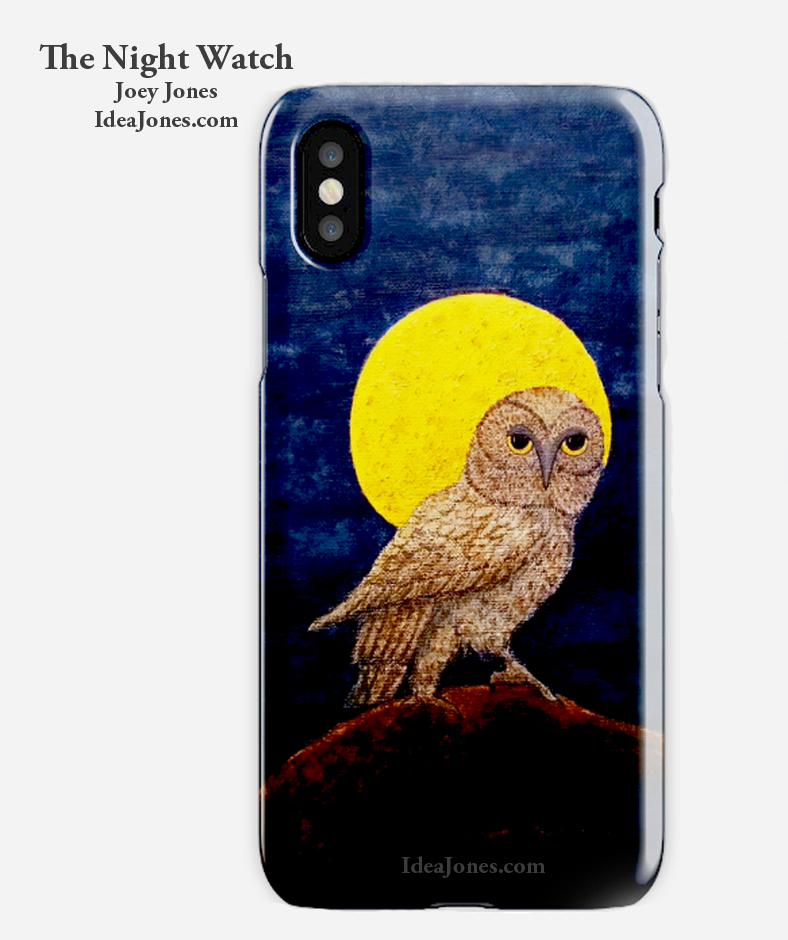
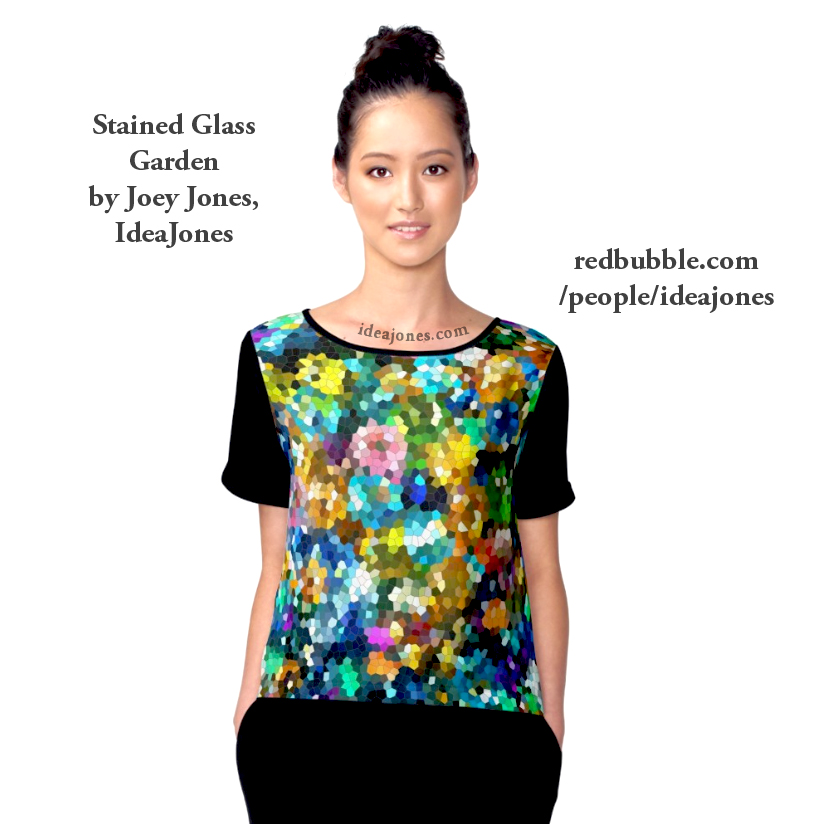
    Right now, work is a lot of fun (when I get to work between running the puppy out to pee — she’s new to housetraining). Here’s some of what I’ve been up to at

    For when enough is more than enough.

    Redbubble:

    A young dragon takes a bath in the sacred pool before embarking on her first voyage.
    The guardian of the night at work.
    The feeling of a garden in full bloom.
  • On Dust, Mirror Neurons, And Discrimination

    On Dust, Mirror Neurons, And Discrimination

    We’re discriminating against ourselves.

    When I started “Where It Starts,” I was fascinated by a science book by Judith Horstman. In it, she mentioned “mirror neurons.”  I did some reading on the subject and fell in love with the idea. Mirror neurons are neurons in the brain that fire up sympathetically. Let’s say you watch someone fall. As he topples over, he sticks his hands out to break his fall. When his hands hit the sidewalk, your own hands twitch in response. You may even flinch. You didn’t fall — so why do you have that reaction?

    Mirror neurons allow you to place yourself in someone else’s shoes for a moment. Other things can make them twitch, too. A story can get their attention. If I tell you about my trip through the mountains, about how it was night and snow started to fall, and my car skidded into a snow bank and the engine died and wouldn’t come back, but I saw the lights of a gas station so I got out and walked, slipping and skidding, the snow soaking my tennis shoes so that my feet were wet and numb… Neurons fire in your brain in areas that would fire up if you were actually having that experience with me. The more vivid the story, the more you feel it.

    As I worked on this sculpture, I heard another bit of information that seemed to relate — the composition of dust. Of course, there are different kinds of dust, but in general, everything is shedding and flaking off tiny bits, and those tiny bits become dust, which swirls all over the world on the wind. This includes shed cells from other people. Many of these bits are too small to see with the naked eye, but we’re all breathing them in. So what?

    So we are all taking in minuscule pieces of each other constantly. The closer you are to someone physically, of course, the more you take in, but the school bully and his victim are literally part of each other. People from all over the world are walking around inside of you right now, and that’s not touchy-feely new age philosophy… it’s scientific fact.  Plus, that dust is deposited everywhere, including the soil where our food grows. The guy who thinks he’s better than everyone else? He IS everyone else.

    Those people who say “we are all one?”  They’re right.

    The first time this sculpture was shown, I saw a woman and her daughter contemplating it. They noticed me and asked about it. When I explained it, the woman laughed and told her daughter, “You’d better be careful who you breathe around!” Then I explained that we are all part of each other, even the people we don’t like. She said, “It would be hard for anyone to bully anyone else if they understood that.” Her daughter shared that she had been bullied in school, and wished the person who had bullied her had understood that they were part of each other.”

    Everyone walking around carries a part of the rest of the world within him. The people in this sculpture are talking, sharing their experiences, breathing each other in. Both will leave changed whether they realize it or not.